JG: The Sheltered Ones

806 - Gaffigan and Father Nicholas

Here’s another great post from Junior Ganymede: The Sheltered Ones.

In the post, MC makes two points that seem a little dischordant at first, but really are not.

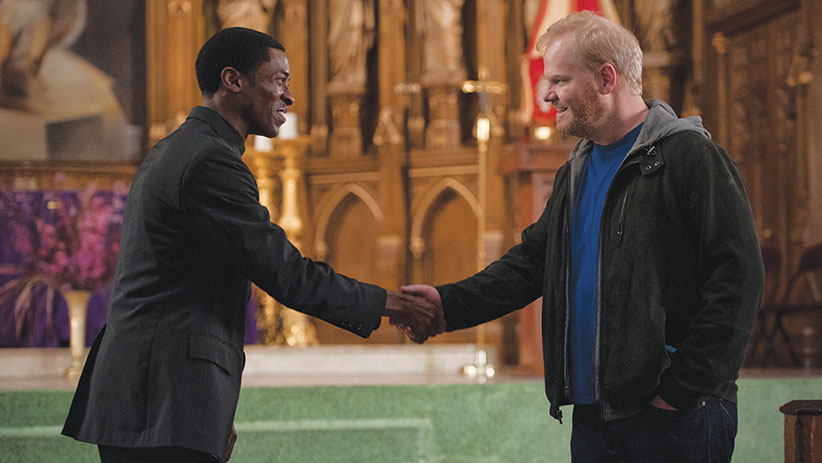
First, religious folks are not really as sheltered as people think. He makes this point first with an exchange from the Jim Gaffigan show in which Gaffigan is worried that local Catholic priest Father Nicholas will find his standup routine jarring:

Jim: Look, you may be exposed to some harsh language and sexual content.

Father Nicholas: I think I can handle it, Jim. When I was eight years old, I saw soldiers burn down my village.

Jim: Yeah, but was there cursing?

From here, MC extrapolates to the Book of Mormon Musical, which is all about a show (played to “Well-to-do New Yorkers, people who use “summer” as a verb.”) about how Mormon  missionaries (who sometimes actually, you know, go to Africa and live there for two years and eat the food and learn the  languages and dialects) are hopelessly naive and sheltered. Uh, ok.

MC is really, really right here. Involvement in a religious community–especially one like Mormonism–is going to bring you face-first into a lot of real, actual human experiences. The two-year missions that Mormon’s serve are one extreme example, but not an isolated one. MC has another, completely ordinary one:

“Sheltered” is whatever uncool people who don’t buy what we’re selling are. Sure, maybe you accompanied your dad to the hospital so that he could give a blessing of comfort to the old, dying sister you home teach. Maybe you heard her in such pain that you could barely stand to hear her breathe, but you stood there and sang her favorite hymn to her, out of tune, and she acted like it was the Mormon Tabernacle Choir.

But have you tried marijuana? Do you go to second base with your girlfriend? Pfffft. Then you don’t know what the “real world” is like.

What can I say to this, other than simply: amen and amen.

MC’s second point is where the apparent dischord comes in. He points out that, quite rightly, the point of a family is to shelter children. That’s what they are there for. But wait, didn’t we just say that religious people aren’t sheltered? Well, it all depends on what you mean by “sheltered.” If you mean living in an antiseptic world where you pay someone else to cook your food and do your dishes and maybe change your kids diapers, then no: religious folk are not generally sheltered. But if you mean having a secure place to come home to that is safe with parents who guard the threshold from dangers spiritual and physical? Then yes: religious folks are very, very good at sheltering their children as they should be.

Obviously it’s not as cut-and-dry as “all religious people are actually deep and all secular people are shallow”, but that’s actually closer to the truth than the current trendy view of who knows and does not know what really happens out there in the world.

The Lion and the Robin

Aslan, from The Chronicles of Narnia: The Lion, the Witch, and the Wardrobe

G. has posted a short allegory (I believe it is his own) for the necessity of the atonement about a lion and a robin. I really like it, and you should read it. It begins:

In the grove in the evening, the lion heard a great racket from a father Robin and his brood and went to investigate.

“Friend Robin,” the lion said, “why do you make a fuss?”

The rest is not long, and is worth your time.

CDC Study: The Myth of Poor Families and Fast Food

Another nugget of “conventional wisdom” bites the dust:

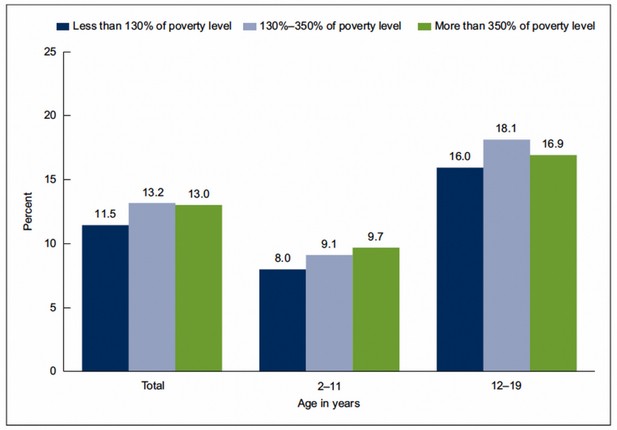
Back in 2011, a national study by a team at UC Davis concluded that as American salaries grow into the upper echelons of middle income, so does fast-food intake…Now a new study, this time by the Centers for Disease Control and Prevention, weighs in on the matter. While the national survey did show that on a given day, roughly one-third of American children will eat fast food, the breakdown among income levels is pretty even.

As Roberto Ferdman points out in The Washington Post, “it’s the poorest kids that tend to get the smallest share of their daily energy intake from Big Macs, Whoppers, Chicken McNuggets, and french fries.” With the lowest-income families suffering the most disproportionately in the national obesity epidemic, knowing what Americans eat is a crucial part of addressing the problem.

RCR: The Mormon Option

807 - The Mormon Option

My good friend Betsy VanDenBerghe has an excellent post up at Real Clear Religion: The Mormon Option. In the post, she builds off of Damon Linker’s experiences as a non-Mormon professor at BYU. Despite having to abide some very strict rules, Linker found that:

strangely enough . . . within a system of strict behavioral requirements, academic freedom flourished. “I was perfectly free to teach whatever I wanted in the classroom. And I did,” including the radical writings of everyone from Machiavelli to Rousseau to Nietzche and his suggestion that “God is dead.” When a singular complaint arose about a scandalous scene in Aristophanes’ The Clouds, the department chair let Linker know “that I had his support. There was no reprimand” — nor demand for trigger warnings or syllabus alterations.

VanDenBerghe suggests that what is true for Linker is also true for devout members of strict religions:

Outsiders associate behavioral guidelines with intellectual and emotional ones, but dismissing believers as incapable of empathizing with those outside their belief system usually comes from those who have never experienced the congregations they disparage. If they went inside, they’d discover a big and surprisingly diverse world of believers moving along the straight and narrow path.

In addition, she points out that if you’re looking for diversity the politically progressive mainline protestant denominations are not the way to go, since they “tend to be whiter, older, and more educated.” By contrast, “It’s American Catholics, Pentecostals, and evangelicals who are less white, younger, and more economically and educationally diverse.” And Mormons, with our population brimming with folks who have served 18- or 24-month mission to strange lands (from Albania to Alabama) is a group that is particularly accustomed to the reality that there are lots and lots of different kinds of people and different ways of living out there.

Hey, maybe Bernie Sanders’ welcome at Liberty University wasn’t such a fluke after all, eh?

The Fragile Beliefs of Terrorists

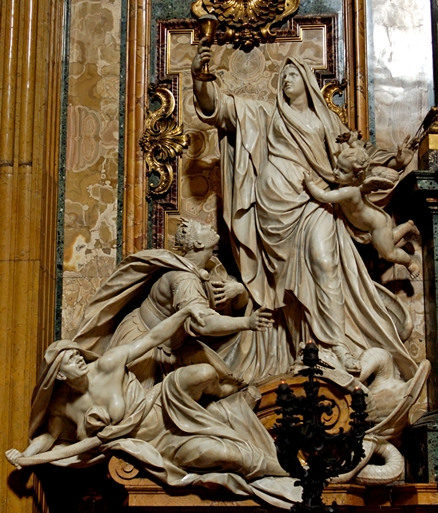
Triumph of Faith over Idolatry by Jean-Baptiste Théodon (Wikimedia Commons)

Since 9/11, it has been conventional wisdom among many on the left, and especially among the New Atheists, that religious conviction is bad, bad news. The logic is pretty straightforward: it takes a very high degree of religious conviction to kill yourself in the name of God. You have to really, really believe. Meanwhile, folks who don’t believe are unlikely to do anything extreme. So we’d all be a lot safer and more comfortable if religious folks would just sort of calm down.

The conventional response from religious folks is that, well: yeah, sometimes great faith makes people do acts of great evil. But it also makes people do acts of great heroism, right? Mother Theresa, right? This is a qualified defense at best. It says, in effect, that there really is a link between religious faith and extreme actions. It doesn’t actually show that these great acts of evil an good balance out, and there really isn’t any good reason to suspect that they should. What’s the exchange rate between an extremist terrorist with a nuclear weapon and an extremist nun with a desire to help poor people in Calcutta?

But maybe the central premise needs to be reconsidered. Maybe it’s not great faith that leads terrorists into extremism. Thus, Slovenian philosopher Slavoj Žižek in an article for the New Statesman:

It effectively may appear that the split between the permissive First World and the fundamentalist reaction to it runs more and more along the lines of the opposition between leading a long satisfying life full of material and cultural wealth, and dedicating one’s life to some transcendent Cause. Is this antagonism not the one between what Nietzsche called “passive” and “active” nihilism? We in the West are the Nietzschean Last Men, immersed in stupid daily pleasures, while the Muslim radicals are ready to risk everything, engaged in the struggle up to their self-destruction. William Butler Yeats’ “Second Coming” seems perfectly to render our present predicament: “The best lack all conviction, while the worst are full of passionate intensity.” This is an excellent description of the current split between anemic liberals and impassioned fundamentalists. “The best” are no longer able fully to engage, while “the worst” engage in racist, religious, sexist fanaticism.

However, do the terrorist fundamentalists really fit this description? What they obviously lack is a feature that is easy to discern in all authentic fundamentalists, from Tibetan Buddhists to the Amish in the US: the absence of resentment and envy, the deep indifference towards the non-believers’ way of life. If today’s so-called fundamentalists really believe they have found their way to Truth, why should they feel threatened by non-believers, why should they envy them? When a Buddhist encounters a Western hedonist, he hardly condemns. He just benevolently notes that the hedonist’s search for happiness is self-defeating. In contrast to true fundamentalists, the terrorist pseudo-fundamentalists are deeply bothered, intrigued, fascinated, by the sinful life of the non-believers. One can feel that, in fighting the sinful other, they are fighting their own temptation.

This is an important new way at looking at the intersection between faith and social stability. (Hat tip to Miles Kimball, who cited the article in his own blog post.)

Prejudice and Favoritism Don’t Cancel Out

Michael Derrick Hudson

An interesting story has been making the rounds. A guy named Michael Derrick Hudson was having trouble getting his poetry published. So he decided to use a pseudonym. That, in and of itself, is of course perfectly benign. But the pseudonym he picked was Yi-Fen Chou. So, after 40 rejections under his own name, he got another 9 under his Chinese-sounding pseudonym before landing the poem in an anthology.

You can read all the rest of the details via New York Magazine: What a Poetry Kerfuffle Can Teach Us About Bias.

Here are some lessons worth taking away. First, let’s not pretend that using the Chinese-sounding name didn’t help Hudson. Obviously it did. The numbers bear this out (a little), but so does common sense and this is born out by the testimony of the guy who picked out the poem for the anthology (he admits reading it in a different way because he assumed the author was Chinese, and therefore being more open to it.)

So, does this prove that white males are really the ones being oppressed?

No, it doesn’t. It illustrates something that should be obvious but for some reason isn’t: bias is local. When you’re applying for a job it really doesn’t matter what the aggregate level of bias in the industry is. It matters what your specific (potential) boss thinks. And this trend can vary. So, do (for example) homosexuals face discrimination? In the NFL: probably. In Hollywood: probably not. Being of Chinese descent may very well hurt if you’re running for nationally elected office (I’m speculating, but it’s reasonable) or competing for CEO. But it actually helps out if you’re tying to get published.

This should make us all be a little bit more cautious about making wide, sweeping claim about privilege and prejudice.

And one more thing: I don’t think that prejudice and favoritism cancel out. Being given favorable treatment in one area of your life does not somehow make prejudice that you face in another area of your life go away. Just something to consider.

The Solar System to Scale

811 - Space Shuttle Atlantis Viewed from the ISS
The launch of the Space Shuttle Atlantis, as soon from the ISS, is also a wonderful glimpse into the scale of space.

You have probably seen this video already because everyone is sharing it, but I had to share it too. I have always wanted to do exactly this: go out to some giant field and set up a scale model of the Solar System and just wander around and try to drink in the sheer scale of it all. Little did I know that, starting with an earth the size of a marble, you’re going to need 7 miles of empty space to do the setup to scale, and that’s without including Plutos’ orbit. (It only goes out as far as Uranus.)

I’d really love to see this done as a permanent installation somewhere. I want to spend an entire day walking around, watching the planets move, imagining the delicate art of sending tiny craft across immense gulfs of emptiness to deliver rovers (or astronauts!) to alien worlds.

(If you’re receiving this blog post via email, you’ll have to visit the site to watch the YouTube clip. Sorry, they don’t embed in the emails for some reason.)

T&S Post: “A woman is a woman no matter what, but manhood can be lost.”

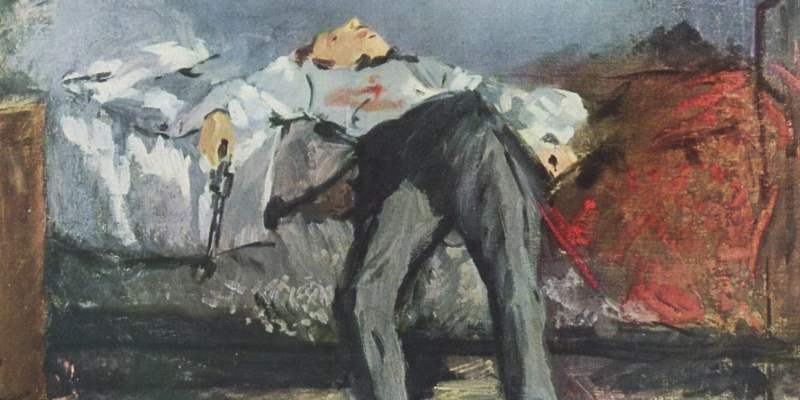
861 - The Suicide of Edouard Manet LARGE

In keeping with my renewed every-other-week schedule at T&S, I posted some speculations about theology and gender at Times and Seasons yesterday: “A woman is a woman no matter what, but manhood can be lost.” The article is about as popular as you’d expect, which is to say: not very.

I am reasonably certain that the rise of gender and sexuality politics in our culture is an opportunity for theological and cultural growth, but also that neither of the prevailing political attitudes are capable of revealing the lessons that are there to be learned. Social liberals are too committed to a view of human nature that is too shallow and superficial to do anyone any good. (In this, I’m basically echoing Pinker’s critique in The Blank Slate.) Social conservatives, I think, are doing a good job of holding onto important traditions that are necessary for a healthy society, but are also too willing to veer towards fearfulness that leads to bigotry on the one hand and prevents consideration of new explanations for why these traditions are important on the other.

This article is just another example of me trying to extricate myself a bit from this morass–without abandoning positions I think are important–and reach for new understandings of old truths.

Salon: Glenn Beck vs. Donald Trump

Note: the initial headline misattributed the story to Slate instead of Salon. My mistake.

Salon has an interesting article: Glenn Beck vs. Donald Trump: Why the wing-nut icon’s new war on the billionaire really matters.  It’s always a little hard to read analysis that is so overtly partisan, and the schadenfreude is dense in this article, but I do think it is important that Beck is taking a stand against Trump.

I have a soft spot for Beck. Unlike every other conservative pundit I’ve listened to, I think he’s really sincere, and I find that endearing even if I don’t actually agree with him a lot of the time. Last time I checked, for example, he was a big Cruz supporter and for me Trump, Cruz, and Huckabee sort of round out the Axis of Crazy within the GOP. Still, it is significant because Beck represents–or is supposed to represent–exactly the kind of radical, unthinking segment of the base that is supporting Trump.

I’m not sure exactly what this means, but it undermines the conventional “establishment vs. base” narrative that has been used to explain Trump’s rise. It’s also, to the extent that Beck can galvanize some of the base to actually oppose Trump meaningfully, a potential ray of hope. Because right now, the GOP could use any and every internal ally to displace Trump and put a grown-up back in charge. (It still shouldn’t be Cruz, though. Come on.)

Inequality and Efficiency: Not Caring vs. Having the “Wrong” Values

813 - Ultimatum Game

Slate has a write-up that is ostensibly about the mystery of rising income inequality in the United States (and the “tepid” response), but is in actual fact more interesting as a case study in how bias works.

The setup is simple: researchers conducted a variant of the venerable “ultimatum game:

The ultimatum game is a game in economic experiments. The first player (the proposer) receives a sum of money and proposes how to divide the sum between himself and another player. The second player (the responder) chooses to either accept or reject this proposal. If the second player accepts, the money is split according to the proposal. If the second player rejects, neither player receives any money. The game is typically played only once so that reciprocation is not an issue.

The twist in this case was that the researchers adjusted the rules so that giving money away was more or less effective. In some games, if you gave $1 to the other player[ref]Economists always refer to the participants as “players” even though the “games” in game theory are really not games at all.[/ref], the player would only get $0.10. In other cases, if you gave $1 away, the other player received $10. By looking at how much money people gave away vs. how how effective it was, the game purported to measure how the players valued equality vs. efficiency.

Let’s make this plain (more plain than the Slate piece) with a simple example where there’s initially $10 at stake. A player who values equality is going to try to have both players end up with the same amount of money. In a situation where there is low efficiency, they would give away about $9.00 to give the other player $0.90 and would keep $1.00 for themselves. This achieves equality, but it also means that both players (combined) have less than $2.00. In a high-efficiency scenario, they will give away $1.00 and the other player will get $10.00, leaving $9.00 for the original player. This means that the total amount of money (combined) is $19.00.

Now let’s look at a high-efficiency player. When giving is very inefficient, the player might give away $1.00, leaving the other player with $0.10 and keep $9.00. Now the two players have $9.10 (combined) whereas in the equality scenario, both players (combined) had just $2.00. When giving is very efficient, the player might give away $9.00, leaving the other player with $90.00 while they keep just $1.00. Now they players together have $91.00, while in the equality scenario the two players together had just $19.00.

In other words: a bias towards efficiency meant that the size of the pie available to both players might grow by roughly 500%.

Is that actually what happened in the results? I have no idea. The Slate article was vague. But it was more than just vague, it set up a really strange and forced dichotomy that suggests players had to value equality or… nothing.

Second paragraph:

But our results suggest that, at least when it comes to attitudes toward inequality, Fitzgerald is right: Elite Americans are not just middle-class people with more money. They display distinctive attitudes on basic moral and political questions concerning economic justice. Simply put, the rich place a much lower value on equality than the rest. What’s more, this lack of concern about inequality among the elite is not a partisan matter. [emphasis added]

Notice how this is not described as a trade-off between efficiency and equality. Even though that’s pretty much the entire point of the experiment, the Slate article treats efficiency as a non-issue beneath consideration, as you can see once again in the penultimate paragraph:

Our results thus shine a revealing light on American politics and policy. They suggest that the policy response to rising economic inequality lags so far behind the preferences of ordinary Americans for the simple reason that the elites who make policy—regardless of political party—just don’t care much about equality. [emphasis added]

This is a major problem because efficiency is a serious practical consideration. One obvious reason for this is the idea of externalities. Consider early-adopters. By definition, an early-adopter has to be relatively affluent in order to invest time and money in bleeding-edge products that don’t necessarily work that well and are quite expensive. The benefit to the rest of us, of course, is that by paying for the over-price, unstable versions of products, early-adopters ensure that the rest of us can buy the cheaper, more stable versions. This sounds frivolous, but something like it applies to virtually every technology that defines our modern existence, from the Internet to penicillin.

My point is not that I know the right way to balance efficiency (the size of the pie) with equality (the relative slices of the pie). My point is just that: it’s a tradeoff we have to make. We’re not going to do a very good job of having a reasonable, civil discussion about that trade off if we can’t even admit that it exists. (Looking at you, Slate.)