Why I Like Good Guys

2014-09-29 Michael Carpenter

That’s Michael Carpenter.[ref]Image by zmajtolovaj.[/ref] Michael Carpenter is my favorite character in the Dresden Files, which is my favorite series. He’s a Knight of the Cross, which means he’s one of three mortals chosen to wield one of the Swords of the Cross, each of which contains a nail from the Crucifixion. They oppose the Denarians–basically fallen angels–although their main job isn’t to conquer the Denarians, it’s to try and rescue humans that the Denarians trick and enslave to their will. Along the way, however, Michael can and does do battle with vampires, dragons, and any other force of darkness that threatens to harm the innocent.

All of that is pretty cool, but none of it gets to the heart of why I like Michael so much. I like him because he’s a devout Catholic. Because he’s a faithful husband. Because he’s a loving father. Because he doesn’t lie or curse, and because he is, in the end, a humble man who just wants to do the right thing because he sincerely trusts and loves his God and his neighbor. He is, in short, a goody-goody.

This type of hero is very rare. Outside of children’s literature (Narnia, or The Dark is Rising, or Harry Potter) and comic books (Superman or Captain America) this kind of hero is basically non-existent. In fact, the piece to which this post is a followup included a link to an article complaining that Captain America “is only interesting if he’s a prick.” Nice guys finish last in more ways than one, it would seem.

Don’t get me wrong: I’m not saying every hero should be a Boy Scout. Where would the world be without scoundrels and rogues? I’m not arguing against Han Solo and Malcom Reynolds!

Walker also wrote a great followup to my initial post called “Darker, Dearie. Much Darker”: Why I Don’t Like “Nice” Heroes in which he said:

I can connect with those who have fallen. I can root for them to repent, to be reconciled with friends and family, and to be forgiven. I personally connect with those who need redemption more than those who don’t seem to need it at all.

Walker’s absolutely right: the redemption narrative is a powerful one. So this post isn’t meant to contradict Walker’s piece. It’s just an alternative or a supplement. It explains why, for all the allure of the anti-hero in need of redemption or the scoundrel with no interest in being saved, my favorite heroes are the white knights.

2014-09-29 Plot Without ConflictLet me start with a technical note, however. In Western culture, plot is conflict-driven. This is such a deep cultural assumption that it’s one of those assumptions you don’t even know is an assumption until someone comes along and shows you that there are alternative ways of doing things. Does a fish know what “wet” means? Nope, not unless it has survived a stay on dry land and learned by contrast to understand the nature of its own existence. So it is with conflict-centric plot. If you don’t see an alternative, you don’t even know it’s what you’re swimming in.

So, as a comparison, I offer up kishōtenketsu which “describes the structure and development of classic Chinese, Korean and Japanese narratives.” There’s 4-panel comic at left as an example: it has plot, but no conflict. [ref]I got that comic from this post, which is well worth the read.[/ref]

The connection between conflict-driven plot and white knights is simple: you don’t necessarily need for your hero to make mistakes, but it certainly makes creating and sustaining conflict easier when they do. This means that Western literature is structurally biased against simplistic good guys. They aren’t impossible to work with, but they are–all else equal–a bit harder to handle.

I don’t think that this fully explains the dearth of goody-goody heroes, however. The same argument that suggests we need morally deficient heroes (to make questionable decisions and fuel conflict) suggests that we need intellectually deficient heroes (to make decisions that are questionable in a different sense of the word), and yet we manage to have intelligent heroes more often than white knights.

Rather than speculate on why our society seems to discredit good guys, however, I just want to say a bit about why I like them.

First of all: I can identify with them. Stick with me for a bit, however, because this might not be going in the direction that you think it is.

I’m the kind of person that people look at and generally think of as an annoying goody-goody.[ref]People who aren’t my fellow Mormons, btw. As a Mormon, I don’t stick out.[/ref] I’m deeply religious, I’ve never had alcohol, smoked a cigarette, or done any other drug (other than for surgery). I waited until marriage for sex. I don’t watch porn. And I’m fully aware that the way people react to a list of statements like that is some combination of disgust at my self-righteousness and pity for my repressiveness. In short: I’m unpopular in the same way and for the same reasons that straight-arrow heroes are unpopular.[ref]In one memorable example a friend asked for my advice on a moral question, I gave a very mild but honest response, and his response was “You really have a way of making people feel like s**t.” Sorry, bro, what do you want me to say? I only suggested you should stop cheating on your girlfriend. I didn’t even bring up waiting until marriage…[/ref]

The important thing is that I identify with the way other people dislike the Boy Scout, but I don’t in any way identify with being morally superior, because I’m acutely aware that I’m not. Sure, I’ve never done drugs, but folks like John Scalzi rarely drink not as a matter of moral principle but because they don’t like to experience a loss of control. That’s not a moral decision one way or the other; it’s a combination of a personal preference and self-preservation. And the reality is that a lot of the vices that I avoided, I avoided for the same reason: personal preference and/or risk avoidance. Sometimes I chose not to do things not because I had such great principles, but because I was scared to do them. That’s not very heroic.

Motivations are complicated things. Sometimes I want to be moral because I want people to trust me and because I want to maintain a favorable self-image. So the moral action can be motivated by selfishness and hedonism. Sometimes I want to avoid destructive addictions because I want my children to have a happy home and stable family. So self-interest can be altruistic as well. I can’t figure out my own motives, so how could I presume to know anyone else’s?

I also realize that I’ve been very lucky. I come from a good, stable home with parents who taught me well and modeled good behavior in their own lives. I didn’t suffer any of the tragedies and hardships that so can damage innocent people and lead them to make bad decisions of their own. I know from research and second-hand experience that these kinds of tragedies are horrifically common. I was just lucky.[ref]I was primarily lucky in the sense of having great parents. They worked hard and sacrificed a lot to give me these advantages.[/ref] The safety, training, and support I received came to me through no merit or choice of my own. There’s no credit in that, either.

So when I see a good guy on screen or in a book who colors mostly inside the lines, I empathize with them. I know that they will appear boring, self-righteous, and shallow to a lot of people because that’s how I come across to a lot of people. I also assume that they have complex reasons for their behavior that are not always good reasons. And so I tend to identify with them both as someone the world often thinks is weird and as someone who has their own struggles and failings to deal with, even if they are sometimes more internal.

That’s another technical point, by the way. Characters who struggle a lot internally don’t often convey well on-screen. So the bias against goody-goodies is strongest in television and movies, and a little bit weaker in books that have a chance to get inside the character’s head.

The thing is, everyone who tries to do the right thing struggles. In the Dresden Files the main character is Harry Dresden. He’s an orphan who was abused as a kid and who–partially based on personality and partially based on his experiences–has serious authority issues, unreasonable levels of petty stubbornness, and a predilection for anger and violence. He struggles all the time with his demons, and sometime he loses and the result is kicking off a supernatural war.[ref]See? Bad decisions fuel conflict-driven plots.[/ref] If you  just glance at Michael Carpenter, he always seems to make the right call. But if you look again you can see that it’s not easy for him. He’s doesn’t mindlessly follow the rules without any quibbles. He has to make his own decision about how to interpret them, how far to bend them, and when to follow them even though it puts him or even his family at risk. He deals with ambiguity and guilt and shame and sacrifice, too.[ref]The fact that Jim Butcher created an overtly religious Boy Scout and didn’t turn him into a self-righteous jerk was one of the first things that really made me start taking the Dresden Files seriously.[/ref]

So part of what I’m getting at is simply this: white knights need redemption, too.

Back when I first started Difficult Run and ran it solo for a while in 2012, I wrote on the “About” page that “I am the prodigal son’s older brother.” He’s the one I identify with the most in that story.  Superficially he’s the good guy because he he didn’t run off and blow his inheritance on booze and hookers and end up starving and eating with the pigs, but if you look deeper he’s the same as his younger brother. The prodigal son’s primary failing was a lack of love and loyalty for his family. He wanted the money (his inheritance) more than he wanted his home, and everything else follows from that. Sure, the elder brother stayed home, but when he sees the party everyone is throwing for the young son, he starts whining and complaining. Those complaints show is that he is also pretty contemptuous of his home and his father’s love.

That’s why the father’s response to his older son is so incredibly tragic: “And he said unto him, Son, thou art ever with me, and all that I have is thine.”[ref]Luke 15:31[/ref]

In other words, he’s saying that if you really cared about me, then you would think that the last several years you spent living with me in comfort and peace while your brother was hitting rock bottom were the reward. Did the elder brother stay home because he was loyal, or because he was afraid? Did he love his dad, or did he think he was doing him a favor? Was he interested in doing the right thing for its own sake, or because he thought he’ be rewarded? In the end, the fact that he’s jealous of his younger brother shows that he is essentially the same as his younger brother. Just a little more risk-averse. Like me.

We all need heroes we can relate to. For me, that means white knights. Not because they are better, not because they think they are better, and not because maybe other people think they are better. But because they aren’t.
 

Cronyism in Hong Kong

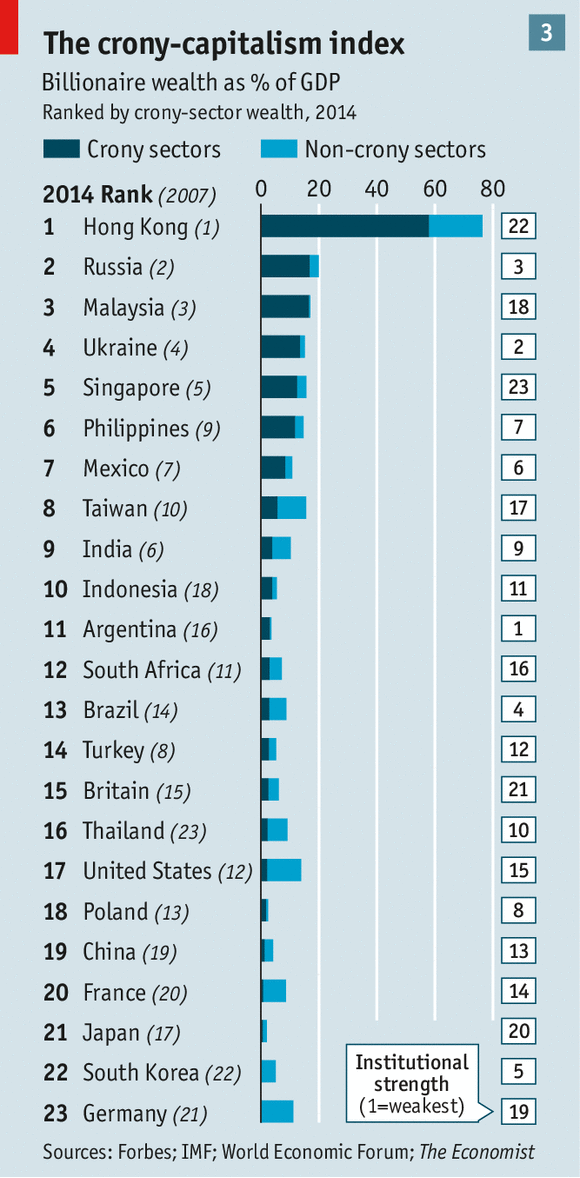
With the Hong Kong protests still raging–protests that were possibly inspired by the Occupy movement in the U.S.–I was reminded of the “crony-capitalism index” put out by The Economist earier this year. Check out who tops the chart:

Now, the methodology of the index is admittedly crude (even recognized by The Economist itself), especially since it concentrates on rich individuals and “rent-heavy” industries. But worth thinking about.

What’s Behind Rising Police Militarization and Violence?

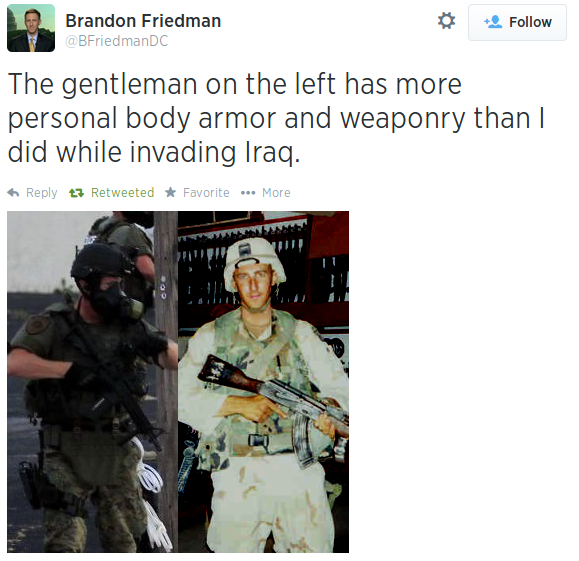
Obviously one of the big discussions since Ferguson has been race relations. But another big discussion was prompted not by the initial shooting of Michael Brown, but by the heavy-handed response of the police to subsequent demonstrations. In particular, there were a lot of pics of the heavily-armed police with comments from Iraq and Afhganistan vets saying, basically, that the cops in Ferguson had heavier body armor and weapons then our front-line combat troops in an actual war zone.

2014-10-01 Ferguson Police Iraq Comparison

There’s a lot going on, including historical reasons why police departments in black neighborhoods tend to be staffed by white officers from other neighborhoods, but one of the biggest problems fueling the rising militarization of police forces is the message the the world is becoming a scary, threatening, hostile police for cops in some new and dangerous way. In a conversation with a friend on Facebook, I decided to do some really quick back-of-the-envelope calculations to determine if there was any evidence of the idea that cops today face new threats that make their jobs more dangerous in the past. I found some police mortality data here and stuck it in Excel. Then I did look backs for 10-, 20-, 30-, 40-, and 50-year periods with a simple linear trend. It was clearly negative in every single case. You want to get police death tolls as low as they have been in recent years? You have to go literally back to the 1950s. And that’s not adjusted for population, so it was actually probably safer back then, too.

Meanwhile, the list of botched, military-style police raids is growing. To give you an anecdote, Salon covered a story in June of a SWAT raid where the cops tossed a flashbang grenade into a two-year-old’s crib, blowing a hole in his chest and nearly killing him. No drugs were found in the house, and the target of the raid wasn’t even present. The good news is that the little boy survived. The bad news is that–after promising to pay for the nearly $1,000,000 in medical expenses required to save his life–the Georgia county changed their mind and is refusing to help at all. Lest you think that this is just one rare, isolated incident, the CATO Institute has an interactive map of hundreds of botched SWAT raids from across the country.

The most recent story is of a South Carolina state trooper panicking and shooting an unarmed man in the back when the man tried to get his wallet to show his ID as the trooper had requested. The state trooper has already been fired and faces criminal charges, and luckily the unarmed man survived. Radley Balko wrote an article about this (A (sort of) defense of South Carolina state trooper Sean Groubert) in which he made a lot of the same points I had already uncovered: police fatalities are trending downwards. Despite this, however, rhetoric about danger and violence is on the rise and police training is increasingly focused on aggressive violence instead of de-escalation. Balko writes:

Yesterday I wrote about another police shooting, the killing of John Crawford in a Beavercreek, Ohio, Walmart. I suggested that the incident may have been due to the sensationalization of mass shooting incidents, and the misperception that such incidents are common. After my post went up, the Guardian reported that indeed, the officer who shot Crawford had recently attended an a “pep talk” for police about responding to calls that may involve an active shooter.

He goes on to describe the “pep talk” as a highly manipulative presentation in which police officers were encouraged to imagine that their own family members were at risk unless they acted with “speed, surprise and aggressiveness” to take out the threat. Even if, as the case happened to be, the threat was a man holding an empty BB gun.

So here’s one of the big problems: humans are really, really bad at dealing with risk in a rational way. Mass shootings are exceptionally rare events,[ref]Although they might be less rare, thanks to all the attention they get.[/ref] but they are horrific and grab our attention the same way that, for example, shark attacks do. This isn’t to say no changes were needed, however. During the Columbine shootings, the police waited for hours while victims bled to death because doctrine at the time called for establishing a secure perimeter and waiting for overwhelming force. This was because the threat was assumed to be some kind of hostage situation, not a murder-suicide killing spree. Since that time, cops have adapted to new policies that call for first responders to engage immediately (even without backup) in the event of in-progress killing. That’s good[ref]It’s also heroic.[/ref], but Balko’s article suggests we’ve gone too far in that direction and are training cops to jump to the worst possible assumption and pull the trigger. Similarly, and this is my own hypothesis, but it seems as though necessary social reactions to ease the trauma of officers who have used deadly force[ref]Dave Grossman, in On Killing: The Psychological Cost of Learning to Kill in War and Society, describes the important social functions that are necessary to help combat veterans reintegrate into peaceful society, for example.[/ref] may also have gone overboard:


In its damning report on the Albuquerque Police Department last April, for example, the Justice Department noted that the city’s police “too often use deadly force in an unconstitutional manner in their use of firearms,” “often use deadly force in circumstances where there is no imminent threat of death or serious body harm,” and that this was caused by serious deficiencies in training. In fact, the DOJ report found that officers who did use improper deadly force were often held up as heroes or examples within the department. [emphasis added]

But there’s another possibility that Balko doesn’t consider, and that is that the cops might be responding to a very real increase in violence despite the lack of an increase in fatalities. The problem here is a subtle one, but it’s one that’s been reported before. Essentially: we tend to measure violence in terms of fatalities, but as medical technology improves you can end up getting an apparent decrease in violence (fatalities) even as actual violence is increasing (number of gunshot victims, for example). This isn’t hypothetical. As the Wall Street Journal has reported:

The number of U.S. homicides has been falling for two decades, but America has become no less violent. Crime experts who attribute the drop in killings to better policing or an aging population fail to square the image of a more tranquil nation with this statistic: The reported number of people treated for gunshot attacks from 2001 to 2011 has grown by nearly half.

So the murder rate is going down, but the number of victims of gun violence are going up. And the driver for that is medical technology:

Emergency-room physicians who treat victims of gunshot and knife attacks say more people survive because of the spread of hospital trauma centers—which specialize in treating severe injuries—the increased use of helicopters to ferry patients, better training of first-responders and lessons gleaned from the battlefields of Iraq and Afghanistan.

“Our experience is we are saving many more people we didn’t save even 10 years ago,” said C. William Schwab, director of the Firearm and Injury Center at the University of Pennsylvania and the professor of surgery at the Hospital of the University of Pennsylvania.

It’s possible–and this is just my speculation–that the same trend could be taking place to an even greater degree among police officers. The trend of greater survival after gunshot would be based primarily on two things: 1. superior equipment (e.g. ballistic vests) and 2. superior training. In other words, it’s possible that the wide perception among police officers that they face a more hostile and dangerous world may be true even if the raw statistics on fatality don’t bear it out because measuring just fatality is missing the underlying violence.

I don’t have the data to draw conclusions on this, but there’s definitely enough evidence that commentators like Balko might want to be more cautious in their dismissal of the concerns of LEOs and the easy conclusion that “By most any measure, the United States is less dangerous than it’s been since the 1950s.” The truth might not be so simple, and on an issue this important we’ve got to dig a little deeper and find out what is really going on.

Problems in Higher Education

Over at alternet, a liberal/progessive news source, there is an article about the demise of higher education. This author immediately set off my loony-toons indicator with her “big business is secretly subverting higher education” conspiracy, but even beyond that I think most of her points can be directly argued against.  The problems she brings up (if they are problems at all) cannot simply be fixed by 1. remembering that higher education is about expanding our minds and 2. getting more funding for our schools (but no funding from corporations!)  However, she does make a few reasonable observations.

beer-pong
We’re just here to expand our minds.

1. Defunding education:

“For example, in the University of Washington school system, state funding for schools decreased as a percentage of total public education budgets from 82% in 1989 to 51% in 2011.” That’s a loss of more than a third of its public funding.” (Lone quotation was original to text). Just because the percentage of the budget is decreased, does not mean the amount of money going to schools has decreased. For instance, if the funding for public education doubled from 1989 to 2011 (this is hypothetical), then that means funding to schools actually increased over that time period by 25%. (Statistics!!) But we should also seriously question where public education funds are going, if not to schools. I don’t believe Washington state, a known liberal state, is defunding its schools for “corporatism” if it is defunding its schools at all, it’s probably just wasting that extra money, which is on to the next point.

“Newfield explains that much of the motive behind conservative advocacy for defunding of public education is racial, pro-corporate and anti-protest in nature.” This is a huge jump to conclusions. How many elite and liberal schools have to force racial diversity on their campuses? Higher education is, in general, an elite white man’s game (or with current statistics, white woman’s) and to claim that it’s different in that regard to corporate America, or that it’s the fault of conservative forces outside the institution, is ridiculous. To immediately claim a conservative racist reason may be easy, but it has no justification.

humanities-vs-Science

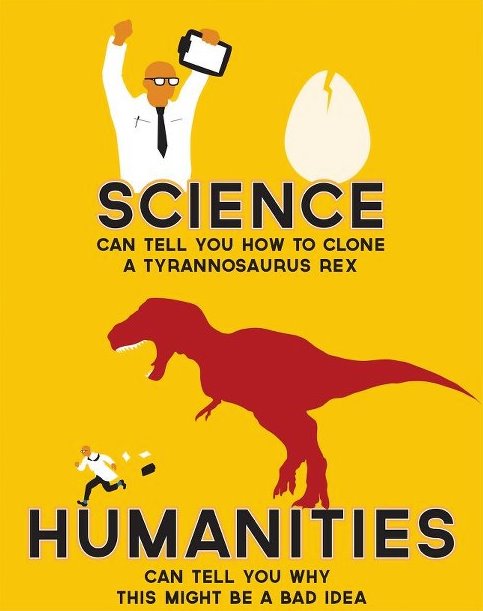
Also, it’s offensive that this author tries to claim that only humanities “train[s] and expand[s] the mind”. Nothing teaches you to think like mathematics and logic, which are also practical in the job market. As nice as it is to think about art, philosophy, and gender studies, those aren’t actually useful skills to most jobs. Trumpeting liberal arts education over any practical education is basically saying “higher education isn’t for getting a job, it’s for learning about culture.” That’s all well and good unless you’re in a suffering job market at graduation time. [ref]I have only attended liberal arts universities (except one very long semester at UM) and specifically went to a Humanities specialty high school program because I knew I would major in the math in college, and I wanted to be well-rounded. I like Humanities, but for most people it can never be more than a hobby. And it’s usually a rich person’s hobby.[/ref] And to deny the important ways science and mathematics teaches you to think is hurting our students, her acclaimed era of liberal arts education in the 50s and 60s would have required much more in science and math than universities require today.

2. Deprofessionalize and impoverish the professors (and continue to create a surplus of underemployed and unemployed Ph.D.s).

Oh, this gets me. Why are there a surplus of PhDs? Because people get PhDs in things like philosophy, art, and gender studies. Good luck finding a job in gender studies outside of lobbying. You know why there are PhDs, even in STEM, that will work for adjunct pay (and please note, adjuncts get paid less than graduate students because they have no unions)? Because people get PhDs and then refuse to work outside of academia [ref]This is my goal, so I feel for them.[/ref]  (or have degrees in subjects where they can’t possibly get a job outside of academia).There is a limit to the number of professors we can have at our universities. And at most universities with graduate programs, the professors only have to teach 1 class a semester! We could solve the problem of adjunct pay, by getting rid of adjuncts all together and making professors teach at least 2 classes a semester. But then there would be even fewer jobs in academia for all those PhDs who refuse to get other jobs. It’s not a pretty picture, but corporatism/universities aren’t doing this on their own.

3. Move in a managerial/administrative class that takes over governance of the university.

“The money wasn’t saved [by hiring adjuncts], because it was simply re-allocated to administrative salaries, coach salaries and outrageous university president salaries.” OK, I’m totally with this lady here, and may I also add outrageous housing, athletic, and dining facilities. This point is spot on. This is a huge problem not just in higher education, but also in K-12. The problem is more complex though, it seems the more we pour into schools, the more bloated our administrations get. Consider, again a hypothetical, the example of doubling our school budgets. If we have 50% to administration and the rest to teaching, and then we double our budgets, but give our administration 62.5%, we have increased our teaching budgets by 50% (even though their share now is only 37.5% of the total), but those administrators are still making out even better. I don’t know if this is exactly how it happens, but more funding can easily lead to this. Frugality whenever it comes to non-teaching school projects and administration is the solution. Conservatives believe bloated administration is a reason to cut funding, but unfortunately the administration decides where those cuts actually take place None of the funding “problems” can begin to be fixed without first substantially fixing administration internally.

4. Move in corporate culture and corporate money.

“When corporate money floods the universities, corporate values replace academic values. As we said before, humanities get defunded and the business school gets tons of money.” I do find business school to be particularly insidious, but that’s probably because I’m an introvert in computer science who doesn’t understand the need to go to school for schmoozing. I digress. I’m not really sure the problem with businesses funding business schools? Business schools cost a lot (due to supply and demand in the market) and if corporate America takes up part of the tab, doesn’t that help with funding our schools – less to take away from the Arts and Sciences? But then the author moves directly into her point that anything that is non-Humanities is not mind-expanding and not important to higher education, so businesses should only be funding humanities?

“Serious issues of ethics begin to develop when corporate money begins to make donations and form partnerships with science departments – where that money buys influence regarding not only the kinds of research being done but the outcomes of that research.” Sure, this is a problem, if you view it in the most sinister way possible. But guess what, if corporate money isn’t funding our science research, the government is. Let’s not pretend that government has no self- or political-interests.  I’m sure I could find a large swath of college-educated people across the country who would shudder at the idea of George W. Bush once upon a time being in charge of our university science research.[ref]Lots of research in the sciences continues to be funded by both the government and scary places like Google, Intel, and Microsoft. (sarcasm) [/ref] And again,this corporate money helps the funding problem. And all the research coming out of America’s universities (in the sciences) is highly peer-reviewed, even by people who are funded by other corporate or government interests.

5. Destroy the students.

graduate

“Instead, more and more universities have core curriculum which dictates a large portion of the course of study, in which the majority of classes are administrative-designed “common syllabi” courses, taught by an army of underpaid, part-time faculty in a model that more closely resembles a factory or the industrial kitchen of a fast-food restaurant than an institution of higher learning.” My liberal arts university had a lot of core curriculum. In fact, as a math major, it was because of this core curriculum that I got a “mind-expanding” experience in philosophy, literature, poetry, sociology, history, theatre, and dance. But even if we only consider big state schools, I’m really not going to cry over here about all the sociology majors who also have to take a science and calculus, or, heaven forbid, statistics. Yes, engineering departments may churn out a bunch of over-processed engineer-bots, but those kids are all getting jobs (I know, according to the author, getting a job is not the point. Unfortunately I did not, and I believe most other students did not (by the author’s next point, even), grow up in a family rich enough to allow me the freedom to not consider my job opportunities upon graduation).

“You make college so insanely unaffordable that only the wealthiest students from the wealthiest of families can afford to go to the school debt-free.” Government subsidized loans are a form of government funding. It may put most of the burden on the student, but as someone who has unsubsidized loans, those interest rates can be substantial. I read a comment on an article somewhere that “if the government was giving out $500 loans for a loaf a bread, bread would start to cost $500.” And this all hearkens back to administrations building huge housing, athletic, dining, and lounge facilities. If college was just about class and a place to study, sleep, and keep our stuff, college could be a lot cheaper. With the loans and student expectations feeding off each other, it becomes a downward cycle of unaffordability.

donations

So, yes, there are problems in bloated administration and student costs at universities. But this isn’t some kind of corporate take down of navel-gazing education. Administration is a problem with colleges, as organizations themselves, not because of conservative or corporate America. And the burden of cost is partially on all Americans – for raising kids who want the best and prettiest dorm rooms (private bathrooms, please), exercise facilities, dining experiences, and football teams to go along with expanding their minds. [ref]I’d really like to see a study of current college students ranking the importance of partying/getting drunk versus expanding their minds while at college.[/ref] However, more funding will not directly fix these problems, and may only make the problems worse. With good peer review, outside funding is not going to warp our research institutions. And telling kids that they should consider job prospects (and that PhDs in some subjects are nothing more than mind-expanding hobbies) will not pervert a good liberal arts institution.

“Son, Men Don’t Get Raped”

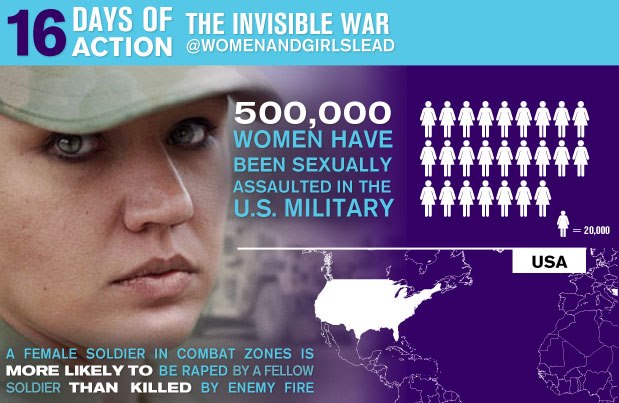
The documentary The Invisible War made waves a couple years ago by tackling the subject of sexual assault within the U.S. military, largely focusing on female victims. A recent issue of GQ has a disturbing and heartbreaking article focused solely on male victims:

Sexual assault is alarmingly common in the U.S. military, and more than half of the victims are men. According to the Pentagon, thirty-eight military men are sexually assaulted every single day. These are the stories you never hear–because the culprits almost always go free, the survivors rarely speak, and no one in the military or Congress has done enough to stop it.

…The moment a man enlists in the United States armed forces, his chances of being sexually assaulted increase by a factor of ten. Women, of course, are much more likely to be victims of military sexual trauma (MST), but far fewer of them enlist. In fact, more military men are assaulted than women—nearly 14,000 in 2012 alone. Prior to the repeal of “Don’t ask, don’t tell” in 2011, male-on-male-rape victims could actually be discharged for having engaged in homosexual conduct. That’s no longer the case—but the numbers show that men are still afraid to report being sexually assaulted.

Military culture is built upon a tenuous balance of aggression and obedience. The potential for sexual violence exists whenever there is too much of either. New recruits, stripped of their free will, cannot question authority. A certain kind of officer demands sex from underlings in the same way he demands they pick up his laundry. A certain kind of recruit rapes his peer in a sick mimicry of the power structure: I own you totally.“One of the myths is that the perpetrators identify as gay, which is by and large not the case,” says James Asbrand, a psychologist with the Salt Lake City VA’s PTSD clinical team. “It’s not about the sex. It’s about power and control.”[ref]I think this is an excellent companion piece to Hanna Rosin’s Slate piece on male rape earlier this year.[/ref]

The title of the article captures this brutal reality: “Son, Men Don’t Get Raped.”

First Things: Ruthless Optimism

2014-09-29 First Things

I neglected to mention this a few days ago, but First Things ran a post I wrote about Mormonism’s tendency–historical, cultural, and perhaps theological–towards “ruthless optimism.” It’s a piece that meant a lot to me, and I was really happy to see it find such a great home. I’ve even seen it mentioned a few times from other folks since it came out, including a nod from Dan Peterson on his Patheos blog and a mention at the Cultural Hall podcast. So, if you haven’t read it yet, you might want to give it a read.

Sameness or Sexism

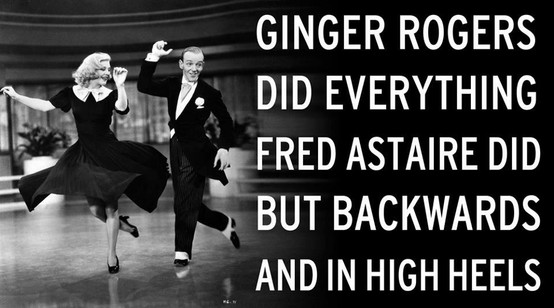
2014-09-24 Ginger Rogers

Just came across a blog post by Patrick Rothfuss that made me a little sad. Here’s the relevant portion:

Today Oot came up to me and asked me if I’d like to play a game.

“What kind of a game?” I asked him.

“Oh you know,” he explains, sounding very matter-of-fact. “A guy game. Because we’re both guys.”…

[T]his stuff is insidious… This constant, low-grade sexism is everywhere. It sneaks in.

I’m skipping some text, but it really is the case that Rothfuss goes straight to sexism without any other statement from his son at all. A distinction is drawn between guy games and girl games and that alone is the basis for crying sexism.

So let’s get a couple of things straight. First: the presumption that any gender difference is a form of discrimination or sexism is pernicious. There really are differences between the sexes, and refusing to acknowledge those differences will hurt someone. Since I’m responding to a particularly extreme view, I can pick particularly easy examples to illustrate this point. If you deny physiological differences between boys and girls, then there’s no basis for girl- and boy-only versions of sports. No WNBA aside the NBA and no USWNST aside the USMNST. Obviously, in sports, denial of stereotypical differences would be mostly bad for girls. And, although there’s still controversy, an increasingly large number of people believe that denial of differences in education are mostly bad for boys. Wherever there are significant differences between male and female, and there are at least some such differences, denying those differences will do at least some damage to boys, girls, or both.

Second: a big motivator for calling out sexism is that doing so is a powerful cultural signifier. If you want to be popular with the right sort of people–and if the right sort of people are intellectual, progressive, etc.–then you write about sexism. There’s a cadre of sci-fi and fantasy authors in particular (Patrick Rothfuss, John Scalzi, Jim Hines, and Mary Robinette Kowal all come to mind) who regularly use their prominent blogging voices to personally weigh in on this issue. I’m sure that a lot of their motivation is genuine, but it would be foolish to ignore the role that displaying in-group status has. Meanwhile, it’s easy to find similar cadres of sci-fi and fantasy authors (notably Larry Correia) who do the exact same thing from the opposite end of the spectrum.[ref]The values they espouse are different, but the process of subsuming values as mere symbols of in-group status to maintain tribal boundaries is the same.[/ref] It’s bad because it’s polarizing, and it’s downright creepy because of the overt religiousness of so much of the language. White male privilege is the new original sin:

It’s like trying to keep dust out of your house. You can do a lot, but ultimately, *you* are one of the main reasons there’s dust. You track it in on your clothes without knowing it. And even if you somehow managed to avoid that, you’d still shed skin cells. Even if you don’t want to.

Third, the fact that discussion of sexism functions so prominently as a means of expressing tribal loyalty means that there’s enormous pressure to discard nuance. Every instance of sexism you can find to write about in a poignant and self-aware way will raise your status. So there’s a strong incentive to (1) see sexism everywhere and (2) not think too critically about any given potential instance. People who think about these things in more detail will protest that I’m taking a kind of straw man because virtually no feminist who’s thinking and writing seriously about the issue is going to take the extreme position that there are no gender differences or that we should ignore the gender differences that exist. No one seriously wants to merge the USWNST and the USMNST, right? I get that. I’m not trying to paint all social liberals with the brush of this one blog post by a highly gifted author with (to my knowledge) no actual expertise or training in sociology, anthropology, women’s studies, etc. What I want to show, instead, is the way that potentially usefully sophisticated and productive critiques of society can be subverted by the gravitational pull of popularity.

Of course this applies to both sides of the political spectrum. There’s an incessant gravitational pull towards extremism the moment you declare an allegiance to a particular ideology. It becomes an arms race to see who can show they are more committed than their fellow partisans. It also ensures that opposed ideologies have a steady stream of prominent but incompetent spokespersons who constantly pump out a dumbed-down, inflammatory version of the ideology to keep the other side’s anger and righteousness sufficiently aroused. As someone who is staunchly conservative in their beliefs, I am in no way immune to these effects, but my hope is that writing about the non-partisan aspect of the question as I’ve tried to do in this post can suck some of the oxygen out of the partisan flamewar.

There is a fourth and last point, and it’s an important one. Nothing in this post should be construed in any way as an argument that Patrick Rothfuss is a bad person or a bad parent. The biggest reason for that is that judging him on such grand scale based on one blog post would be lunacy. I don’t know him personally, and even if I did I would still not have any basis for forming a judgment like that. Honestly, my impression of Rothfuss as person and parent based on that blog post is rather high. Parents always get a lot of things wrong. The most important thing we can do, I believe, is try sincerely to get it right. Rothfuss sounds like a father who is really trying, and I respect that immensely. I can say no better for myself. Besides, when all the angst was said and done, he went and played with his kid. As far as parenting goes, that’s all that really mattered in that blog post.

World Competitiveness Rankings 2014

The IMD World Competitiveness Center released their 2014 rankings earlier this year. The top ten countries are:

  1. USA
  2. Switzerland
  3. Singapore
  4. Hong Kong
  5. Sweden
  6. Germany
  7. Canada
  8. UAE
  9. Denmark
  10. Norway

These rankings are based on four main factors (which are further divided):

  • Economic Performance
  • Government Efficiency
  • Business Efficiency
  • Infrastructure


Worth checking out (if you’re into that kind of thing).

The Slow Hunch: “…The Sounds of the Big Blackfoot River and a Four-Count Rhythm…”

fly fish

I watched Robert Redford’s film A River Runs Through It for the first time last week. The film was absolutely gorgeous to look at, though admittedly dull. However, the narration from portions of the original novella left me a lot to chew on and I ended up reading the story over the course of the following week. While there are many beautiful elements of the story, for my purposes, I couldn’t help but notice the underlying concept of the sacred in the mundane. Crafts and tasks, whether for hobbies or work, can be transformed into an art. And grace can be manifested through art.

This is the topic of my latest post at The Slow Hunch. Check it out.

Neil deGrasse Tyson: Saint of Scientism

2014-09-22 NDT
Doesn’t this look like it could be a screen shot of a televangelist?


The overtly religious behavior of supposedly secular, anti-religious opponents is becoming increasingly obvious, but the reaction to revelations of Neil deGrasse Tyson’s plagiarism are surprising even to me. This, my friends, is what happens when you tip a sacred cow.

The story comes from Sean Davis by way of The Federalist. Davis has done some digging and has found that many of the punchiest and most perfect quotes Tyson uses to excoriate religious believers who don’t grasp the magnificence of science are punchy and perfect because he made them up.

The fabrications were not a one-off thing. They were deliberate and calculated, crafted with one goal in mind: to elevate Tyson, and by extension his audience, at the expense of know-nothing, knuckle-dragging nutjobs who hate science. Tyson targeted journalists, members of Congress, even former President George W. Bush. And what was their crime? They were guilty of rejecting science, according to Tyson.

There’s only one problem. None of the straw man quotes that Tyson uses to tear them down are real. The quote about the numerically illiterate newspaper headline? Fabricated. The quote about a member of Congress who said he had changed his views 360 degrees? It doesn’t exist. That time a U.S. president said “Our God is the God who named the stars” as a way of dividing Judeo-Christian beliefs from Islamic beliefs? It never happened.

That’s already a pretty interesting story, but before I had a chance to write about the other shoe dropped. Folks, naturally enough, started adding this information to Tyson’s Wikipedia page. This is pretty standard fare: whenever a person with a Wikipedia entry gets connected to some major controversy, there’s usually a section in their entry dedicated to discussing the charges. But, in this case, Wikipedia editors did not take kindly to anyone besmirching the honor of their patron saint!

According to a review of the edit history of Tyson’s page, one long-time Wikipedia editor deleted an entire pending section summarizing the issue of Tyson’s fabricated quotes. Another editor attempted to insert a brief mention of Tyson’s fabrication of the George W. Bush quote. That mention was also deleted. When it was reinserted, it was deleted yet again by an editor who describes himself as a childless progressive and an apostle of Daily Kos (h/t @kerpen)… Literally every single mention of Tyson’s history of fabricating quotes has been removed from Tyson’s Wikipedia page.

The only thing possibly worse than the fanatical desire to protect Tyson’s image from reality is the viciousness with which Davis, for daring his sacrilege, is pilloried by his opponents. It is, as he describes, overtly religious.

These lovers of science don’t actually love science, because science requires you to go where the evidence takes you, even if it goes against your original hypothesis. What many of Tyson’s cultists really like is the notion that one can become more intelligent via osmosis — that you can become as smart and as credentialed as Tyson by merely clapping like a seal at whatever he says, as long as what he says fits the political worldview of your average progressive liberal.

Davis’s analysis is particular interesting from a Mormon perspective, because the Book of Mormon closely identifies false prophets with flattery. Examples:

  • And he [Sherem] preached many things which were flattering unto the people; and this he did that he might overthrow the doctrine of Christ. – Jacob 7:2
  • Yea, and [the people] also became idolatrous, because they were deceived by the vain and flattering words of the king and priests; for they did speak flattering things unto them. – Mosiah 11:5
  • And [Nehor]  had gone about among the people, preaching to them that which he termed to be the word of God, bearing down against the church; declaring unto the people that every priest and teacher ought to become popular; – Alma 1:1
  • But behold, it is better that thy soul should be lost than that thou shouldst be the means of bringing many souls down to destruction, by thy lying and by thy flattering words; – Alma 30:47 (This is Alma speaking to Korihor, another false prophet)

It’s not just a generally religious template that Tyson is enacting. It’s some of the worst religion has to offer: the promise that if you give a prophet loyalty this means you are superior to your neighbors. It’s a message seductive as it is sinister.