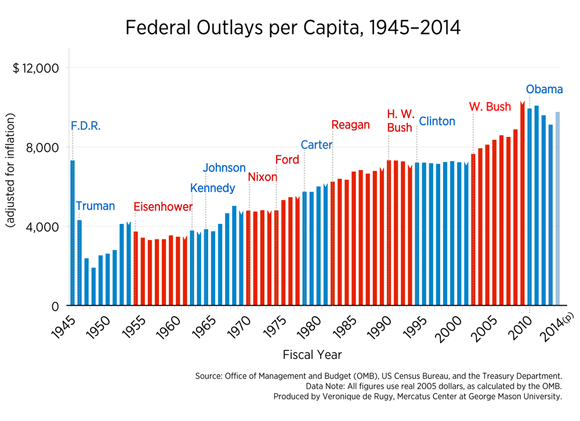
Economist Veronique de Rugy of the Mercatus Center at George Mason University provides the depressing chart above. Federal spending has been on the rise since 1948 with no sign that the slight decrease has any permanency about it.
You have probably all heard how religion is the enemy of science. Let me say something you may not have heard: Naturalism represents an equally dangerous foe for the scientific enterprise. How can that be, you ask? Science is a naturalistic enterprise, isn’t it? Well, yes and no. Science is what we call methodologically naturalist in that it “assum[es] naturalism in working methods, without necessarily considering naturalism as an absolute truth with philosophical entailments.”[ref]Naturalism (Wikipedia)[/ref] Hence the old recognition that science cannot answer all of our questions as human beings, nor did it ever intend to. However, there are those who take naturalism beyond the realm of science and into the metaphysical[ref]I use the following definition of metaphysical: “of or relating to the transcendent or to a reality beyond what is perceptible to the senses” from Merriam-Webster. Metaphysics thus consists of anything non-empirical in character. Since naturalism most often entails the view that every claim must be empirically verifiable, naturalists generally reject the whole of traditional metaphysics, committing it “to the flames” as Hume famously declared.[/ref], stating that nothing exists beyond our physical world. They are known unsurprisingly as metaphysical naturalists.
Since science is methodologically naturalist, it has become natural (pun intended) for many metaphysical naturalists to adopt science as their standard of belief. In keeping with that adoption, many naturalists see it as their duty to defend science against the supernatural. I contend that naturalists, in trying to defend science, threaten instead to introduce the evils of the worst religious orthodoxy into science. I believe this outcome can occur for two main reasons:
First, many naturalists substitute science as their source of metaphysical belief since they lack any metaphysical claims of their own aside from rejecting all metaphysical claims. People are generally resistant to their beliefs being challenged, and so if people’s metaphysical beliefs are inextricably tied to their scientific beliefs, they are going to be much more dogmatic about scientific theories. And where, for example, a Christian might be content to simply reject science, leaving himself or herself sadly bereft of scientific knowledge but science itself fine, the naturalist, deriving their knowledge from science alone, has no choice but to try and warp science into not just an empirical expression but a metaphysical one as well–an orthodoxy about the nature of existence. This orthodoxy most often takes the form of believing that all reliable human experiences and knowledge must be reducible to an empirical level. Naturalistic orthodoxy strikes at heart of science itself by trying to make science into the new orthodoxy and thereby destroy the questioning and theorizing that makes the scientific enterprise possible.
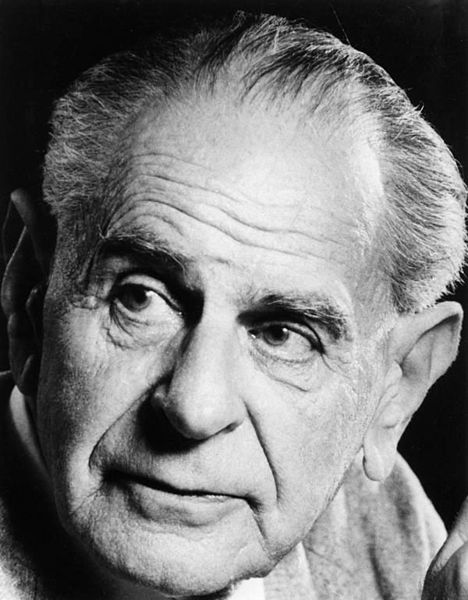
Karl Popper
The signs of this orthodoxy are clear enough in how people speak about science. We may rightly say that scientific theories are well-tested and highly explanatory. We may not say they are proven or true, and yet many people choose these exact words. I cannot state this point emphatically enough. Anyonewho says science proves theories is making an anti-scientific statement. Karl Popper, the famous philosopher of science, played a large role in asserting this view of science:
Scientific theories, for [Popper], are not inductively inferred from experience, nor is scientific experimentation carried out with a view to verifying or finally establishing the truth of theories; rather, all knowledge is provisional, conjectural, hypothetical—we can never finally prove our scientific theories, we can merely (provisionally) confirm or (conclusively) refute them; hence at any given time we have to choose between the potentially infinite number of theories which will explain the set of phenomena under investigation. Faced with this choice, we can only eliminate those theories which are demonstrably false, and rationally choose between the remaining, unfalsified theories. Hence Popper’s emphasis on the importance of the critical spirit to science—for him critical thinking is the very essence of rationality. For it is only by critical thought that we can eliminate false theories, and determine which of the remaining theories is the best available one, in the sense of possessing the highest level of explanatory force and predictive power.[ref]Karl Popper and Growth of Human Knowledge (Stanford Encyclopedia of Philosophy)[/ref]
My pronouncement may seem like a semantics game–people conceivably could use ‘proven’ as shorthand for the much bulkier ‘well-tested and highly explanatory’–but I believe a view more worrying is at play when people state, “Science has proven this theory.” They are using science not as an expression of our current best understanding of the natural world, but as the only understanding they believe we will ever have about existence.
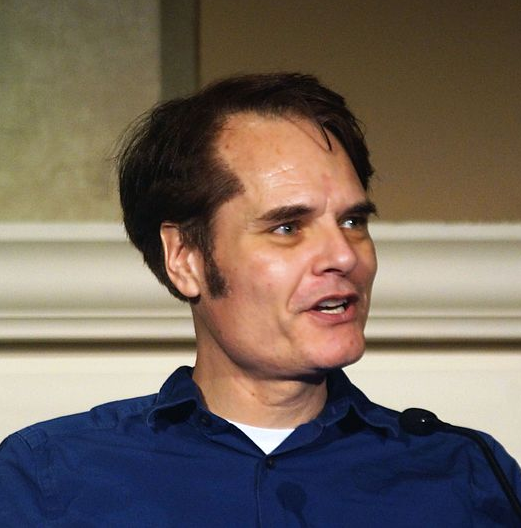
Dan Kahan
Believing science has shown us the only true understanding of the world leads to yet another problem: People begin to conflate accepting scientific conclusions as a measure of how well you understand science. Since science is the truth, if you do not accept it, that must mean you simply do not understand it. This is another anti-scientific attitude. As Dan Kahan rightly points out in the comments sections of his “Cultural Cognition” blog[ref]How religiosity and science literacy interact: Evolution & science literacy part 2. (The Cultural Cognition Project at Yale Law School)[/ref], a brief study of scientific history reveals the necessity of decoupling understanding theories from accepting theories in order to produce new scientific theories. Dr. Kahan cites how Einstein needed to understand and yet reject Newtonian physics to come up with relativity, just as proponents of quantum physics needed to understand and yet reject relativity to come up with quantum physics. Orthodoxy does not allow you to decouple understanding and acceptance: If the final truth has been discovered, you only reject it for lack of understanding.
Second, for some naturalists, their strongest commitment is to naturalism, not science, and therefore they will be highly opposed to any scientific theory that conflicts with naturalism or gives credence to supernatural claims. A good example of this point is the Steady State Theory. Steady State Theory was a popular theory in the early to mid 20th century and stated that the universe has always existed, in contrast to the Big Bang theory which has a clear beginning of the universe. As PBS puts mildly, “[t]his struck a philosophical chord with a number of scientists, and the steady-state theory gained many adherents in the 1950s and 1960s.”[ref]Steady-State Universe (PBS.org)[/ref] The theory was only abandoned after a long struggle and discovery of strong falsifying evidence in part due to the popular philosophical implications of the theory among naturalist scientists.
To be fair, problems can and have arisen when scientific theories conflict (or seemingly conflict) with supernatural claims. My point here is not to set up a competition between supernaturalism and naturalism over who is the “true” defender of science. Neither group is. The true defender of science is anyone who recognizes that any orthodoxy is a threat to the scientific enterprise. Thus Karl Popper invites us all to become defenders of science, not by what particular metaphysical beliefs we hold or reject, but by upholding this opposition to orthodoxy in our quest for greater understanding of the world in which we live:
I hope that my proposals may be acceptable to those who value not only logical rigour but also freedom from dogmatism; who seek practical applicability, but are even more attracted by the adventure of science, and by discoveries, which again and again confront us with new and unexpected questions, challenging us to try out new and hitherto undreamed-of answers.[ref]The Logic of Scientific Discovery. Karl Popper. 1958.[/ref]
As a final note, I cannot state enough how large of a role Dan Kahan played in getting my mind turning on this subject. I have shared Karl Popper’s views on the scientific enterprise for some time, but Dan Kahan helped me start connecting my understanding of the philosophy of science to modern day issues in science. His blog can be found here.
The Nordic countries (particularly Sweden) have been held up by many as the utopias of the future. But journalist Michael Booth has a recent piece in The Guardian demonstrating that the praise may be overdone. For example, the OECD reports that Danes work fewer hours per year than most of Europe while having the highest level of private debt in the world. They even have the fourth largest per capita ecological footprint in the world (higher than the US). But if you ask the Danes, “they will tell you that the Norwegians are the most insular and xenophobic of all the Scandinavians, and it is true that since they came into a bit of money in the 1970s the Norwegians have become increasingly Scrooge-like, hoarding their gold, fearful of outsiders.” Booth describes Sweden as having a “distinctive brand of totalitarian modernism, which curbs freedoms, suppresses dissent in the name of consensus, and seems hell-bent on severing the bonds between wife and husband, children and parents, and elderly on their children. Think of it as the China of the north. Youth unemployment is higher than the UK’s and higher than the EU average” and “integration is an ongoing challenge.” Perhaps this is why the Nordic countries have been cutting back their welfare states (which helped end Sweden’s depression in the 1990s). The market has been taking over Sweden’s health care system, with Swedes increasingly purchasing private health insurance.
I’m curious as to whether the U.S. should be looking across the pond for a Rawlsian utopia or if the answer can be found in some of its own metropolitan areas. As sociologist W. Bradford Wilcox points out,
According to a recent study from Harvard and UC-Berkeley, out of the largest 100 metropolitan regions in the country, the Salt Lake City area is best at promoting absolute economic mobility for lower-income children…Children from the bottom 20% of the national income distribution in the Salt Lake City region were more likely to “reach the top 20% of the national income distribution” as adults than poor children hailing from any other major metropolitan region in America…[T]he Harvard-Berkeley study…found that the most powerful (negative) correlate of such mobility was the share of single moms in a region. This means that children were most likely to realize the American dream when they came from regions—like the Salt Lake City area—with comparatively strong families.Utah, for instance, has some of the lowest rates of nonmarital childbearing and highest shares of its adult population married of any state. Likewise, the study also found that the strength of a region’s civil society was strongly correlated to economic mobility. Communities rich in social capital and religiosity, for instance, were more likely to foster economic mobility for children. And Utah is one of the most religious states in the country, and it scores high on national indices of social trust…[R]ealizing the Rawlsian vision of justice for the least among us, and giving poor kids a shot at the American dream, may depend on the nation’s capacity to revive communitarian virtues and institutions.
So, which utopian model is best: the Mormons or the Swedes?[ref]This is obviously a misleading question for three reasons: (1) Not all of Utah is Mormon and not all Mormons live in Utah, (2) there are Swedish Mormons (though Sweden is highly irreligious), (3) Mormonism is a religion, Sweden is a country and nationality. But you get the point.[/ref]
Disney’s Frozen was, as summarized at Rotten Tomatoes, “beautifully animated, smartly written, and stocked with singalong songs…[A]nother worthy entry to the Disney canon.”[ref]It was good, not great.[/ref] While Olaf’s “In Summer” stole the show, you can’t get “Let It Go” out of your head. The film version features Idina Menzel (of Wicked and Glee fame) on vocals, while the single (and inferior) version features Demi Lovato. Like every other song known to man, a bagillion covers showed up on YouTube. However, Caleb Hyles‘ cover below caught my attention. Listen all the way through. I was only mildly impressed with the first verse and chorus. And then he changed octaves…[ref]If you need more evidence as to how awesome this is, check out YouTube mash-up between the film and Hyles (or the duet version). For more of his vocal chops, see his beautiful rendition of “Bring Him Home” from Les Miserables.[/ref]
In his book Coming Apart, political/social scientist Charles Murray examined the divorce rates among both the working class (“Fishtown”) and professional (“Belmont”) whites.[ref]For a summary of Murray’s findings, see his Wall Street Journal article “The New American Divide.”[/ref]
Not only is the educated, professional class staying married, they are marrying each other. A new NBER paper “Marry Your Like: Assortative Mating and Income Inequality” finds that this factor has a major impact on income inequality (see my previous “Inequality and Demographics“).[ref]I imagine the clustering of like-minded people described in The Big Sort also has an impact on marriage outcomes.[/ref]
Once again, family factors help explain much of the income inequality we see today.
I don’t particularly care for the Grammys. Half the time, I’m not up-to-date enough with new artists to know who is winning (typically, I don’t care for them when I do know who they are). On the other hand, Grammy performances can sometimes be pretty rad. For example, Metallica joined with Chinese pianist Lang Lang to perform the Grammy-nominated (lost to Jethro Tull) “One” from their 1988 album …And Justice For All. While it is no S&M, it is still rockin’.
The next standout was Daft Punk (who went home with Album of the Year for Random Access Memories) with Pharrell Williams, Nile Rodgers, and Stevie Wonder performing “Get Lucky” (which won Record of the Year). The performance works in Daft Punk’s “Harder Better Faster Stronger,” “Lose Yourself to Dance,” Stevie Wonder’s “Another Star,” and Chic’s (Nile Rodgers’ band) “Le Freak.”
A while back, I co-authored a couple posts with Allen Hansen over at Worlds Without End on an important thread running through Mormonism: the religious significance often attached to secular acts. Part one explored this phenomenon in light of similar traditions in Judaism, specifically Hasidism and its “worship through corporeality.” Part two added managerial perspectives and its connection to eternal progression.[ref]We’ve actually reworked these two posts and submitted it for the 2014 Conference of the Mormon Transhumanist Association. We should hear back by Feb. 20 as to its acceptance. Wish us luck![/ref]
Deirdre McCloskey, Distinguished Professor of Economics, History, English, and Communication at the University of Illinois at Chicago, has a Nov. 2013 piece that draws on Christian history to express the morality and theology of work and self-development. Readers of my posts with Allen will find that many of McCloskey’s ideas resonate with the idea of “worship through corporeality.”
Why is Business Insider covering the “anti-abortion activists who were conceived in rape and incest”? I don’t know. Seems a bit outside their bailiwick. Still, despite the typically slanted title, it’s actually a really interesting piece.
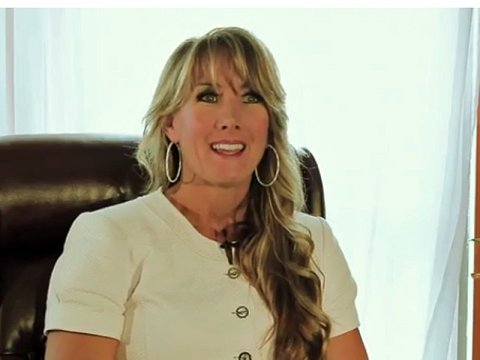
Rebecca Kiessling, who was conceived in a rape, is one of the more prominent voices opposing abortion even in cases of rape.
I’ve written about abortion and the rape exception before in a piece that was carried by Secular Pro-Life . In the short run, and thinking pragmatically, it doesn’t strike me as a good issue to get hung up on. The vast majority of abortions are for purely elective reasons. In other words: most abortions are a form of voluntary birth control. This is the biggest problem numerically and ethically, and I think the focus should be on ending abortion as a method of birth control.
In the long run, however, I have a lot of empathy for the position that folks like Rebecca Kiessling and her group Save the 1 take. A careful reading of the piece I wrote for SPL will show just how narrow our differences are.
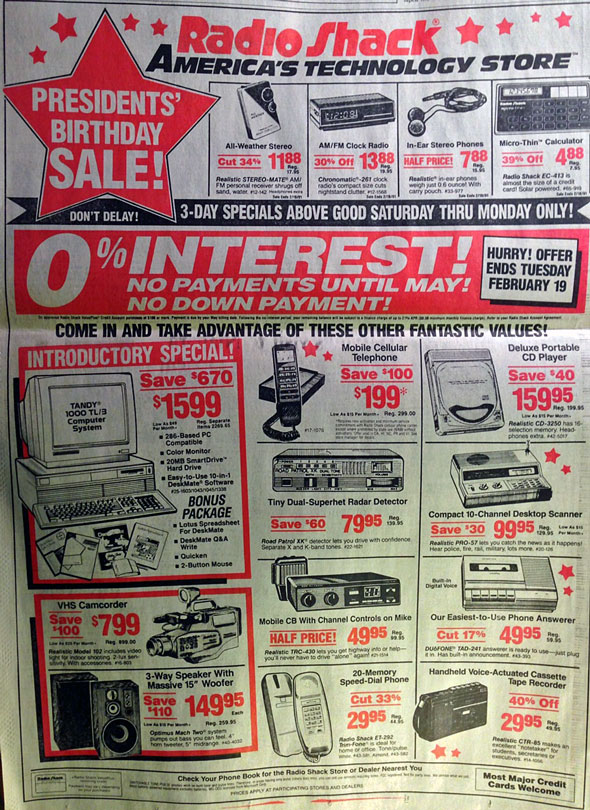
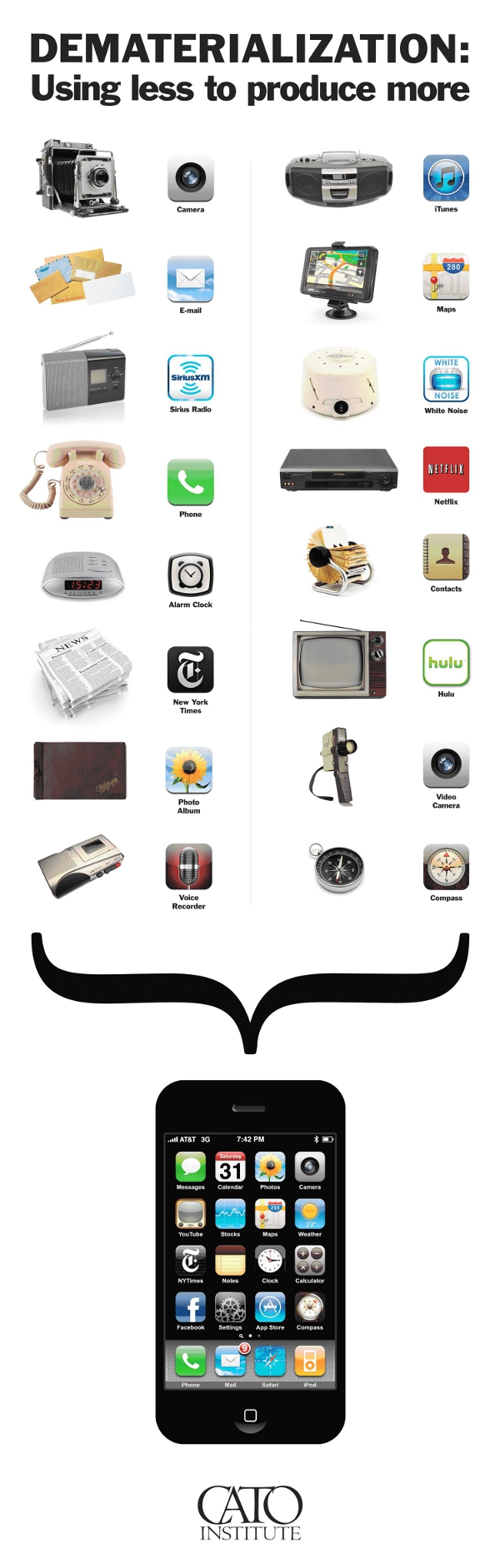
As the author of the piece I’ve borrowed this from states, “There are 15 electronic gimzo type items on this page, being sold from America’s Technology Store. 13 of the 15 you now always have in your pocket.” Here is the list of the items above which are now conveniently on your iPhone:
All weather personal stereo, $11.88. I now use my iPhone with an Otter Box
AM/FM clock radio, $13.88. iPhone.
In-Ear Stereo Phones, $7.88. Came with iPhone.
Microthin calculator, $4.88. Swipe up on iPhone.
Tandy 1000 TL/3, $1599. I actually owned a Tandy 1000, and I used it for games and word processing. I now do most of both of those things on my phone.
VHS Camcorder, $799. iPhone.
Mobile Cellular Telephone, $199. Obvs.
Mobile CB, $49.95. Ad says “You’ll never drive ‘alone’ again!” iPhone.
20-Memory Speed-Dial phone, $29.95.
Deluxe Portable CD Player, $159.95. 80 minutes of music, or 80 hours of music? iPhone.
10-Channel Desktop Scanner, $99.55. I still have a scanner, but I have a scanner app, too. iPhone.
Handheld Cassette Tape Recorder, $29.95. I use the Voice Memo app almost daily.
BONUS REPLACEMENT: It’s not an item for sale, but at the bottom of the ad, you’re instructed to ‘check your phone book for the Radio Shack Store nearest you.’ Do you even know how to use a phone book?
All this was $3054.82 in 1991 (about $5100 in 2012 dollars) and has been “replaced by the 3.95 ounce bundle of plastic, glass, and processors in our pockets” (which is about $200 nowadays). A few years ago, Reason‘s science correspondent Ronald Bailey wrote on the concept of “dematerialization”:
Jesse Ausubel, director of the Program for the Human Environment at Rockefeller University and Paul Waggoner at the Connecticut Agricultural Experiment Station, show that the world economy is increasingly using less to produce more. They call this process “dematerialization.” By dematerialization, they mean declining consumption of energy or goods per unit of GDP. In a 2008 article in the Proceedings of the National Academy of Sciences, Ausubel and Waggoner, using data from 1980 to 2005, show that the world is on a dematerialization binge, wringing ever more value from less material. It turns out that dematerialization achieves many of the same environmental goals as deconsumption.
Ausubel and Waggoner demonstrate that the global economy dematerialized (got more outputs from fewer inputs) steadily in the production of crops, use of fertilizer and wood, and carbon dioxide emissions. For example, while global per capita income rose by 40 percent between 1980 and 2005, farmers around the world raised crop yields 57 percent. Had farming productivity remained stuck at the 1980 level, farmers would have had to plow down an additional 1 billion hectares (about half the land area of the U.S. and six times current U.S. cropland) to produce the amount of food grown in 2005. Instead cropland expanded by less than 100 million hectares and farmers so boosted their productivity that they could produce the same amount of crops on only 60 percent of the amount of land they used in 1980.
The world economy emitted more carbon dioxide in 2005 than it did in 1980, but nearly 30 percent less than it would have had emissions grown at the same rate as the world economy grew. Using European Carbon Exchange prices per ton of carbon dioxide, Ausubel and Waggoner calculate that this dematerialized carbon would be worth nearly $400 billion dollars per year.
As the Cato Institute’s Marian Tupy notes, “Dematerialization, in other words, should be welcome news for those who worry about the ostensible conflict between the growing world population on the one hand and availability of natural resources on the other hand. While opinions regarding scarcity of resources in the future differ, dematerialization will better enable our species to go on enjoying material comforts and be good stewards of our planet at the same time. That is particularly important with regard to the people in developing countries, who ought to have a chance to experience material plenty in an age of rising environmental concerns.”
In today’s post at Times And Seasons I tackle the question: Are prophets superheroes? I think it’s a good post (not that I’m biased) and you should check it out.
But I also want to use this space to talk about some of the pop-culture references I made in that post. You see, I didn’t just cite conventional superheroes. I also quoted from Kill Bill and referenced Watchmen and Kick-Ass. I know plenty of people who would be horrified at the thought of watching Kill Bill and plenty of people who would literally not comprehend that this could be an issue for anyone. And, at the risk of offending everyone, I want to talk about that.
Let’s start out with full disclosure: I’ve seen large chunks of Kill Bill (both volumes), but only on network TV. I read all of Watchmen, but haven’t seen the movie. I watched Kick-Ass, but I haven’t read the comics. I’ve also seen a handful of episodes from each of Breaking Bad, The Sopranos, Mad Men, Battlestar Galactica, and other critically-acclaimed and wildly popular TV shows. But, along with my wife, I’ve made the conscious decision not to continue watching them. (Justified is about the only show in this category I watched regularly. I think I did through the end of season 3 before it got to be too much and I quit.) You now have the raw material with which to make your own independent moral / geek-cred assessments of me.
Here’s the thing: I really don’t want to be in the business of telling other people what to watch. That’s not a thing that interests me even a little bit. But I do know that these shows all get a ton of publicity and it seems like everybody watches them, and the only possible reason to not watch them would be one of taste. On the contrary, I believe that decision about what entertainment you consume do have a moral component. You’re deciding what themes and images you’re going to allow into your mind, which is a kind of sacred space for me. I think what you consume, not just what you eat, affects the kind of person that you are.
I liked pretty much all of those shows. The production quality was great, the writing was great, and the acting was great. It’s not an issue of taste for me. It’s an ethical decision. I realize that sounds judgmental, but that’s not my intent. I don’t think that I have the one true standard of what is OK to watch. I just know there are other people who opt out of these shows, and that we can kind of feel like losers and freaks for doing so. I sort of want to reach out and simply say, “You’re OK.” The only general point I want to make is that drawing a line and deciding what you want to support and what you don’t is a legitimate thing to do. I won’t tell anyone else where to draw the line, but I do think that it’s something everyone should think about and decide in a conscious, intentional way for themselves.
Lastly: I just don’t want folks to assume that everything I reference I am also recommending. I read quite a bit about these shows (reviews and plot summaries) just so that I can keep up with conversations that happen around me. So I’m generally aware of what they are about, what happens, and why people like them. But just because they are significant enough for me to reference doesn’t mean that I, personally, think it’s a good idea to watch them.
 Economist Veronique de Rugy of the Mercatus Center at George Mason University provides the depressing chart above. Federal spending has been on the rise since 1948 with no sign that the slight decrease has any permanency about it.