Introduction
It’s tempting to write off the small minority of humankind who dislike the Harry Potter books as merely malcontents and misanthropes but for one fact: they are somewhat united in their criticism of the books. This criticism, in a nutshell, is that the Wizarding World and the witches and wizards who inhabit it make no sense.

For example, in a world where time travel is possible, why did no one ever think of using it to kill Voldermort or at least save some of his victims? The Ministry of Magic had a whole cabinet full of time turners, after all. Maybe there’s some practical or ethical problem that would prevent them from being used in that way, but it seems unbelievable that no one even considers a long-run plan in which they might be useful for something other than letting Hermione overload her course schedule. Surely Sirius might have thought it would be nice to use the trick that saved his life to try and save Lily and James? Surely Harry, after a time turner made him think he saw his father, might have gotten the idea of using the device to go back and see his parents for real?
This is the kind of unreality that can really bother someone who is otherwise perfectly happy to suspend disbelief about the whole magic thing. Potions and spells are fine, but Quirrel repeatedly trying to grab Harry with his bare hands mere moments after using magic to bind him is not. Apparition is acceptable, but a world where wizards can apparate but choose to mostly travel using trains, floo powder, port keys, carriages pulled by griffins, thestrals, broomsticks, dragons, magical underwater pirate ships and the Knight Bus instead isn’t. Ritual duels using a variety of interesting curses and counter-curses seem sensible, but using anything but avada kedavara in an all-out-war seems as absurd as trying to fight a real war with Nerf guns.[ref]A lot of these examples came up in conversations I had with my contrarian friend Reece. You can read his completely wrong-headed criticisms of Rowling’s world-building on his blog.[/ref]
One might argue that only Scrooge would apply this kind of scrutiny to beloved children’s tales. The Wizarding World doesn’t make sense, but who cares? I understand that approach, but in the first case: I can’t help it. Analyzing things is what I do. I couldn’t turn it off I tried.[ref]For that matter, I have tried. No dice.[/ref] In this case, however, something funny happened. The closer I looked at these supposed flaws, the more convinced I became that J. K. Rowling is a world-building genius. If you look carefully, the apparently nonsensical traits of the magical community actually make a very good deal of sense. In fact, given the basic reality of magic in Rowling’s work, there’s no other way the Wizarding World could have turned out.
On Magic
There are two key facts to understand about magic as it exists in Harry Potter. The first is that it’s very rare. How rare? Well, here’s one way to try and estimate the entire population of Wizards in the United Kingdom, just to get a general idea.
Start with the fact that Harry’s first year of Hogwarts was 1991[ref]The date of death on the gravestone of Lilly and James Potter is October 31, 1981. Since Harry was one when they died, his birth day was July 31, 1980. Therefore, he would have started Hogwarts in fall 1991 just after he turned 11.[/ref]. There were 40 first years in his cohort. So if we assume every 11-year old wizard or witch in the UK showed up at Hogwarts we know that there were 40 of them in 1991. Now let’s compare that to the total population of 11-year old kids in the United Kingdom in the same year. We can start with the total population of the UK in 1991: 57,439,000.[ref]Wikipedia[/ref]. The closest age bands I could find were from 2011, but lets just say that’s close enough. In that case, 5.8% of those 57,439,000 were children between the ages of 10 and 14[ref]Wikipedia[/ref], which is 3,331,462. Let’s assume that within that age band equal numbers of kids are 10, 11, 12, 13, and 14. So if we divide the total number of the group (3,331,462) by the number of groups (5) we get that there were 666,292 11 year old kids in the UK in 1991. If 40 of them were magic-users, then we can establish a wizard:Muggle ratio of 1:16,657. Now, sure, there were a lot of “ifs” and assumptions along the way, but it’s not a bad start for a ball park estimate, and if that ratio holds true across all ages then there would have been about 3,448 witches and wizards all together in the Unitked Kingdom in 1991.
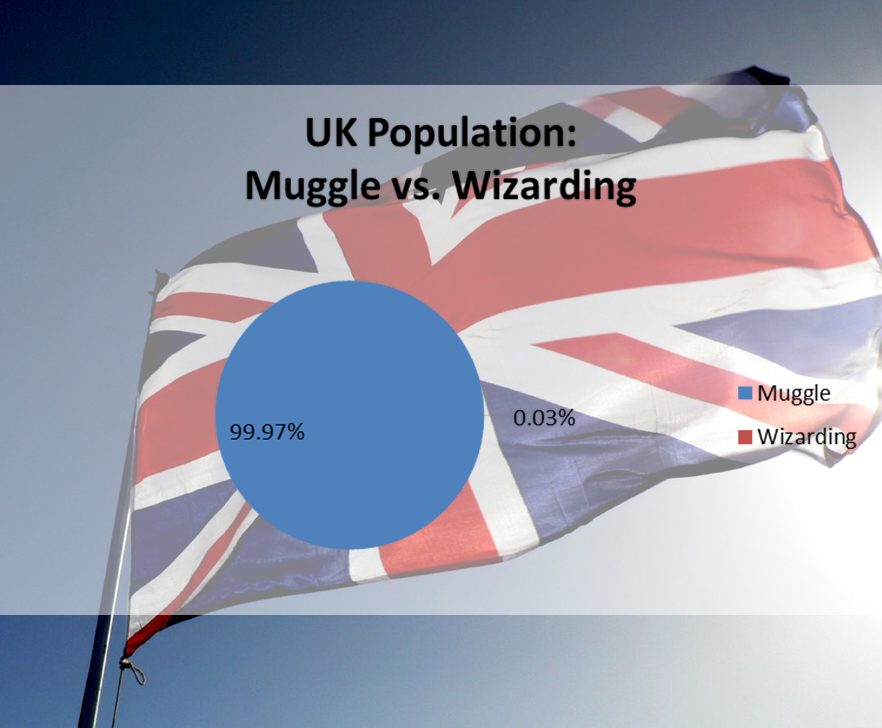
This is fairly close to J. K. Rowling’s estimate of 3,000 [ref]Harry Potter Wiki[/ref]. Of course it’s possible that not all the eligible 11-year olds in the United Kingdom came to Hogwarts. You might also want to consider Squibs to be part of the wizarding community. Both of these factors would raise the estimate from 3,448. J. K. Rowling stated elsewhere that the total population of Hogwarts was 1,000, and others have used this as a starting point to extrapolate higher numbers for the total population in the range of 12,000 – 15,000[ref]Harry Potter Wiki[/ref] . Even at the high end, however, we’re talking about a population that is at least 99.97% muggle[ref]15,000 / 57,439,000 = 0.026%[/ref]. The magical community is absolutely tiny.
The second is that magic conveys a tremendous amount of power for very, very little effort. This seems obvious, but it’s impossible to overstate the profound implications of being a person who has secret powers that 99.97% of the rest of the world do not even know exist. As Horace Slughorn showed in The Half-Blood Prince, a wizard can easily live comfortably simply by mooching off of the work of Muggles. There is no such thing as real poverty or want or deprivation in the wizarding world except, as with the Gaunt family as, as a result of stubborn, voluntary arrogance or, as with the Weasley family, apparent indifference. (Ron’s robes may have been unfashionable and their house may have been crowded, but access to housing, food, healthcare, and self-washing dishes was never in question.)
The magical world, in other words, is comprised of a tiny cadre of the ultra-elite where the only scarce resource is status. All the dysfunctional aberrations (by Muggle standards) of the Wizarding World flow from this.
Parasitic
Because witches and wizards don’t have to earn their bread by the sweat of their brow, the entire society is basically a parasitic leisure class that depends entirely on the Muggle world. Start with government: the Wizarding World (at least in the United Kingdom) is under the jurisdiction of the Minster of Magic. In the parliamentary system of the United Kingdom, the various ministers are appointed by the Prime Minister and fulfill a role somewhat akin to the Cabinet of a United States President. This means that the head of state for the wizarding community is described by the wizarding community itself as only an adjunct to the larger Muggle government. By this logic, the head of state for witches and wizards in the United States would be just “the Secretary of Magic” (instead of “President”).
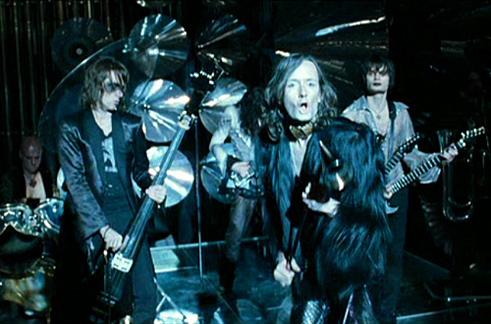 The same is true of culture. All wizarding music is depicted as being just magic-themed veresions of contemporary muggle artists. Mrs. Weasley adores her old-timey crooning and the Hogwarts students enjoy the rock and roll of the Weird Sisters. And what about wizarding religion? There is none. The only religious holidays mentioned are Christmas and Easter, but the celebrations seems strictly secular. There is only one explicit instance of religion in Harry Potter, although it’s a very important one. The gravestone of Lilly and James Potter bears a phrase (“The last enemy that shall be conquered is death”) which is taken from one of Paul’s epistle’s to the Corinthians in the New Testament[ref]1 Corinthians 15:26, although the KJV and NIV use “destroyed” instead of “conquered”.[/ref]. To the extent that the wizarding world has any religion at all, it is apparently borrowed directly from the Muggle world.
Even the grand old institution of Hogwarts itself belies a world dependent on Muggle culture and institutions. After all, students do not start until they are 11, by which time they are clearly supposed to have learned basic literacy somewhere else. It’s not clear what that means for pure-bloods like the Weasleys or Malfoys, but at least for those who hail from the muggle world like Harry and Hermione, it means a reliance on public Muggle schools for basic education.
So where do the basic economic goods of the wizarding world come from? Where to the houselves at Hogwarts get the ingredients for their feasts? Where do the tailors at Diagon Alley get the fabric for their robes? Who mines the tin, copper, antimony, and bismuth that go into a cauldron (pewter, standard size 2)? Whether paid for with Muggle money exchanged at Gringotts or “borrowed” a la Slughorn, it is clear that everything that isn’t explicitly magical in the Wizarding World—from government to culture to physical goods—comes directly from the Muggle world, and at effectively no cost.
Backwards
The reason that witches and wizards make so little of their own is quite simply that they don’t have to. In contrast, every aspect of the development of the Muggle world is defined by the constant struggle for scarce resources. Necessity, as they say, is the mother of invention. That is why Muggle society progresses, and it is why the wizarding society does not. Efficiency drives the Muggle world, but it has relatively no influence on a world where anyone can always opt to just coast along and enjoy a comfortable life gleaning off of Muggles.
Although the drive towards invention and efficiency has been a permanent aspect of Muggle society, for most of human history the pace of progress has been glacial. That’s why, with very little effort, wizards and witches had been able to keep pace with Muggle technology until the Industrial Revolution. Telescopes they have, while steam power (to say nothing of electricity) they do not[ref]Sure, there’s the Hogwarts Express, but it’s a single train that runs on the Muggle rail system. They also have the Knight Bus, but it doesn’t mean they have a clue about the internal combustion engine. None of the magical homes are wired for electricity, and there’s no evidence of steam or internal combustion engines being used in any widespread, common way.[/ref]
The technological gap is obvious in Harry Potter, but what is most interesting is the gap in the financial sector. In Muggle history, the technological advances of the Industrial Revolution were predicated on financial innovation of prior centuries. Two of those innovations are conspicuously absent from the wizarding world: representative money and fractional reserve banking.
Witches and wizards, by contrast, are using commodity money: coins that derive their value from the rare metals of which they are composed. In actual history, representative money (which refers to paper money that can be redeemed for valuables) is actually even older than coinage, but it really came to supremacy with banking innovations just prior to the Industrial Revolution, and especially fractional reserve banking.
Fractional reserve banking is the practice of banks lending out more money than they actually have. It sounds a bit crazy, but every banking system in the real world is based on this system. The reason it is important is that it lets money flow freely in the economy to where it is needed most.
Hagrid, and everyone else, calls Gringotts a bank, but as far as the world of Harry Potter is concerned, pretty much the only role Gringott’s provides is a secure place to keep stuff. This has about as much to do with banking as a coat closet has to do with running a restaurant. Gringotts, in other words, is absolutely not a bank by any definition that the muggle world would recognize in the last five or six hundred years.
So the wizarding world is dependent on the Muggle world and mirrors their institutions on Muggle institutions, but over the last few centuries as the pace of Muggle progress has increased exponentially the wizarding world has been left farther and farther behind. They have the façade of Muggle institutions, but only the façade.
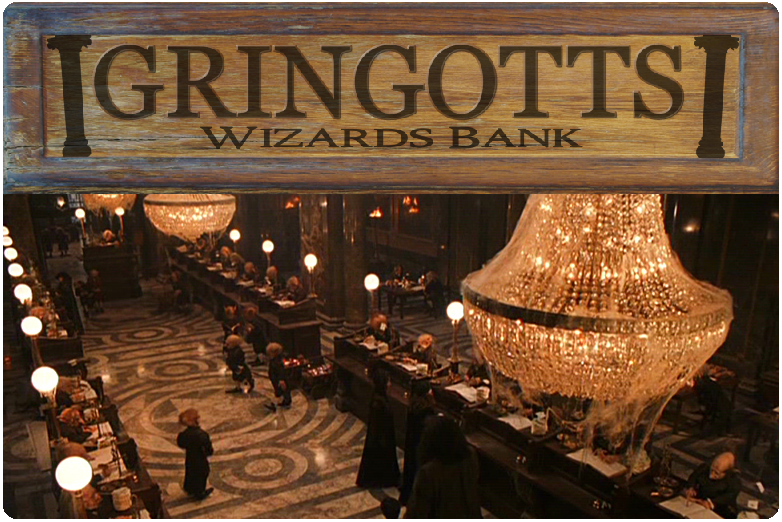
Seen this way, there’s no surprise to the fact that wizards travel by all manner of bizarre and inefficient contrivances when—with minimal discomfort and a little bit of organization—they could easily be zipping around the world faster than the speed of light. Everything about the wizarding world is inefficient, not just the travel arrangements.
Shallow
In the Muggle world, a really advanced education requires the 13 years of K-12, 4 more years of undergraduate work, 5 or 6 years of work on a combined masters/doctoral degree and then perhaps another year or two of postdoctoral work for a total of up to 25 years of education. In the wizarding world, 7 years has you covered, maybe 8 or 9 if you want to be an auror.
In the Muggle world, a credible military force requires expensive hardware and serious training. The United Kingdom spends about $60 billion per year on defense spending .[ref]Wikipedia[/ref] In the United States, the costs of training a single Marine are hard to estimate, but good guess would be $50,000 – $150,000 .[ref]NBC[/ref] The deployment costs are much higher, with the US Army spending between $850,000 and $1,500,000 per soldier per year for deployment in Afghanistan.[ref]CNN[/ref] In the Wizarding World, by contrast, a couple dozen teenagers with no special equipment who train in their spare time without adult supervision constitute a credible threat to the standing government.
One big reason for this is simply that, as mentioned previously, the Wizarding World is tiny. The British Armed Forces comprise about 400,000 individuals (active and reserve)[ref]Wikipedia[/ref] out of a total population of about 63 million.[ref]Wikipedia[/ref] That means about 0.63% of the population is in the armed forces. If the wizarding world in the UK has a population of 12,000 and Dumbledore’s Army had 80 members (seems high for the book, but low if the total school population was actually 1,000) then they would represent 0.67% of the total population. And, unlike a typical modern army, they would all be potential combat troops. Just to be clear: 80 high school kids constitute a greater relative military force in the Wizarding World than the entire British army, navy, and air force do in the Muggle world.
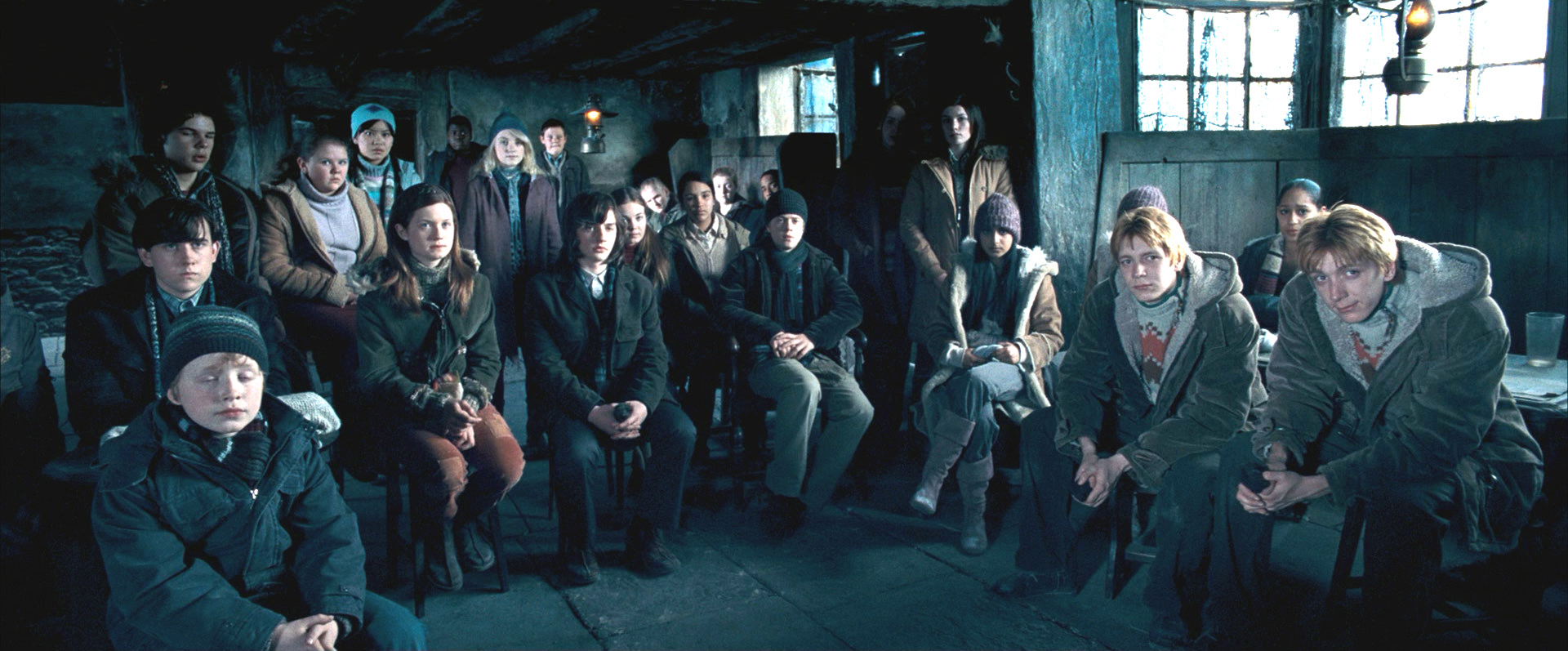
The same shallowness works on an individual level. In the Muggle world an unarmed 15 year old doesn’t even register as a threat next to a fully armed SAS team. But in the Wizarding World, you might actually feel the need to deploy an entire squad of their most elite fighters, the aurors, just to bring in a teenage kid. In the Muggle world, a precocious high school student doesn’t hold a candle to the expertise of a newly minted neurosurgeon, but in the Wizarding World the skills of a really talented 7th year student can rival or even surpass those of adult wizards and government officials. The wizarding world is incredibly flat. Setting aside Squibs, there’s very little distance between the least and most knowledgeable or dangerous relative to Muggle society.
Reckless
As a result of all the previous observations, wizarding society is incredibly reckless relative to Muggle society. It’s impossible to get even ballpark mortality estimates because the wizarding world is at war throughout most of Harry Potter, but even the peacetime activities are frightfully dangerous compared to what would be acceptable in a Muggle world. In the very first book, after all, Dumbledore keeps a vicious, man-eating, three-headed dog monster inside a school full of young kids who have a hard time knowing where their classes are. And, oh yeah, Fluffy is separated from the kids by nothing but a locked door that virtually any of the kids can defeat with a trivial spell.[ref]Of course, with the basilisk still locked in the Secret Chamber, Fluffy was only the second most dangerous monster inside the walls of Hogwarts![/ref] From that to Hagrid’s choice of ferocious textbooks to the potentially lethal Tri-Wizard Tournament, wizards all seem a bit deranged when it comes to matters of life and death.
But that sort of makes sense in a world where everyone is carrying the magical equivalent of a loaded bazooka from age 11 whether they want to or not. Ariana Dumbledore’s death is the most tragic example of this: she lived and died in peacetime before either Voldemort or Gridlewald had risen to power. She died simply because her brother got into a fight with his childhood friend. Similarly, Luna’s mother blew herself up messing about with potions. Because magic is so powerful, being a wizard is inherently dangerous, and there’s just no way around it.
But it’s not just individuals who are prone to early demise in the Wizarding World. The entire society itself is incredibly volatile because of all the characteristics noted so far. Wizarding society is completely dependent on Muggle society for its institutions, culture, and basic resources. And yet, because wizards aren’t subject to the same competitive pressures, the link between the Wizarding and Muggle Worlds is increasingly breaking down. This leaves the wizarding institutions increasingly arbitrary and brittle. It’s also a very flat world, where the relative power of the weakest member is very high relative to the most powerful institutions. Add to this the very low numbers of wizards, and it’s clear that the entire society is dangerously volatile and will only become more so with time.
Conclusion
Charles Darwin once noted that the honey bee would obviously be better off if it did not have a barbed stinger. Because the singer is barbed, a honey bee can only sting once before it dies. Wasps and hornets, on the other hand, are capable of stinging many times without suffering injury because they have straight stingers. Obviously it would be better if honey bees had straight stingers. Darwin understood, however, that this is unlikely to happen. The reason for that is simple: evolution doesn’t tend towards optimal results. Natural selection is all about doing the least necessary to survive. Without direct evolutionary pressure, bees will not evolve straight stingers even if it would be better for them to do so.
 Humans are the same way. Without external pressure: we stagnate. Because of their incredibly powerful gifts, witches and wizards are largely immune from the pressures to which the rest of human society is constantly subject. On an individual level, this sounds like a lot of fun, and it’s part of the reason that Harry Potter is so much fun to read. But in the long run, the freedom from pressure comes with a serious cost.
The odd behavior of witches and wizards and the bizarre nature of their social institutions is not sloppy world-building. It’s brilliant world-building based on a keen observation of human nature. If a tiny cohort of humans were given incredible magical powers, this is pretty much the world that you would end up with. Parasitic, backwards, shallow, and reckless[ref]This is the same key insight behind Lev Grossman’s bitter and cynical coming-of-age wizard series starting with The Magicians.[/ref]
I really have no idea how much of this was intentional on J. K. Rowling’s part. I haven’t read The Casual Vacancy, but judging by The Cuckoo’s Call (in addition to the Harry Potter books, of course), she is an incredibly astute observer of human nature. My guess is that she didn’t sit down and think “How would a world populated by witches and wizards operate?” My guess is that she just started with a fun premise (hidden magic! wizard school!) that involved certain key attributes (magic is relatively easy and magic users are very rare), and the rest just flowed naturally from there.
In a way, of course, it doesn’t really matter. You can enjoy Harry Potter without analyzing it. But I’m not gonna lie: the fact that it withstands this level of scrutiny so well makes me love the books more then ever, even if it is a darker take on the Wizarding World.
Here’s the most interesting proposition, though. It’s possible that part of what fueled Voldemort’s rise to power was the increasing instability of the Wizarding World as it lagged farther and farther behind Muggle progress. And, since the pace of technological progress shows no sign of slowing down, you have to wonder: what’s the long-run fate of the Wizarding World? How long can this relatively primitive society continue to maintain any social cohesion at all while all its foundational institutions are eroding out from underneath it? If we’re really lucky, maybe one day J. K. Rowling will decide to tell us.