Earlier this year, The New York Times reported that “[o]ne of the strongest predictors of Trump support is the proportion of the population that is native-born. Relatively few people in the places where Trump is strong are immigrants — and, as their answers on their ancestry reveal, they very much wear Americanness on their sleeve.” In other words, those opposing immigration the most live in areas with very few immigrants (similar to Brexit voters). A new Gallup study supports these findings. The Washington Post reports, “According to this new analysis, those who view Trump favorably have not been disproportionately affected by foreign trade or immigration, compared with people with unfavorable views of the Republican presidential nominee. The results suggest that his supporters, on average, do not have lower incomes than other Americans, nor are they more likely to be unemployed.” However, while
Trump voters tend to be the most skeptical about immigration, they are also the least likely to actually encounter an immigrant in their neighborhood.
Rothwell finds that people who live in places with many Hispanic residents or places close to the Mexican border, tend not to favor Trump — relative to otherwise similar Americans and to otherwise similar white Republicans.
Among those who are similar in terms of income, education and other factors, those who view Trump favorably are more likely to be found in white enclaves — racially isolated Zip codes where the amount of diversity is lower than in surrounding areas.
These places have not been affected much by immigration, and Rothwell believes that is no coincidence. He argues that when people have more personal experience of people from other countries, they develop friendlier attitudes toward immigrants.
All this makes yesterday’s outstanding article in The Washington Post all the more important. “For many economists,” the author writes, “it’s the simplest and most effective way to make the world richer and reduce poverty. For those in government, it’s a political landmine.” She goes on to present the case in favor of loosening immigration restrictions:
Some economists have suggested that allowing people to work where their labor is most highly valued — something that is hardly realistic, given the political environment in the developed world— could double the size of the global economy. More than a dozen studies reviewed by economist Michael Clemens, a senior fellow at the pro-immigration Center for Global Development, suggested that eliminating barriers to global mobility would increase world gross domestic product by between 67 and 147 percent.
Clemens says the benefits are huge even for a more modest loosening of restrictions on immigration. His research suggests that allowing just 5 percent of the people now living in poor countries to work temporarily or permanently in richer countries would add trillions of dollars to the global economy. The economic gains would be greater than those from dismantling every remaining barrier to trade and investment around the world.
While some critics like Harvard’s George Borjas reject this kind of optimism, the evidence leans in favor of those pushing for fewer restrictions:
First, the same worker can create more economic value in some places than in others, because of differences in factors that affect the productivity of businesses, such as natural resources, infrastructure, technologies and laws…Differences in productivity are reflected in the vastly different wages people can earn for similar types of work across the world. According to estimates by Clemens, Claudio Montenegro and Lant Pritchett, who examined a data set of more than 2 million workers, the average Peruvian can make 2.6 times as much in the United States as in Peru, while a Haitian can make seven times more.
Second, many economists say that an influx of immigrants can expand an economy, potentially even raising wages for the native born…An expansive study released by the National Academies of Sciences in September found that immigration has mostly helped the U.S. economy in recent decades and had little effect on the wages or employment of native-born Americans. According to the study, the main group negatively affected by newly arriving immigrants was actually earlier waves of immigrants with similar language skills. To a lesser extent, new immigrants also competed for work with the lowest-skilled Americans, such as high-school dropouts. But in general, immigration left the native population slightly better off.
The article concludes:
While Clemens says he is troubled by the idea of discriminating against people based on where they are born, he doesn’t advocate “openborders,”[ref]See his and Lant Prichett’s newest publication “The New Economic Case for Migration Restrictions: An Assessment.” While empirical evidence may not back complete open borders, it does support the relaxing of current restrictions.[/ref] a term that is oftenused as a synonym for anarchy — no background checks, no deportation and no restrictions on immigration. In reality, few politicians are advocating even moderately higher levels of immigration, and the world won’t see anything like open borders anytime soon. But he says people still should recognize the substantial trade-offs of the current system.
Clemens draws an analogy with the rights of women. In the United States, laws prevented women from owning property, inheriting wealth and entering many professions until the late 1800s. Although some male workers may have suffered from the entry of women into the workforce during the 20th century, no one would deny that it has provided enormous benefits to the country and the economy. Yet restrictions on women had still persisted for millennia.
To borrow the title from Lant Prichett’s book:[ref]Prichett’s book was really influential in changing my views of immigration.[/ref] let their people come.
As if we didn’t feel small and insignificant already, The Guardian reports,
There are a dizzying 2 trillion galaxies in the universe, up to 20 times more than previously thought, astronomers reported on Thursday. The surprising finding, based on 3D modeling of images collected over 20 years by the Hubble Space Telescope, was published in the Astronomical Journal.
Scientists have puzzled over how many galaxies the cosmos harbors at least since US astronomer Edwin Hubble showed in 1924 that Andromeda, a neighboring galaxy, was not part of our own Milky Way. But even in the era of modern astronomy, getting an accurate tally has proven difficult.
To begin with, there is only part of the cosmos where light given off by distant objects has had time to reach Earth. The rest is effectively beyond our reach. And even within this “observable universe”, current technology only allows us to glimpse 10% of what is out there, according to the new findings.
“Using deep space images from Hubble,” the article continues, “Conselice and his team painstakingly converted them into 3D to measure the number of galaxies at different times in the history of the universe. The analysis reached back more than 13bn years – very near the time of the “Big Bang” thought to have given birth to the universe.” These findings have some astounding implications:
The results have clear implications for galaxy formation, and also helps shed light on an ancient astronomical paradox — why is the sky dark at night?
In analyzing the data, a team led by Christopher Conselice of the University of Nottingham, U.K., found that 10 times as many galaxies were packed into a given volume of space in the early universe than found today. Most of these galaxies were relatively small and faint, with masses similar to those of the satellite galaxies surrounding the Milky Way. As they merged to form larger galaxies the population density of galaxies in space dwindled. This means that galaxies are not evenly distributed throughout the universe’s history, the research team reports in a paper to be published in The Astrophysical Journal.
“These results are powerful evidence that a significant galaxy evolution has taken place throughout the universe’s history, which dramatically reduced the number of galaxies through mergers between them — thus reducing their total number. This gives us a verification of the so-called top-down formation of structure in the universe,” explained Conselice.
So why is the sky so dark at night if it is populated with galaxies?:
The team came to the conclusion that indeed there actually is such an abundance of galaxies that, in principle, every patch in the sky contains part of a galaxy. However, starlight from the galaxies is invisible to the human eye and most modern telescopes due to other known factors that reduce visible and ultraviolet light in the universe. Those factors are the reddening of light due to the expansion of space, the universe’s dynamic nature, and the absorption of light by intergalactic dust and gas. All combined, this keeps the night sky dark to our vision.
In the nearly half-century history of Foreign Policy, the editors of this publication have never endorsed a candidate for political office. We cherish and fiercely protect this publication’s independence and its reputation for objectivity, and we deeply value our relationship with all of our readers, regardless of political orientation.
It is for all these reasons that FP’s editors are now breaking with tradition to endorse Hillary Clinton for the next president of the United States.
Our readers depend on FP for insight and analysis into issues of national security and foreign policy. We feel that our obligation to our readers thus extends now to making clear the great magnitude of the threat that a Donald Trump presidency would pose to the United States. The dangers Trump presents as president stretch beyond the United States to the international economy, to global security, to America’s allies, as well as to countless innocents everywhere who would be the victims of his inexperience, his perverse policy views, and the profound unsuitability of his temperament for the office he seeks.
The litany of reasons Trump poses such a threat is so long that it is, in fact, shocking that he is a major party’s candidate for the presidency. The recent furor over his vile behavior with women illustrates the extraordinary nature of his unsuitability, as does his repudiation by so many members of his own party — who have so many reasons to reflexively support their nominee.
This endorsement made me want to look at the state of newspaper and magazine endorsements thus far. As of now, there isnot a single newspaper or magazine that has endorsed Trump. None. Zero. And the following have more-or-less broken tradition:
New York Daily News: pro-Clinton. Typically centrist; endorsed George Bush in 2004 and Mitt Romney in 2012 (Barack Obama in 2008).
Houston Chronicle: pro-Clinton. Third time in 64 years to endorse a Democratic candidate.
Tulsa World: No endorsement. Franklin Roosevelt in 1940 was the last Democratic candidate they endorsed.
Richmond Times-Dispatch: pro-Johnson. Have endorsed every Republican nominee since 1980. First endorsement of a Libertarian.
Dallas Morning News: pro-Clinton. First endorsement of a Democratic nominee since Roosevelt in 1944.
New Hampshire Union Leader: pro-Johnson. First Libertarian endorsement and non-Republican in over 100 years.
Cincinnati Enquirer: pro-Clinton. First Democratic endorsement since Woodrow Wilson in 1916.
Arizona Republic: pro-Clinton. First Democratic endorsement in its 126-year history.
Detroit News: pro-Johnson. First non-Republican endorsement in its 143-year history.
USA Today: not Trump. First time to take a position on the presidential election in its 34-year history.
San Diego Union-Tribune: pro-Clinton. First Democratic endorsement in its 148-year history.
Desert Sun: pro-Clinton. First Democratic endorsement in 90-year history.
Foreign Policy: pro-Clinton. See above.
Wired: pro-Clinton. Magazine’s first presidential endorsement.
Deseret News: not Trump. Has not endorsed a candidate in 80 years, but wrote an editorial saying Trump should drop out.
I enjoyed taking a break to cover the October 2016 General Conference last week, but now we’re back on to our usually scheduled General Conference Odyssey posts, which means we’re writing about the Friday afternoon session of the April 1974 GC.
I didn’t really catch a theme in this session, and there wasn’t one talk that really grabbed me. Instead, I just want to go through a couple of lines that stuck me from several different talks.
True love is not earthbound. It is as eternal as our spirits, which never die.
There is no coincidence that two of Mormonism’s most unique beliefs are (1) marriage for time and all eternity and (2) the immortality of the human soul both forwards and backwards in time. There is a part of our soul that is ageless, because not only does it have no end but it also has beginning. For souls like these, nothing but eternal relationships could possibly do.
In Hanging On, Elder Loren C. Dunn told a story about a pampered tree that toppled in a storm and contrasted it with a neglected tree—that, because it was forced to drive down deep roots for water—outlasted the gale.
I see in many people this same kind of beauty. Adversity and trial have driven the roots of faith and testimony deep in order to tap the reservoir of spiritual strength that comes from such experiences. By nature they know how to stand and fight and hang on.
Elder H. Burke Peterson spoke with frankness and directness about the role of mothers in Mother, Catch the Vision of Your Call. His call for women to not work outside the home was unapologetic, but it was not unqualified. He not only indicated that single mothers had to work—and deserved our respect and help—but went farther, writing:
Fathers and mothers, before you decide you need a second income and that mother must go to work out of the home, may I plead with you: first go to the Lord in prayer and receive his divine approbation. Be sure he says yes.
This is one of those interesting verses that complicates simplistic stereotypes and reaffirm that the teachings of the Gospel are not as amenable to caricatures as some might think. What he’s saying here is a teaching that has been reiterated more plainly in more recent years: that the guidance of General Authorities in General Conference is just that: general. It is up to us to, in humility and a spirit of obedience, figure out how to apply those teachings to our individual lives. And, as a corollary, that means that we ought to get a little bit better at minding our own business when we see folks who are departing from the general course. Maybe they’re lazy, or disobedient, or apathetic. Or maybe they’re just as righteous, obedient, and passionate as we are but walking a slightly different path.
Then we have Elder William H. Bennett, in Inertia, describing some the primary reasons that people fail to live up to their potential:
some of the more important [reasons we do not reach our potential] are failure to do adequate realistic planning; lack of desire, commitment, and dedication; failure to use time effectively; and failure to correct one’s mistakes.
It’s a very practical list, and one that I think is entirely applicable to most or our lives. I also like how it fit with Elder Kazuhiko Yamashita’s call (in the most recent GC) to “be ambitious for Christ.” If you want to realize your ambitions, then you should pay attention to Elder Bennett’s cautions.
And last but not least, two more short quotes, this time from Elder Marvin J. Ashton in A Time of Urgency:
Midnight is so far and yet so close to those who have procrastinated.
and
God listens to humble prayer. If he didn’t, he wouldn’t ask us to pray.
Wikipedia: “Symphony of the Stones carved by the Goght River at Garni Gorge in Armenia is an example of an emergent natural structure.” Released by WOWARMENIA for Wikimedia under Creative Commons Attribution-Share Alike license
I didn’t get a chance to make that pithy observation in a Facebook exchange this morning because my interlocutor gave me the boot. That’s OK, I may have been blocked from somebody’s Facebook feed for thinking bad thoughts, but I can’t get blocked from my own blog! You can’t stop this signal, baby.
So, just as two wrongs don’t make a right, let’s use this Columbus Day to talk about two stupids that don’t make a smart.
Bad Idea 1: The Noble Savage
There’s a school of thought which holds, essentially, that everything was fine and dandy in the Americas until the Europeans came along and ruined it. The idea, seen in Disney and plenty of other places, is that “native” peoples lived at harmony with the Earth, appreciating the fragile balance of their precious ecosystems and proactively maintaining it. This idea is bunk. The reality is that in almost all cases the only limit on the extent to which any culture restricts its exploitation of natural resources is technological. Specifically, humanity has an unambiguous track record of killing everything edible in sight as they spread across the globe, leading to widespread extinctions from Australia to the Americas and upending entire ecosystems. If our ancient ancestor didn’t wipe a species out, the reason was either that it didn’t taste good or they couldn’t. As Yuval Noah Harari put it Sapiens:[ref]Which I reviewed here.[/ref]
Don’t believe the tree-huggers who claim that our ancestors lived in harmony with nature. Long before the Industrial Revolution, homo sapiens held the record among all organisms for driving the most plant and animal species to their extinctions. We have the dubious distinction of being the deadliest species in the annals of biology.
Harari specifically describes how the first humans to discover Australia not only wiped out species after species, but–in so doing–converted the entire continent into (pretty much) the desert it is today:
The settlers of Australia–or, more accurately, its conquerors–didn’t just adapt, they transformed the Australian ecosystem beyond recognition. The first human footprint on a sandy Australian beach was immediately washed away by the waves, yet, when the invaders advanced inland, they left behind a different footprint. One that would never be expunged.
Matt Ridley, in The Origins of Virtue, lists some of the animals that no longer exist thanks to hungry humans:
Soon after the arrival of the first people in Australia, possibly 60,000 years ago, a whole guild of large beasts vanished — marsupial rhinos, giant diprotodons, tree fellers, marsupial lions, five kinds of giant wombat, seven kinds of short-faced kangaroos, eight kinds of giant kangaroo, a two-hundred-kilogram flightless bird. Even the kangaroo species that survived shrank dramatically in size, a classic evolutionary response to heavy predation.
And that pattern was repeated again and again. Harari again:
Mass extinctions akin to the archetypal Australian decimation occurred again and again in the ensuing millennia whenever people settled another part of the outer world.
Have you ever wondered why the Americas don’t have the biodiversity of large animals that Africa does? We’ve got some deer and bison, but nothing like the hippos, giraffes, elephants, and other African megafauna. Why not? Because the first humans to get here killed and ate them all, that’s why not. There’s even a name for what happened: the Pleistocene overkill. Back to Ridley:
Coincident with the first certain arrival of people in North America, 11,500 years ago, 73% of the large mammal genera quickly died out… By 8000 years ago, 80% of the large mammal genera in south America were also extinct — giant sloths, giant armadillos, giant guanacos, giant capybaras, anteaters the size of horses.
In Madagascar, he notes that “at least 17 species of lemurs (all the diurnal one is larger than 10 kg in weight, one as big as a gorilla), and the remarkable elephant birds — the biggest of which weighs 1000 pounds — were dead within a few centuries of the islands first colonization by people in about 500 A.D.” In New Zealand, “the first Maoris sat down and ate their way through all 12 species of the giant moa birds. . . Half of all new Zealand’s indigenous land birds are extinct.” The same thing happened in Hawaii, where at least half of the 100 unique Hawaiian birds were extinct shortly after humans arrived. “In all, as the Polynesians colonized the Pacific, they extinguished 20% of all the bird species on earth.”
Ridley’s myth-busting doesn’t end there. He cites four different studies of Amazon Indians “that have directly tested their conservation ethic.” The results? “All four rejected the hypothesis [that the tribes had a conservation ethic].” Moving up to North America, he writes that “There is no evidence that the ‘thank-you-dead-animal’ ritual was a part of Indian folklore before the 20th century,” and cites Nicanor Gonsalez, “At no time have indigenous groups included the concepts of conservation and ecology in their traditional vocabulary.”
This might all sound a little bit harsh, but it’s important to be realistic. Why? Because these myths–no matter how good the intentions behind them–are corrosive. The idea of the Noble Savage is intrinsically patronizing. It says that “primitive” or “native” cultures are valuable to the extent that they are also virtuous. That’s not how human rights should work. We are valuable–all of us–intrinsically. Not “contingent on passing some test of ecological virtue” (as Ridley puts it.)
Let me take a very brief tangent. Ridley’s argument here (as it relates to conservation) is exactly parallel to John McWhorters linguistic arguments and Steven Pinker’s psychological arguments. In The Language Hoax, John McWhorter takes down the Sapir-Whorf Hypothesis,[ref]AKA “linguistic relativity“[/ref] which is the trendy linguistic theory that what you think is determined by the language you think it in.[ref]You may have seen a meme about early humans not being able to see the color blue because the word for it appears later in most languages. This is precisely the kind of pseudo-scientific bunk McWhorter dismisses in the book.[/ref] Just like the Noble Savage, this idea was originally invented by Westerners on behalf of well, everybody else. The idea is that “primitive” people were more in contact with the timeless mysteries of the cosmos because (for example) they spoke in a language that didn’t use tense. Not only did this turn out to be factually incorrect (they just marked tense differently, or implied it in other cases, as many European languages also do), but it’s an intrinsically bad idea. McWhorter:
In the quest to dissuade the public from cultural myopia, this kind of thinking has veered into exotification. The starting point is, without a doubt, I respect that you are not like me. However, in a socio-cultural context in which that respect is processed as intellectually and morally enlightened, inevitably, to harbor that respect comes to be associated with what it is to do right and to be right as a person. An ideological mission creep thus sets in. Respect will magnify into something more active and passionate. The new watchcry becomes, “I like that you are not like me,” or alternately, “What I like about you is that you are not like me.” That watchcry signifies, “What’s good about you is that you are not like me.” Note however, the object of that encomium, has little reason to feel genuinely praised. His being not like a Westerner is neither what he feels as his personhood or self-worth, nor what we should consider it to be, either explicitly or implicitly.
The cute stories about the languages primitive peoples speak and the ways that enables them to see the world in unique and special ways end up being nothing but a particularly subtle form of cultural imperialism: our values are being used to determine the value of their culture. All we did was change up the values by which we pass judgement on others. Thus: “our characterization of indigenous people in this fashion is more for our own benefit than theirs.”
The underlying premise of Harrari, Ridley, and McWhorter is what Steven Pinker’s The Blank Slate tackles directly: the universality of human nature. We can best avoid the bigotry and discrimination that has marred our history not by a counter-bigotry that holds up other cultures as special or superior (either because they’re in magical harmony with nature or possess unique linguistic insights) but by reaffirming the fact that there is such a thing as an universal, underlying human nature that unites all cultures.
Universal human nature is not a byproduct of political wishful thinking, by the way. Steven Pinker includes as an appendix to The Blank Slate a long List of Human Universals compiled by Donald E. Brown in 1989. It is a long list, organized alphabetically. To give a glimpse of the sorts of things behaviors and attributes common to all human cultures, here are the first and last items from the list:
abstraction in speech and thought
actions under self-control distinguished from those not under control
aesthetics
affection expressed and felt
age grades
age statuses
age terms
…
vowel contrasts
weaning
weapons
weather control (attempts to)
white (color term)
world view
The list also includes lots of stuff about binary gender which is exactly why you haven’t heard of the list and why Steven Pinker is considered a rogue iconoclast. These days, one does not simply claim that gender is binary.
I’ve spent a lot of time on the idea of the Noble Savage as it relates to ecology, but of course it’s a broader concept than that. I was once yelled at quite forcibly by a presenter trying to teach us kids that warfare did not exist among pre-Columbian Native Americans. I was only 11 or 12 at the time, but I knew that was bs and said so.[ref]He cursed me with the fires of Hell if I didn’t stop interrupting. I didn’t stop. The next day I got third degree burns. True story; I’ve still got the scars. He may have been a wizard, but I was still right.[/ref]
The point is that the whole notion of a mosaic of Native Americans living in peace and prosperity until the evil Christopher Columbus showed up and ruined everything is a bad idea. It’s stupid number 1.
Bad Idea 2: Christopher Columbus is Just Misunderstood
So, this is the claim that started the discussion that got me blocked by somebody on Facebook today. The argument, such as it was, goes something like this: Columbus looks very bad from our 21st century viewpoint, but that’s an unfair, anachronistic standard. By the standards of his day, he was just fine, and those are the standards by which he should be measured.
The problem with this idea is that, like the first, it’s simply not true. One of the best, popular accounts of why comes from The Oatmeal. In this comic, Matthew Inman contrasts Columbus with a contemporary: Bartolomé de las Casas. While Columbus and his ilk were off getting to various hijinks including (but not limited to) child sex slavery and using dismemberment to motivate slaves to gather more gold, de las Casas was busy arguing that indigenous people deserved rights and that slavery should be abolished. Yes, at the time of Columbus.
The argument that if we judge Columbus by the standards of his day he comes out OK does not hold up. We can find plenty of people at that time–not just de las Casas–who were abolitionists or (if they didn’t go that far) were critical of the excessive cruelty of Columbus and many like him. Keep in mind that slavery had been a thing in Europe for thousands of years until the Catholics finally stamped it out around the 10th century. So it’s not like opposition to slavery is a modern invention. When slavery was restarted in Africa and then the Americas many in the Catholic clergy opposed it once again, but were unable to stop it. So the idea that–by the standards of his day–Columbus was just fine and dandy doesn’t work. He’s a pretty bad guy in any century.
Two Stupids Don’t Make a Smart
I understand the temptation to respond to Noble Savage-type denunciations of Christopher Columbus by trying to defend the guy. You see somebody making a bad argument, and you want to argue that they’re wrong.[ref]Throw in the obviously implied left/right dichotomy and you’ve got partisan tribal motivations to boot![/ref]
But that isn’t how logic actually works. A broken clock really is right twice a day, and a bad argument can still have a true conclusion. If I tell you that 2+2 = 4 because Mars is in the House of the Platypus my argument is totally wrong, but my conclusion is still true.
The Noble Savage is a bad bit of cultural luggage we really should jettison,[ref]Especially when it results in bad Chipotle burritos, among other reasons.[/ref] but Columbus is still a bad guy no matter how you slice it. Using one stupid idea to combat another stupid idea doesn’t actually enlighten anyyone.
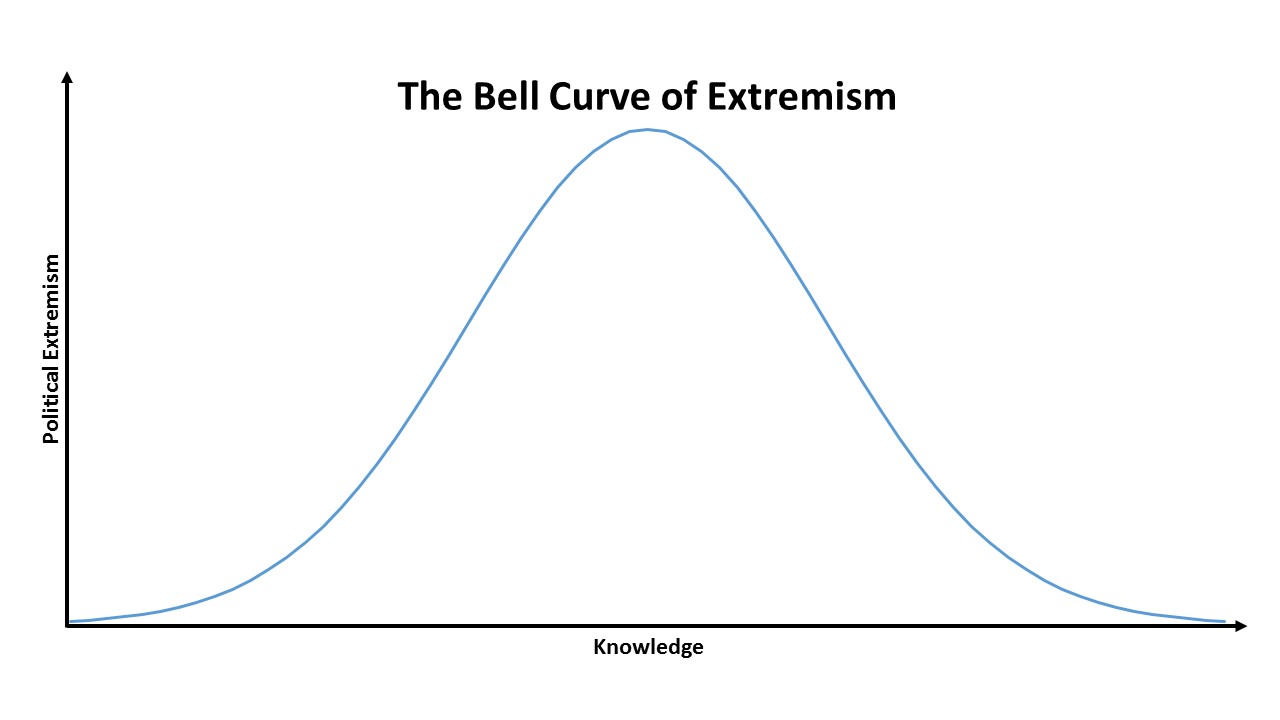
The Bell Curve of Extremism
There are basically two kinds of moderates / independents: the ignorant and the wise. It really is a sad twist of fate to stick the two together, but nobody honest every said life was fair.
To illustrate, let me introduce you to a concept I’ll call the Bell Curve of Extremism:
To flesh this out, I’ll use some examples from voting.
A person on the left doesn’t know who they’re going to vote for because they don’t know much of anything at all. They may not even know who’s running or who’s already in office. This doesn’t mean they’re stupid, necessarily. They could be brilliant, but just pay no attention to politics.
A person in the left knows exactly who they’re voting for, and it’s never really been in question. What’s more, they can give you a very long list of the reasons they are voting for that person and–what’s more–all the terrible, horrible things about the leading contender that make him or her totally unfit for office and a threat to truth, justice, and the American Way. This is the kind of person who consumes a lot of news, but probably from a narrow range of sources, like DailyKos or RedState. They’re not bad people, but they high motivation tends to lead to an awful lot of research that is heavily skewed by confirmation bias.
A person on the right may also be unsure of how they’re going to cast their vote, but it’s not because they don’t know what’s going on. The problem is they do, and this knowledge has led them (as often as not) to fall right off the traditional left/right axis. I called myself a radical moderate when I was in high-school. At the time, it was mostly because I was on the far left but I wanted to sound cool. Later on in life I found myself near the peak of the bell-curve, a die-hard conservative with all the answers who was half-convinced that liberals were undermining the country. But then I went to graduate school to study economics (one of the areas where I was staunchly conservative) and lo and behold: things got complicated. I fell off the peak and I’ve been sliding down the slope ever since. And what do you know, but I found out recently that radical moderates are actually a thing. They even include some of my very favorite thinkers, like John McWhorter (cited above) and Jonathan Haidt (cited in a lot of my posts). I’ve come full circle, from know-nothing moderate to know-that-I-know-nothing radical moderate.
It’s kind of lonely and depressing over here, to be honest, and we don’t often find an awful lot to shout about. Which is why the conversation tends to be dedicated by peak-extremists who know just enough to be dangerous. About the only banner you’ll see us waving is the banner of epistemic humility. And really, how big of a parade can you expect to line up behind, “People probably don’t know as much as they think they do? (Including us!)”
But one thing that I can share with some conviction is this post, and the idea that–when it comes to ideas–fighting fire with fire just burns the whole house down. There is validity to the idea that things were better before Christopher Columbus showed up. There was a helpful lack of measles and small pox, for example. But blaming the transmission of those diseases (except in the rare cases when it was important) and the resulting humanitarian catastrophe on Columbus doesn’t make any sense. He did a lot of really evil things, but intentional germ warfare was not among them. Relying on it because the numbers are so big is lazy. There is also validity to the idea that Columbus lived in a different time. Many of the most compassionate Westerners were motivated not by a modern sense of equal rights but by a more feudal-tinged idea of noblesse oblige. De la Casa himself, for example, first suggested making things easier on Caribbean slaves by importing more African slaves before later deciding that all slavery was a bad idea. And if you fast-forward to the 19th century abolitionist movements, you’ll find plenty of what counts as racism in the 21st century among the abolitionists who were motivated (in some cases) by ideas of civilizing the savages. Racial politics are complicated enough in the 21st century alone, of course we can’t bring in perspectives from six centuries ago and expect all the good guys to neatly align on bullet point of focus-group vetted talking points!
So yes: I see validity to both sides of the fight. If your goal is to win in the short term, then the most useful thing to do is double-down on your strongest arguments and cherry-pick the other side’s weakest points. This is the strategy of two stupids making a smart, and it doesn’t work.
If your goal is to win in the long term, then you have to undergo a fundamental transformation of perspective.[ref]Do you see how I avoided the buzz-phrase “paradigm shift”?[/ref] The short-term model isn’t just short-term. It’s ego-centric. The fundamental conceit of the idea of winning is the idea of being right, as an individual. Your view is the correct one, and the idea is to have your idea colonize other people’s brains. It is unavoidably an ego-trip.
The long-term model isn’t just about the long-term. It’s also about seeing the whole that is more than the sum of the parts. In this view, the likeliest scenario is that nobody is right because, on any particular suitably complex question, we are like the world before Newton and the world before Einstein: waiting for a new solution no one has thought of. And, even if somebody does have the right solution to the problem we face now, that will almost certainly not be the right answer to the problem we will face tomorrow. In that case, it’s not about having the right ideas in the heads of the read people, it’s about having a culture and a society that is capable of supporting a robust ecosystem of idea-creation. The focus begins to shift away from the “I” and towards the “we.”
In this model, your job is not to be the one, singular, heroic Messiah who tells everyone the answer to their problem. Your job is to play your part in a larger collective. Maybe that means you should be the lone voice calling from the wilderness, the revolutionary prophet like Newton or Einstein. But more probably it means your job is to simply be one more ant carrying one more grain of sand to build the collective pile of human knowledge and maybe–through conversations with friends and family–shift the center of gravity infinitesimally in a better direction.
I’m not a relativist. I’m a staunch realist in the sense that I believe in an objective, underlying reality that is not dependent on social construction or individual interpretation. But I’m also a realist in the sense of acknowledging that the last living human being to have ever understood the entire domain of mathematics was Carl Friedrich Gauss and he died in 1865. No living person today understands all mathematical theory. And that’s just math. What about physics and history and chemistry and psychology? And that’s just human knowledge. What about the things nobody knows or has thought of yet? An individual is tiny, and so is their sphere of knowledge. The idea that the answers to really big questions fall within that itty-bitty radius seems correspondingly remote. In short: the truth is out there, but you probably don’t have it and you probably can’t find it. It may very well be, keeping this metaphor going, that the answer to some of our questions are too complex for any one person to hold in their brain, even if they could discover one.
I’m not giving up on truth. I am giving up on atomic individualism, on the idea that the end of our consideration with regards to truth is the question of how much of it we can fit into our individual skulls. That seems very small minded, if you’ll pardon the pun. Instead, I’m much more interested in ways in which individuals can do their part to contribute to building a society that may understand more than its constituent individuals do or (since that seems a bit speculative, even to me) at a minimum provides ample opportunity for individuals to create, express, and compare ideas in the hope of discovering something new.
Two stupids can’t make a smart. The oversimplification and prejudice necessary to play that strategy is not worth the cost. Winning debates is not the ultimate goal. We can aim for something higher, but we have to be willing to lay down our own egos in the process and contribute to something bigger.
So says a thought-provoking article in Christianity Today. According to the author, engaging “the culture” simply “causes us to stab blindly in the dark” and “miss our actual cultural responsibility and opportunity”:
A nation of 300 million people, especially one as gloriously diverse as the United States, does not have one monolithic “culture.” It has neighborhoods and cities, ethnic groups and affinity groups, political parties and religious denominations. There is a shared national ethos, to be sure. But that ethos is constantly being contested, challenged, and reimagined by different groups within the nation, and ignored or actively resisted by others.
Even the idea of “the culture,” in the way we now use the phrase, is fairly new. The New Testament, especially the Gospel of John, prefers the term “the world” (cosmos in Greek) for what we might call “the culture,” especially systems of ideology and influence that operate independent of God. But it also speaks of “nations” or “peoples” (ethne in Greek—today we might call them “ethnolinguistic groups”). We are called to resist being “conformed to this world” (Rom. 12:2, ESV), and to make disciples of all ethne, in the hope that they all will join in the multinational, multilingual, multicultural chorus around the throne of the Lamb (Rev. 7:9).
In short,
Instead of preoccupying ourselves with the cosmos, we are called to the ethne. Rather than engaging in largely imaginary relationships with the world system…we are called to real people in a real place. With those real people, we reflect on the concrete possibilities and limitations of the time and place we share (including, to be sure, the ways the world system presses in on us). We learn to care for what is lasting and valuable in our particular time and place, and begin to create alternatives to things that are inadequate and broken.
The more we do this—the more fully human we become, entwined in relationships of empowering mutual dependence—the less bound and tempted we will be by “the culture.” And the less bound we are by “the culture,” the more we are able to actually influence culture around us, even sometimes up to very large scales—because we are creating and sustaining real alternatives to it.
We are to be like Paul, who didn’t seek to “engage “Rome,”” but instead “wrote a letter to actual Romans.” Similarly, “our mission is not primarily to “engage the culture” but to “love our neighbor.” Our neighbor is not an abstract collective noun, but a real person in a real place.”
This post is a talk that I gave in my congregation a couple of weeks ago. A few folks asked me for copies, so I thought putting it online would be the simplest approach.
Love or Fear
I have heard it said that every decision a human makes fundamentally comes down to one of only two motivations: fear or love. That’s it.
Scientists are a little less romantic about it, but they actually have the same basic concept. From biology to computer science whether you’re talking about an amoeba or an artificial intelligence the fundamental choice every agent has to make comes down to attraction or avoidance. You are attracted to the good stuff. You avoid the bad stuff. If you’re a bacterium, it means you move towards food and you move away from anything that thinks your food. So these are the two motives any creature can have: we either move towards what we want or we move away from what we don’t want.
An Irritant or a Quest
President Benson said
When obedience ceases to be an irritant and becomes our quest, in that moment God will endow us with power. [ref]via Elder Donald L. Staheli in Obedience—Life’s Great Challenge[/ref]
What I want to talk about is how we make that transition. How do we change our attitude towards obedience? How do move beyond the place where obedience feels like a burden and get to the place where obedience feels like a challenge? How do we turn obedience from an irritant into a quest?
I believe that it comes down to fear and love. We have to wean ourselves away from fear-based obedience and towards love-based obedience. We have to fear less and love more. It’s like Paul told Timothy:
For God hath not given us the spirit of fear; but of power, and of love, and of a sound mind.[ref]2 Timothy 1:7[/ref]
Fearful Obedience
On my mission I set goals all the time. My companion and I would sit down, we’d pray, and we’d set “realistic” goals. We’d set goals that—sitting in the apartment, feeling charged to go out and do the Lord’s work—seemed easily attainable.
I don’t think we hit 50% of our weekly goals a single time. Not even once. And yet somehow, we never learned. Every week we felt really horrible about how bad our goals were going, and every week we rallied and we did the exact same thing.
The Lord can work with all kinds of tools, but I’m pretty sure that even he appreciates the value of a sharp instrument over a blunt one. As a missionary I was definitely not the sharpest tool in the shed. It never occurred to me, not even once, that the only realistic goals would be to start with what we actually accomplished last week and then build from there.
It’s not actually that I was too dumb. The truth is that I was too proud to admit how far from perfect I was. I wanted to think of myself as a good missionary. I’d wanted to serve my whole life, I was following the rules, and I truly wanted to be there. So I just assumed—naturally—given all my good intentions I had to be pretty good, right?
Well, not. First of all, that’s not realistic. That’s just wishful thinking. I try to be a lot more realistic now than I was then. (My wife doesn’t think I’m very good at that, yet.) More importantly, however, I was operating out of fear. It was fear-based obedience. I was afraid of failure. And, I have come to learn, there is a mile of difference between trying to avoid failure and pursuing success. They may look similar from the outside, but from the inside they could not be more opposite.
Trying to be obedient out of fear means that you’re in constant stress. You’re unwilling to take risks—and risks are necessary for growth. Over time, this can lead to shriveling and atrophy. You remember the parable of the talents? The rich man gives his servants 5 talents, 2 talents, and 1 talent. The story has always bugged me, because it’s the poor guy who only gets 1 talent that messes it up. I’d like the story more if it was the guy who got 5 talents who was lazy. But that’s not the point. The point is that the first two invested. They risked. They turned doubled their talents. But the last guy? He was so afraid of losing his talent he just buried it. That’s fear right there.
Still Better than Disobedience
Let me pause for a second and make a very important disclaimer. Fear-based obedience is not as good as love-based obedience, but it’s still a whole lot better than disobedience. I don’t want anybody misunderstanding me on that point, OK?
And there’s a reason for that.
The laws of nature, the laws of God, the laws of life, are one and the same and are always in full force.[ref]Elder Richard L. Evans Where Are You Really Going?[/ref]
No matter why you are obedient, you’re still going to enjoy at least some of the blessings of that obedience because the laws of God are always in full force. The laws of physics don’t care why you buckle your seat-belt, right? If you get into an accident, your motivation does not enter into the equation. If you have the seat-belt on, you’re going to be safe. If you have it off, you’re going to be in a lot more danger.
O my beloved young friends, even selfishly it is smart to keep the commandments God has given.[ref]lder Richard L. Evans Where Are You Really Going?[/ref]
So, step 1 is be obedient. What we’re talking about now is step 2, which is how to be obedient.
Look, if your option is to either be obedient because you feel like you’re supposed to or be disobedient, then go ahead: be obedience out of obligation. When I was growing up I avoided a lot of pitfalls because I was afraid. That’s the honest truth. I didn’t smoke, I didn’t drink, I didn’t watch pornography. It’s not because I’m such an awesome, righteous guy. It’s because I was risk averse. I saw that a lot of bad stuff came along with drinking and smoking, and in general I never wanted to lose control. I was obedient because I was afraid. That’s better than disobedient. And there are plenty of days when I just don’t feel all excited about following the commandments, and I just go through the motions because it’s what I promised to do. Going through the motions is better than not doing it at all.
So, fearful obedience is better than disobedience, but it’s not that great. We want love-based obedience. This is tricky, in a way, because we’re changing horses in mid-stream. We need to find a way out of fear-based obedience and into love-based obedience. Let’s start with letting go of fear.
A Remission of Sins
I have always been struck by the phrase “remission of sins.” We pretty much always hear about it around baptism.
John did baptize in the wilderness, and preach the baptism of repentance for the remission of sins.[ref]Mark 1:4, emphasis added[/ref]
And the only other time we ever use the word “remission” is when we’re talking about cancer. I’m not a scholar. I know that the word remission has two definitions. It can mean “the cancellation of a debt” or it can mean “a temporary recovery.” And I’m not certain which one fits best with our understanding of baptism. But as I understand it, the idea of cancer going into remission and the idea of sins going into remission is basically the same. The one difference is this: when your cancer goes into remission you can’t control if or when it will come back. But when your sins go into remission you are in control. As long as you abide by the covenant you made when you were baptized, they are in remission.
What this means to me is: you don’t have to be afraid. You don’t have to live in fear. When you have faith in Christ, you get to live in hope.
That’s the first key to transitioning away from fear-based obedience.
Humility
The second key is being humble. That was my biggest problem as a goal-setting missionary. I was too proud to admit how weak I was. That got a lot easier as I got older. My life, in many ways, has been a string of disastrous failures ever since I got home from my mission. I have failed at so many things and in so many ways and with such utter gracelessness that I have been blessed with the inability to take myself very seriously anymore. I am like the poor Zoramites who were not allowed into the synagogues that they had built.
because ye are compelled to be humble blessed are ye[ref]Alma 32:13[/ref]
This humiliation has been a great blessing. It has taught me that fear of your own sins is a kind of arrogance. It is like saying that your evil is greater than Christ’s good. It is like saying that you have the ability to dig a hole too deep for your Savior to lift you out of. And if there’s only one thing you remember from my talk, let it be this: as long as you want to be saved there are no holes that deep.
When you are humble, failure loses the power to intimidate you. That’s why the devil hates humble people, they are practically impossible to push around. When you have faith and are humble, you are ready to let go of fear.
Godly Ambition
I’m going to share one of my favorite quotes. It’s from a man named Ira Glass, and—on the surface, at least—it won’t sound very religious. But it is. You’ll see. Here is his quote:
Nobody tells this to people who are beginners, I wish someone told me. All of us who do creative work, we get into it because we have good taste. But there is this gap. For the first couple years you make stuff, it’s just not that good. It’s trying to be good, it has potential, but it’s not. But your taste, the thing that got you into the game, is still killer. And your taste is why your work disappoints you. A lot of people never get past this phase, they quit. Most people I know who do interesting, creative work went through years of this. We know our work doesn’t have this special thing that we want it to have. We all go through this. And if you are just starting out or you are still in this phase, you gotta know its normal and the most important thing you can do is do a lot of work. Put yourself on a deadline so that every week you will finish one story. It is only by going through a volume of work that you will close that gap, and your work will be as good as your ambitions. And I took longer to figure out how to do this than anyone I’ve ever met. It’s gonna take awhile. It’s normal to take awhile. You’ve just gotta fight your way through.[ref]The quote is all over the place. The most original source I could find was YouTube.[/ref]
This quote is about love and fear. All artists have to confront the gap between what they want to do (make good art) and what they are doing (making terrible art) and then they have to make a decision: love or fear. If they choose fear, they will quit, because the pain of failure is too much. If they choose love, they will refuse to give up. And that means they will keep on failing. They will write bad stories. They will write terrible poetry. They will take horrible photographs. And they will do it again and again and again until they get it right.
This applies to all of us.
Every thing which inviteth to do good, and to persuade to believe in Christ, is sent forth by the power and gift of Christ[ref]Moroni 7:16[/ref]
We all see light and truth and kindness and beauty in our lives at some point. We love those things. And we all see our own actions and we see darkness and deception, selfishness and ugliness. And then we have to choose: love or fear.
If we choose love, then—just like the artists—we go right on ahead and keep failing. We fail at being perfectly kind. We fail at being perfectly wise. We fail at being perfectly honest. And every morning we get up and we do it again and again until one day we get it right. And that is what it means to be a saint.
A saint is not necessarily a person who is perfect, but he is a person who strives for perfection—one who tries to overcome those faults and failings which take him away from God. A true saint will seek to change his manner of living to conform more closely to the ways of the Lord.[ref]Elder Theodore M. Burton in The Need for Total Commitment[/ref]
Artists learn to be better artists by first being bad artists. They practice. And people learn to be better people by first being bad people. They practice. And the name for that practice is: obedience. When you “seek to change [your] manner of living to conform more closely to the ways of the Lord” because you love the things which “inviteth to do good” then—for you—obedience has become a quest. Keeping the commandments will always be hard, but it will no longer feel like a burden because you will understand that keeping the commandments is the path to becoming the kind of person you would be proud to be.
—
If you’d like a printable copy of the talk, here you go.
A new IMF publication finds that “[t]he waning pace of trade liberalization over the past few years and the recent uptick in protectionist measures could be limiting the sustained policy-driven reductions in trade costs achieved during 1985–2007, which provided a strong impetus to trade growth (Evenett and Fritz 2016; Hufbauer and Jung 2016)” (pg. 63). Their suggestion? “[R]esisting all forms of protectionism and reviving the process of trade liberalization to dismantle remaining trade barriers” in order to “provide much-needed support for trade growth, including through possibly kicking off a new round of global value chain development” (pg. 86). The Wall Street Journal reports,
Rising protectionism, record debt levels and a continuing economic malaise in wealthy countries will drag on global growth next year despite a turnaround in several key emerging markets, the International Monetary Fund said Tuesday. Global growth should only marginally pick up in 2017 to 3.4% from 3.1% this year, the fund said in its latest World Economic Outlook, despite policy makers pushing central bank stimulus into uncharted territories…A political backlash against the perceived negative effects of globalization threatens to undermine an already-weak and precarious recovery, the IMF warned.
“Subpar growth at recent levels risks feeding on itself through the negative economic and political forces it is unleashing,” IMF chief economist Maurice Obstfeld said, referring in large part to the surge in trade barriers around the world and the rise in opposition to free trade and immigration in the politics of the U.S. and Europe. Fearful of a trend toward protectionism when the global economy is already struggling with deflation risks, the IMF highlighted the potential shocks to growth from a sudden increase in tariffs and other trade barriers.
…The IMF also took pains to caution policy makers against the temptation to revert to protectionism as trade growth stalls in the low-growth era. Such anti-trade trends risk tilting the world economy deeper into a long-term funk. The fund estimated that a surge in trade barriers around the globe that pushed up import prices by 10% could sap nearly 2 percentage points off world growth over five years, force a 15% decline in exports and pull investment down by more than 4%.
U.S. automotive competitiveness is highly dependent on global free trade. According to the Mexico City-based consulting firm De la Calle, Madrazo, Mancera, 37% of the U.S.’s imported auto components came from Mexico and Canada in 2015. This sourcing from abroad is important to good-paying U.S. auto-assembly jobs. But parts also flow the other way. U.S. parts manufacturers sent 61% of their exports to Mexico and Canada in 2015.
This synergy has made the U.S. auto industry attractive for investment. In the aftermath of the 2008 financial crisis investment in the auto sector contracted. But from 2010-14 almost $70 billion was invested in the North American automotive industry. Mr. Trump claims that investment is going to Mexico but two-thirds of it went into the U.S., according to a January 2015 report by the Michigan-based Center for Automotive Research.
This investment dynamism helped generate 264,800 new U.S. jobs in motor-vehicle production and parts between January 2010 and June 2016, according to the Bureau of Labor Statistics. That’s a 40% increase in employment despite the increasing trend toward robotics in the industry. Shut down Nafta and these workers and future job seekers will pay.
The National Academy of Sciences released a comprehensive report earlier this year that “builds on previous related Academies reports published between 1987 and 2010 by undertaking a retrospective examination of the purported positive and adverse effects of GE crops and to anticipate what emerging genetic-engineering technologies hold for the future.” Here are the highlights from the press release:
Effects on human health: “The committee carefully searched all available research studies for persuasive evidence of adverse health effects directly attributable to consumption of foods derived from GE crops but found none. Studies with animals and research on the chemical composition of GE foods currently on the market reveal no differences that would implicate a higher risk to human health and safety than from eating their non-GE counterparts. Though long-term epidemiological studies have not directly addressed GE food consumption, available epidemiological data do not show associations between any disease or chronic conditions and the consumption of GE foods. There is some evidence that GE insect-resistant crops have had benefits to human health by reducing insecticide poisonings. In addition, several GE crops are in development that are designed to benefit human health, such as rice with increased beta-carotene content to help prevent blindness and death caused by vitamin A deficiencies in some developing nations.”
Effects on the environment: “The use of insect-resistant or herbicide-resistant crops did not reduce the overall diversity of plant and insect life on farms, and sometimes insect-resistant crops resulted in increased insect diversity, the report says. While gene flow – the transfer of genes from a GE crop to a wild relative species – has occurred, no examples have demonstrated an adverse environmental effect from this transfer. Overall, the committee found no conclusive evidence of cause-and-effect relationships between GE crops and environmental problems. However, the complex nature of assessing long-term environmental changes often made it difficult to reach definitive conclusions.”
Effects on agriculture: “The available evidence indicates that GE soybean, cotton, and maize have generally had favorable economic outcomes for producers who have adopted these crops, but outcomes have varied depending on pest abundance, farming practices, and agricultural infrastructure. Although GE crops have provided economic benefits to many small-scale farmers in the early years of adoption, enduring and widespread gains will depend on such farmers receiving institutional support, such as access to credit, affordable inputs such as fertilizer, extension services, and access to profitable local and global markets for the crops. Evidence shows that in locations where insect-resistant crops were planted but resistance-management strategies were not followed, damaging levels of resistance evolved in some target insects. If GE crops are to be used sustainably, regulations and incentives are needed so that more integrated and sustainable pest-management approaches become economically feasible. The committee also found that in many locations some weeds had evolved resistance to glyphosate, the herbicide to which most GE crops were engineered to be resistant. Resistance evolution in weeds could be delayed by the use of integrated weed-management approaches, says the report, which also recommends further research to determine better approaches for weed resistance management. Insect-resistant GE crops have decreased crop loss due to plant pests. However, the committee examined data on overall rates of increase in yields of soybean, cotton, and maize in the U.S. for the decades preceding introduction of GE crops and after their introduction, and there was no evidence that GE crops had changed the rate of increase in yields.[ref]I’m surprised by this finding considering there are numerousstudiesthatfindGMOsincreasecrop yields.[/ref] It is feasible that emerging genetic-engineering technologies will speed the rate of increase in yield, but this is not certain, so the committee recommended funding of diverse approaches for increasing and stabilizing crop yield.”
What about “superweeds”? Again, the evolution of resistance by weeds to herbicides is nothing new and is certainly not a problem specifically related to genetically enhanced crops. As of April 2014, the International Survey of Herbicide Resistant Weeds reports that there are currently 429 uniquely evolved cases of herbicide resistant weeds globally involving 234 different species. Weeds have evolved resistance to 22 of the 25 known herbicide sites of action and to 154 different herbicides. Herbicide resistant weeds have been reported in 81 crops in sixty-five countries. A preliminary analysis by University of Wyoming weed scientist Andrew Kniss parses the data on herbicide resistance from 1986 to 2012. He finds no increase in the rate at which weeds become resistant to herbicides after biotech crops were introduced in 1996. Since Roundup (glyphosate) is the most popular herbicide used with biotech crops, have the number of weed species resistant to Roundup increased? Kniss finds that the development of Roundup resistant weeds has occurred more frequently among non biotech crops. Glyphosate resistant weeds evolved due to glyphosate use, not directly due to GM crops,” he points out. “Herbicide resistant weed development is not a GMO problem, it is a herbicide problem (pgs. 155-156).
The more you learn about herbicide resistance, the more you come to understand how complicated the truth about GMOs is. First you discover that they aren’t evil. Then you learn that they aren’t perfectly innocent. Then you realize that nothing is perfectly innocent. Pesticide vs. pesticide, technology vs. technology, risk vs. risk—it’s all relative. The best you can do is measure each practice against the alternatives. The least you can do is look past a three-letter label.
If an employer has an opening that pays $50,000 in salary, and the Christian applicant will bring in $51,000 in extra revenue to the firm while the Muslim applicant will bring in $55,000, then to discriminate against the creed of the latter will cost the employer $4,000 in potential profits…No government inspector or watchdog agency is required: by definition, discrimination is automatically “fined” in the free market. In addition, not only does the market catch discrimination whenever it occurs, but the amount of the “fine” is also exactly proportional to the severity of the discrimination…In short, employers are free to discriminate in the free market, but this discrimination certainly isn’t free.
It turns out there is good evidence for this theory. As economist Alex Tabarrok reports at Marginal Revolution,
A nice test of the theory can be found in a paper just published in Sociological Science, Are Business Firms that Discriminate More Likely to Go Out of Business? The author, Devah Pager, is a pioneer in using field experiments to study discrimination. In 2004, she and co-authors, Bruce Western and Bart Bonikowski, ran an audit study on discrimination in New York using job applicants with similar resumes but different races and they found significant discrimination in callbacks. Now Pager has gone back to that data and asks what happened to those firms by 2010? She finds that 36% of the firms that discriminated failed but only 17% of the non-discriminatory firms failed.
The sample is small but the results are statistically significant and they continue to hold controlling for size, sales, and industry.
So don’t discriminate. Not only is it unethical, it’s bad for business. But if you do, I hope you go out of business.


 In the nearly half-century history of


 There’s a school of thought which holds, essentially, that everything was fine and dandy in the Americas until the Europeans came along and ruined it. The idea, seen in Disney and plenty of other places, is that “native” peoples lived at harmony with the Earth, appreciating the fragile balance of their precious ecosystems and proactively maintaining it. This idea is bunk. The reality is that in almost all cases the only limit on the extent to which any culture restricts its exploitation of natural resources is technological. Specifically, humanity has an unambiguous track record of killing everything edible in sight as they spread across the globe, leading to widespread extinctions from Australia to the Americas and upending entire ecosystems. If our ancient ancestor didn’t wipe a species out, the reason was either that it didn’t taste good or they couldn’t. As Yuval Noah Harari put it
 In Madagascar, he notes that “at least 17 species of lemurs (all the diurnal one is larger than 10 kg in weight, one as big as a gorilla), and the remarkable elephant birds — the biggest of which weighs 1000 pounds — were dead within a few centuries of the islands first colonization by people in about 500 A.D.” In New Zealand, “the first Maoris sat down and ate their way through all 12 species of the giant moa birds. . . Half of all new Zealand’s indigenous land birds are extinct.” The same thing happened in Hawaii, where at least half of the 100 unique Hawaiian birds were extinct shortly after humans arrived. “In all, as the Polynesians colonized the Pacific, they extinguished 20% of all the bird species on earth.”
 Let me take a very brief tangent. Ridley’s argument here (as it relates to conservation) is exactly parallel to John McWhorters linguistic arguments and Steven Pinker’s psychological arguments. In
 The underlying premise of Harrari, Ridley, and McWhorter is what Steven Pinker’s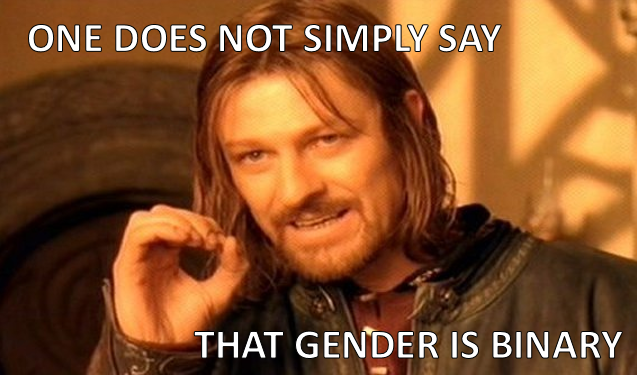

 A
A 
 If an employer has an opening that pays $50,000 in salary, and the Christian applicant will bring in $51,000 in extra revenue to the firm while the Muslim applicant will bring in $55,000, then to discriminate against the creed of the latter will cost the employer $4,000 in potential profits…No government inspector or watchdog agency is required: by definition, discrimination is automatically “fined” in the free market. In addition, not only does the market catch discrimination whenever it occurs, but the amount of the “fine” is also exactly proportional to the severity of the discrimination…In short, employers are free to discriminate in the free market, but this discrimination certainly isn’t free.