Chris Henrichsen at Approaching Justice posted this fantastic video from Amnesty International. Twenty-five years ago today, the still unknown “Tank Man” took his stand.
Just because China wants to forget doesn’t mean we should.
I had another dream, I had another life
Chris Henrichsen at Approaching Justice posted this fantastic video from Amnesty International. Twenty-five years ago today, the still unknown “Tank Man” took his stand.
Just because China wants to forget doesn’t mean we should.
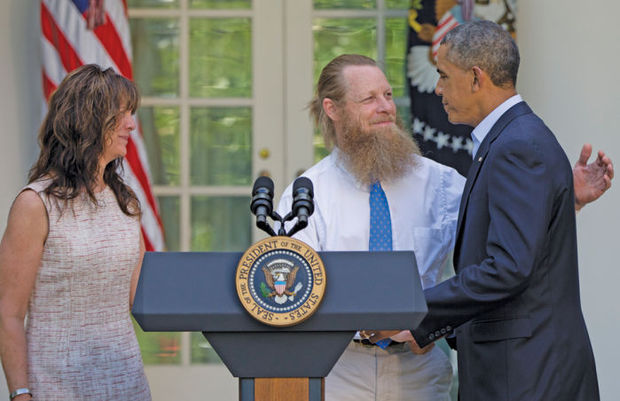
As I understand it, the news cycle has gone something like this:
Let me give you two examples. The first comes from The Daily Beast and the headline says it all: We Lost Soldiers in the Hunt for Bergdahl, a Guy Who Walked Off in the Dead of Night. According to the story, Bergdahl deserted his post of his own volition (bad enough), which led to a vast manhunt that resulted in American soldiers dying while looking for him (worse) and culminated in strict orders that the American soldiers not speak of the incident at all (worse still). The article, written by one of the soldiers who was out risking his life and jeopardizing the greater counterinsurgency operations looking for Bergdahl, concludes by saying:
And Bergdahl, all I can say is this: Welcome back. I’m glad it’s over. There was a spot reserved for you on the return flight, but we had to leave without you, man. You’re probably going to have to find your own way home.
It’s a really poignant, fair, eye-opening piece. Read it. And then there’s this piece, published by conservative Mormon and Islamic scholar Daniel Peterson about some of the conservative complaints that are decidedly less reasonable. Peterson shoots down the theory that Bergdahl’s father “sanctified the White House for Islam” when he said, upon entering that building, “Bi ism Allah al-rahman al-rahim whih” meaning (in Arabic): “in the name of Allah the most gracious and most merciful.” Sounds ominous (if you have no idea what you’re talking about), but Peterson explains that the phrase “is routinely used at the beginning of formal statements and speeches in Islamic societies.” Bergdahl’s next words, apparently in Pashto instead of Arabic, were “I am your father.” Why speak Arabic and Pashto to a returning American POW? Because he spent the last 5 years speaking only Arabic and Pashto and is having trouble adjusting back to English, that’s why.
In short: this is another one of those stories where everyone who is convinced that the other side is ripe for ridicule ends up looking rather ridiculous themselves. Whether it’s Mother Jones embarrassing itself by attributing the (entirely factual) notion that Bergdahl was a deserter to “a few fringe types” (thus making The Daily Beast, USA Today, etc. all out to be right-wing nutjobs) or conservatives with zero comprehension of Arabic language or culture concocting weird fantasies about the White House being baptized into Islam[ref]I know that’s not a thing. That’s the point.[/ref], people ought to settle down and just do a little bit of digging. And maybe a little bit of waiting.
As far as I can tell the reason that conservatives were ahead of the main stream media on this story is partially paranoia but also because conservatives are much, much more tied in to the US military and therefore knew early that something was up. I knew because I follow Michael Yon, and he issued an early warning on this story, saying:
Mixed Reaction on Bergdahl release from Taliban
Be careful with this. He needs to be welcomed home, given a full physical and time with his family, and then charges against Bergdahl should be considered.
A piece of information you likely never will see in the news: Taliban and al Qaeda shared joint custody of Bergdahl. He converted to a hardcore strain of Islam, according to reliable sources.
Yon linked to an Army Times piece citing “mixed” reaction from the military community. (He added information in further updates like this one and this one.) So the military community, which is no fan of Obama, was out early with suspicion about holding a press conference for the return of someone who had, by his own derelection of duty, ensured that other Americans never made it home. Now the Pentagon will review claims US soldiers killed during search for Bergdahl. Looks like there was at least some fire to go with all this smoke.
I skipped the last post or two at Times And Seasons ’cause I thought I was pushing through to the end of another project I’m working on and wanted to give it all my attention. Turns out, however, that I wasn’t as close to the end as I thought. So I’m back to regular posting (every other week) starting this morning with False Choices and Fence Holes. It’s a response to a By Common Consent post that I saw going around on Facebook and deals with the way liberals and conservatives talk to each other about potential problems the Church is facing. It’s relatively short (as m pieces go) and I’ve gotten some positive feedback on it already, so check it out!
The libertarian website Reason.com has a special collection of articles and videos on video games coinciding with the June 2014 issue of their magazine. I’ve never been a huge gamer, mainly because I wasn’t allowed to have a video game system growing up. But I’ve always loved them when I had the chance to play. I especially became interested in their impact on people after reading Steven Johnson’s Everything Bad Is Good For You: How Today’s Popular Culture Is Actually Making Us Smarter and Jane McGonigal’s Reality Is Broken: Why Games Make Us Better and How They Can Change the World. I even recently bought Liel Leibovitz’s God in the Machine: Video Games as Spiritual Pursuit. I don’t see them as the “waste of time” that I was often told they were.
Reason‘s collection looks at the interaction of gaming and society from various angles. Check it out.
 Damon Linker has an interesting article in The Week relaying his teaching experience at Brigham Young University:
The combination of crusading moral indignation and hypersensitive self-protectiveness has the potential to stamp out genuine liberalism at some schools, transforming them into institutions devoted to insulating students from provocation and free thinking rather than to exposing them to it.
…In my experience, liberalism in the classical sense often thrives where many scholars and academics would least expect to find it — in institutions of higher learning that are unlikely to get swept up in the illiberal currents currently washing over so many of the nation’s campuses. I’m talking about schools with deep, serious religious commitments.
I happened to spend two years in the late 1990s teaching at one of these schools — Brigham Young University, wholly owned and run by the Church of Jesus Christ of Latter-day Saints — and it was a clarifying experience.
Check out the full article for his admittedly surprising (even to this active Mormon) experience.
 Americans are missing out on one of the greatest stories in the history of mankind:
According to a recent Barna Group survey…more than eight in 10 Americans (84%) are unaware global poverty has [decreased by more than half in the past 30 years]. More than two-thirds (67%) say they thought global poverty was on the rise over the past three decades.
Similarly, while both child deaths and deaths caused by HIV/AIDS have decreased worldwide, many Americans wrongly think these numbers are on the rise: 50% of US adults believe child deaths have increased since 1990, and 35% believe deaths from HIV/AIDS have increased in the past five years.
Despite the very real good news, more than two-thirds of US adults (68%) say they do not believe it’s possible to end extreme global poverty within the next 25 years. Sadly, concern about extreme global poverty—defined in this study as the estimated 1.4 billion people in countries outside the US who do not have access to clean water, enough food, sufficient clothing and shelter, or basic medicine like antibiotics—has declined from 21% in 2011 to 16% in 2013.
It turns out that practicing Christians are more likely to believe it’s possible to end extreme global poverty in the next 25 years: “Practicing Christians under 40 are the most optimistic at nearly half (48%), with practicing Christians over 40 slightly higher than the general population (37%) compared to 32% of all adults).” But people are hesitant to give more for reasons ranging from belief in the inevitability of poverty’s existence to distrust in corrupt foreign governments. [ref]Unfortunately, the Barna Group doesn’t even mention the impact of liberalized markets and globalization on extreme poverty. This is exactly what Nathaniel and I cover in our SquareTwo article.[/ref]
Check out the full article.
 Economists Wojciech Kopczuk and Allison Schrager have a Foreign Affairs article with the eye-catching title “The Inequality Illusion.” The two argue that “imposing a tax on wealth is a terrible way to promote equality. It actually benefits the super wealthy the most.” They continue:
What is not widely understood is that the growth in income inequality [in the U.S.] has been driven almost entirely by earned income, that is, what people are paid for their work rather than what they earn on their investments.
Wealth inequality refers to the stock of people’s assets. It represents the accumulation of saved income and returns on investments over the years. Some wealth inequality is inevitable, even desirable, because wealth represents a lifetime of saving and not just luck or opportunity. Extreme income inequality can beget extreme wealth inequality because people with a lot of income, if they save, can amass large fortunes and pass them on to their children. But over time, such wealth can also dissipate as people leave it to multiple children, get married and divorced, develop expensive lifestyles, contribute to charities, or make poor investment decisions. Whereas income inequality has clearly worsened, the recent evidence about wealth inequality is much less convincing.
After reviewing a number of sources, they declare, “Taken together, then, the economic evidence points to increased earnings inequality but to a much more benign picture of changes in wealth inequality. Increasing inequality has been driven by income earners not necessarily by the entrenched wealth holders.”
Given the recent controversy over errors in Thomas Piketty’s data (errors that may or may not undermine his argument),[ref]The FT analysis is likely the most famous (update: Financial Times has a follow-up post), but others have found some major errors as well. For example, former chief economist for the U.S. Department of Labor Diana Furchtgott-Roth has pointed out Piketty’s errors in the history of the U.S. minimum wage. Economist Randall Holcombe has written on the “fundamental problems with the way [Piketty] depicts capital.” Inequality expert Scott Winship has two articles in Forbes that are also quite critical of Piketty. Economist Robert Murphy disputes Piketty’s tax history. In response to a recent Spectator article contrasting Deirdre McCloskey and Piketty, GMU economist Don Boudreaux writes, “[I]ndispensable to our modern prosperity is not only the innovative creation of capital but also the continual destruction of capital that such successful innovation entails…What is destroyed is not only some jobs (e.g., t.v. repairman) and the value of some consumer goods (e.g., crutches for polio victims) and services (e.g., postal delivery), but also the value of capital. Capitalism’s nature is not, contrary to Piketty’s claim, to forever protect and augment existing capital. Central to capitalism’s nature is what McCloskey calls “market-tested innovation.” And this innovation inevitably destroys the value of older, less-productive capital that is in competition with with it – in competition with the new capital, the new goods, the new production and consumption processes, and the new knowledge that innovative entrepreneurs create.” Update: A brand new paper out of Yale disputes Piketty’s “second law of capitalism.”[/ref] the above article is quite timely.
Check it out.

Gratitude and grace are subjects I’ve written on before, but I don’t think I’ve ever explicitly connected it with work. My latest post at The Slow Hunch does just this. It was disheartening to learn (based on a survey by the John Templeton Foundation) that work is the place at which people are least likely to express or feel gratitude. But business organizations are human institutions and thus have the potential to be islands of human meaning and progress. There is plenty to be grateful for in one’s employment. Expressing it not only benefits individuals, but the organization as a whole.
Check out the post to see how.

Mike Rowe is best known as the host of the Discovery Channel series Dirty Jobs, but I’ve noticed he’s been writing about politics more and more these days, and I like what he has to say. Here’s a story he shared, along with the photo above, on Facebook recently.[ref]I checked, and the photo is actually from July 2013. So I heard about it recently, but it’s an old story. Still good, though.[/ref]
[Bob Reidel: “Mike – Saw you hangin with Bill Maher. I had no idea you were a liberal. Really blew me away. Love everything you do but now that I know who you really are, I won’t be tuning in to watch anything your involved with.”]
Well, hi there, Bob. How’s it going? Since your comment is not the only one of its kind, I thought I’d take a moment to address it.
Bill Maher is opinionated, polarizing and controversial. I get it. So is Bill O’Reilly, which is probably why I heard the same comments after I did his show. (“How could you Mike? How could you?”)
Truth is, every time I go on Fox, my liberal friends squeal. And every time I show up on MSNBC, my conservative pals whine. Not because they disagree with my position – everyone agrees that closing the skills gap is something that needs to happen. No, these days, people get bent simply if I appear on shows they don’t like, or sit too close to people they don’t care for.
What’s up with that? Is our country so divided that my mere proximity to the “other side” prompts otherwise sensible adults to scoop up their marbles and go home?
Back in 2008, I wrote an open letter to President Obama, offering to help him promote those 3 million “shovel-ready” jobs he promised to create during his campaign. (I suspected they might be a tough sell, given our country’s current relationship with the shovel.) Within hours, hundreds of conservatives accused me of “engaging with a socialist,” and threatened to stop watching Dirty Jobs with Mike Rowe if I didn’t come to my senses.
When I made the same offer to Mitt Romney (who actually responded), thousands of liberals chastised me for “engaging with a greedy capitalist,” and threatened to stop watching Dirty Jobs if I didn’t take it back.
You may ask, “But what did these people think about the issue at hand?” Who knows? They were too busy being outraged by my proximity to the devil. (Poor Ed Shultz at MSNBC nearly burst into tears. “You were on the wrong stage, Mike! The wrong stage!! With the wrong candidate!!!”)
Oy.
Here’s the thing, Bob – Profoundly Disconnected (http://profoundlydisconnected.com/) is not a PR campaign for Mike Rowe. It’s a PR campaign for skilled labor and alternative education. PR campaigns need … that’s right, PR, and if I limit my appearances to those shows that I personally watch, hosted only by those personalities with whom I personally agree, I might as well start a church and preach to the choir.
Point is, I didn’t go on Real Time to endorse BM, and I didn’t go on The Factor to endorse BO. I went on because millions of people watch those shows. I approached our liberal president for the same reason. Likewise, his conservative opponent. And I showed up on Sesame Street with the same agenda that I took to Congress.
Closing the skills gap is bigger than you or me or any particular venue, and Real Time gave me an opportunity to reach 5 million people. I’m grateful for that, and I’ll do it again if they want me back.
As for Bill Maher off-camera, you’ll be pleased to know that the guy was a perfect gentleman. His staff is excellent, and his after-party included an open bar with a spread I’ve never seen in such a setting. Bill took the time to hang out with his guests and their friends after the show, chatting about this and that for over an hour, and taking pictures with anyone who wanted one. Trust me, that’s rare.
Yes, he’s outrageous, inflammatory, and to many, a jagged little pill. But he’s also gracious, generous, engaging, and taller than he appears on TV.
Which, frankly, surprised me.
The world could use a few more guys and gals like Mike Rowe.
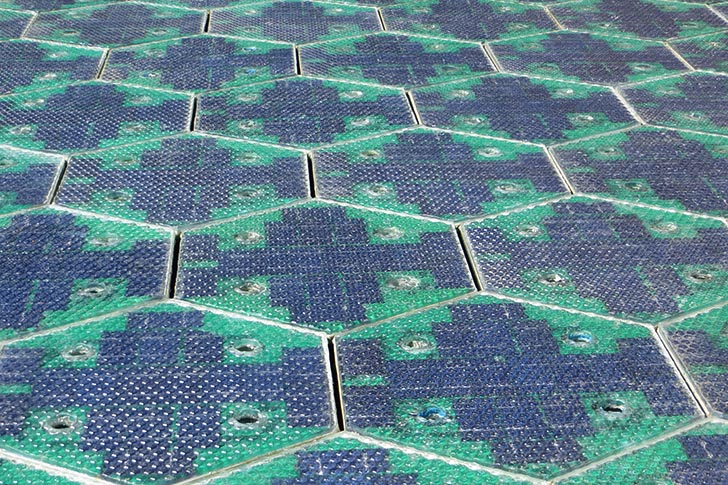
This is without doubt the most exciting kickstarter-style project I have ever in my life seen. The concept is simple, but the results are far-reaching and profound. Ready for the concept? Here it is: build all of our roads out of interlocking hexagonal solar panels. Hey look, there’s a video!
So there’s a little more to it than that, obviously. First: yes, the panels are strong enough for use as roadways. Second: they generate a lot of power. The estimate in the video is that they could generate 3x our entire national energy usage. Third: they are more than just solar panels. They also include heating elements to keep roadways clear during winter, LED panels for safety (and fun, when used on playgrounds or driveways, etc.), and come with conduits designed to allow buried power and telecommunications cable on one hand, and handle water run-off on the other.
One thing the video doesn’t mention, that it should, is the possibility of using these roadways to make self-driving cars infinitely easier and safer. The historical debate for self-driving cars has always been smart roads vs. smart cars. Smart roads are a lot easier in terms of technology, but require vast investment. But if we’re replacing all our roads anyway, then there’s no reason not to network them and make the network available to your smart car. Then you’d get an exact, real-time map of all the roads that would take some of the strain off of smart cars. (They would still need to be smart, but now you’ve got redundancy and have made their job easier.)
Obviously there are concerns. The issue of cost is not fully addressed. Neither is the issue of maintenance. There are a lot caveats and exceptions to consider, such as handling bridges and tunnels. Some parts are just not necessarily going to work that well. Replacing pained lane-markers with LEDs sounds awesome… but will they be readily visible in the middle of the day? And generating 3x the required power supply is great… except that it’s all generated during the day. The same issue that has always plagued solar power still applies: storage. Then there are the political considerations. Are global power suppliers (everything from nuclear to fossil fuels to other alternatives) going to just twiddle their thumbs while their market literally disappears? And generating enough power for all our cars to run off of the electricity from the roadways is great, but we’d actually need to all transition to electric cars first, which means phasing out hundreds of millions of cars currently in existence.
AND YET! And yet this idea, over the long run, feels like it has the potential to really change our world in a fundamental way for the better. It’s the kind of technological advance that I can see people taking for granted in the future, never realizing how much immeasurably better everyone’s lives have become by something that would be taken for granted not long after being implemented precisely because of how much everyone would depend on it every day. For me, it seems like it would be up there with, I don’t know, running water or electricity, or the interstate highway system. The kinds of things we don’t really appreciate, even though they define our modern world.
Maybe the current iteration of the tech doesn’t address all these problems, but I can’t help but feel that we’re close.[ref]Example: maybe LEDs don’t work under bright, daylight conditions. So why not use e-ink instead?[/ref] And that this would be the kind of massive public project that I would love, love to support even as a conservative. Go support the IndieGoGo campaign now!
EDIT: The campaign has 8 days left. They have raised over $400,000, but their goal is $1,000,000. The money will be used for moving from prototype to production, primarily by hiring additional engineers. I think it’s a worthy cause, but I’d like to know more about the short-term business model. Seems like selling to early-adopters who want to use the material to pave their driveways would be awesome, then moving up to commercial installations as parking lots to improve / prove the technology works. Replacing our national roadway system seems like the final phase, not the next step.