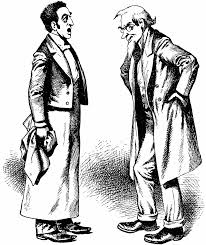
“But what of man’s relation to the Divine?” “Quiet, please, we’re arguing over how old dirt is”
So begins a thought-provoking article in The Week on the evolution vs. creation debate entitled “In Defense of Creationists.”[ref]I’d like to point to a similar, though more broadly-themed post by my friend Seth Payne entitled “In Defense of Believers.”[/ref] Being one who accepts evolution, rejects a young earth viewpoint, etc., I struggle sometimes in my church’s culture and Sunday School courses. The article’s author describes my outlook fairly well:
Genesis describes the created world and the Garden of Eden like a temple, and Adam’s duties therein are outlined in terms of worship and priestly service. Revelation describes the heavenly Jerusalem and the worship of all the saints, martyrs, and angels in the heavenly temple. It measures this city of God in cubits of gold brick and precious jewels. These liturgical blueprints informed and inspired the construction and worship within the Jewish Temple of Jerusalem and every Christian sanctuary worthy of the name across the planet.
And let me emphasize something important: What I just described is the “literal” interpretation of these Biblical texts. When I say Genesis and Revelation are a kind of divine architecture course, I’m taking the text on its own terms. It may be spitting into the storm of common idioms, but to be a literalist is to read poetry as poetry, history as history, and parable as parable.
Anglican bishop and biblical scholar N.T. Wright explains this rather well below.
Noting the tearing down of liturgy following the Protestant Reformation, the The Week author explains that the texts were then “reduced to a replacement science textbook and a ripped-from-the-headlines Michael Bay–style blockbuster.” Yet, despite this recognition, the author provides a charitable view of creationists’ peculiar interpretation of scripture:
They have gotten lost in the woods while trying to protect the big truths of Christianity: that God created the world, that we are dependent on him, that we owe him everything, and that he loves us even though we are sinful. In the world most of us inhabit, day to day, the world of lovers, wriggling kids, disease, war, and death, the sureness of God’s love is relevant in a way that the details of early hominid fossils never will be, glorious as they are. Have some perspective, people. In protecting that big truth of creation — that we are all made in God’s image and all endowed with supreme dignity — fundamentalists zealously guard things that follow logically from that.
As the article’s subtitle reads, “Sure, they’re misreading Genesis. But for all the right reasons.”
Adam Greenwood has a pretty insightful look at one of the commonly confused aspects of arguing about gay marriage over at Junior Ganymede.
A lot of time gets wasted in arguments that are really about what the proper unit of analysis is, without any of the participants quite realizing that is what their argument is about.
Let’s take gay marriage, for example. Defenders of the traditional definition of marriage believe that marriage is fundamentally tied to procreation. Proponents of gay marriage pooh-pooh the suggestion. The defenders, they point out, do not try to prevent old or infertile couples from getting married, nor do they try to prevent couples who have decided not to have children from getting married.
Read the rest for his resolution of this problem, which is really helpful in bringing some clarity to the debate.
There was an initial wave of angry condemnation when The Triple Package was first released, and my problem with that reactionary wave was just that: It was reactionary. It’s been over a month since those first-pass criticisms were unleashed, and over at Slate Daria Roithmayr has had time to formulate a more nuanced and sophisticated response. Or, as turns out to be the case, not. Instead, her response shows the twin perils of (A) putting politics ahead of reality and (B) espousing historical theories without consulting Wikipedia first[ref]I’m not saying Wikipedia is the final word on research, but if you don’t at least start there…[/ref].
According to Roithmayr, the real reason that different cultural groups perform differently is that they start out with unequal resources. Otherwise: we are all exactly the same. The problem is that Roithmayr pretends it’s a conclusion of her research when quite obviously it is pure political dogma. She explains the success of each of the seven cultural groups identified by Chua in their turn. I’m not a historian, so I’m not qualified to analyze all of them, but in the case of her hypothesis about what makes Mormons successful, her explanation is so bad that you don’t have to be. Even the most superficial familiarity with our history[ref]Again: Wikipedia[/ref] shows that she has no idea what she’s writing about. Consider:
It’s not just that Mormons have developed a “pioneer spirit” or that they believe that they can receive divine revelations, as Triple Package would have us believe. It’s more that the first Mormons started with enough money to buy a great deal of land in Missouri and Illinois. They then migrated to Utah, where Brigham Young and his followers essentially stole land from the Shoshone and Ute tribes, refusing to pay what the tribes demanded, and petitioning for the government to remove them. Beyond thousands of acres of free land, early political control over Utah was helpful.
So here’s the true story of Mormonism: a bunch of really wealthy families just decided to buy a bunch of land in New York, Ohio, Missouri, Illinois, and so forth. Why did they keep moving around and buying new land? Oh, you know, just because. They were fickle like that. Then they thought it would be fun to move to Utah because, you know, the land by the Great Salt Lake is legendary for being so fertile. That’s what everyone says when they drive through Utah, right?
Look how green everything is!
In case you can’t detect all the sarcasm, the reality is that the Mormons were poor and marginalized from the start and that they moved from one state to the other at the point of a gun, suffering murders, rapes, and theft along the way. When they managed to build the city of Nauvoo up to one of the largest American cities at the time, well, that was about the time Joseph Smith was murdered and they were surrounded by thousands of armed men with, you know, cannons and then forced out of their homes without compensation in the middle of winter.[ref]They were able to walk across the Mississippi on their way out.[/ref] The land they stole in Utah was only marginally fit for agriculture and the reason they were there in the first place was simply to get away from constant oppression, but that ended up not working so well when the United States sent the largest federal expeditionary force of its history (to that point) to subjugate those wacky religious nuts, resulting in the low-grade Utah War of 1857[ref]Not to be confused with the Mormon War of 1838 in Missouri or the Mormon War of 1844-1848 in Illinois. In case it isn’t clear: Mormons lost those wars. Or, as Roithmayr puts, it, we “migrated”.[/ref]
Since Roithmayr says “For many groups, like Cubans and Mormons, the early wave was a select group endowed with some significant material or nonmaterial resources—wealth, education, or maybe a government resettlement package,” and since Mormons were by and large quite poor[ref]Definitely after all the pillaging and running for their lives if not before.[/ref] the only reasonable conclusion is that she can’t tell the difference between a resettlement package and an armed invasion.
The Haun’s Mill Massacre where a mob of over 200 killed about 20 Mormon men and boys and were never prosecuted. Or, as Roithmayr describes it, the “Haun’s Mill Polite Conversation.”
She mentions Mormons one more time, writing:
The most recent (newly converted) Mormons hail from Africa and Latin America, and many of them have migrated to the U.S. The Church of Jesus Christ of Latter-day Saints has also begun outreach to U.S.-born blacks (African-Americans have only been allowed in the Mormon church priesthood since 1978). Black Mormon trajectories look nothing like the white Mormons at the center of The Triple Package’s argument.
Keen observers might point out the obvious fact that “recent” converts are probably not the best indication of the long-run effects of a culture.
Again: I’m still skeptical of Chua’s points. I haven’t read the book and I don’t subscribe to the thesis. I’m also not nearly as familiar with the history of the other cultures described. I do know that in general there’s a serious selection problem when you’re comparing immigrants (often those with the wealth and education to be mobile) with their home population (sometimes slanted towards those unable to get away). I think Roithmayr could probably have made a serious, convincing counter-argument if she’d been willing to put history ahead of ideological wish-fulfillment. As it stands, she’s making the case against Triple Package look worse, and she’s not doing much for the either the credibility of either Slate or the discipline of critical race theory.
The cover story of the 2014 Jan/Feb issue of Christianity Today traces the work of political scientist Robert Woodberry and his earth-shattering article “The Missionary Roots of Liberal Democracy.” While a graduate student, Woodberry took interest in a surprising link between democracy and Protestantism. While various case studies seemed to support the link, it wasn’t until Woodberry “created a statistical model that could test the connection between missionary work and the health of nations. He and a few research assistants spent two years coding data and refining their methods. They hoped to compute the lasting effect of missionaries, on average, worldwide.” The results were shocking. “It was like an atomic bomb,” said Woodberry. “The impact of missions on global democracy was huge. I kept adding variables to the model—factors that people had been studying and writing about for the past 40 years—and they all got wiped out. It was amazing. I knew, then, I was on to something really important.” Woodberry’s discovery revealed a surprising truth: “Missionaries weren’t just part of the picture. They were central to it.” But not every kind of missionary: “The positive effect of missionaries on democracy applies only to “conversionary Protestants.” Protestant clergy financed by the state, as well as Catholic missionaries prior to the 1960s, had no comparable effect in the areas where they worked. Independence from state control made a big difference.” It turns out that “Protestant missionaries not funded by the state were regularly very critical of colonialism.” And “so far, over a dozen studies have confirmed Woodberry’s findings. The growing body of research is beginning to change the way scholars, aid workers, and economists think about democracy and development.”
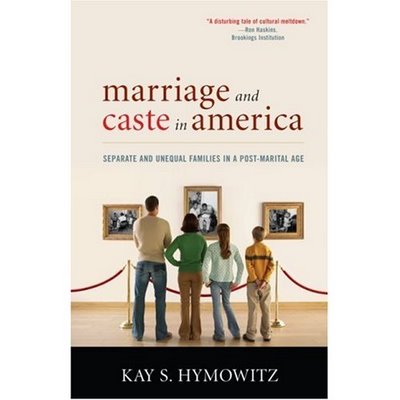
Kay Hymowitz of the Manhattan Institute has an excellent article in The New York Times on single motherhood and the outcomes of children. Hymowitz is no amateur to the subject and she cites an impressive amount of research. For me, one of her most interesting links was a study that “found a connection between the size of a welfare state and rates of both nonmarital births and divorce. Even if you believe that enlarging the infrastructure of support for single-parent families shows compassion for today’s children, it’s not at all obvious that it shows much concern for tomorrow’s.”
The 2013 study looked at OECD member countries and the effect expansive welfare states had on family outcomes. The findings indicate that the welfare state increases the amount of marriages. However, it also increases the divorce rate and the amount of out-of-wedlock births.[ref]The quality of these welfare-sponsored marriages may be lacking: “First, a more pronounced welfare state may facilitate divorce by providing or subsidizing goods and services to divorced spouses that would be otherwise only available within marriage (e.g., risk sharing). Put differently, in the case of divorce, the indirect e ffect may dominate the direct effect. Second, marginal marriages–those which would have not been formed without the marriage-promoting component of the welfare state–may have a lower match quality, which increases marital instability. Third, the welfare state may alter assortative mating patterns such that less stable marriages are formed…In principle, it is possible that the increased incidence of divorce drives some of the positive e ffect on the marriage rate (i.e., divorces increase the supply of potential partners in the marriage market)” (pg. 12, fnt. 20).[/ref] “Hence, while the welfare state supports the formation of families, it crowds-out the traditional organization of the family by increasing the divorce rate and the number of children born out of wedlock” (pg. 3). The welfare state’s relation with out-of-wedlock births “is consistent with the view that the welfare state creates incentives by providing higher support for single mothers (direct e ffect, as for instance in the case of AFDC), and with the idea that the welfare state acts as a substitute for a stable union (indirect e ffect)” (pg. 13).
I’ve mentioned debates over evolution before, largely based on one of Nathaniel’s T&S posts.[ref]For an interesting analysis of Mormon acceptance of evolution, see Benjamin Knoll’s post at By Common Consent.[/ref] One of Nathaniel’s criticisms of typical polls (specifically the one by Pew Research) is the questions’ wording. Sociologist Jonathan Hill has recognized this as well and introduces in a recent piece in Christianity Today a new nationally representative survey called The National Study of Religion and Human Origins (NSRHO). The new poll asked about the following three propositions:
Humans did not evolve from other species.
God was involved in the creation of humans.
Humans were created within the last 10,000 years.
Hill explains that only “14 percent affirmed each of these beliefs, and only 10 percent were certain of their beliefs. Furthermore, only 8 percent claimed it was important to them to have the right beliefs about human origins…Nine percent believed humans evolved and that God played no part in the process, six percent held these beliefs with certainty, and less than four percent said their beliefs were important to them personally.”
“If only eight percent of respondents,” he continues, “are classified as convinced creationists whose beliefs are dear to them, and if only four percent are classified as atheistic evolutionists whose beliefs are dear to them, then perhaps Americans are not as deeply divided over human origins as polls have indicated. In fact, most Americans fall somewhere in the middle, holding their beliefs with varying levels of certainty.”
Yesterday I decided to poke a hornet’s nest again and write about gender roles at Times And Seasons once more. Some folks are emailing me to tell me how much they like it (which doesn’t happen very often). Other folks are describing it as “the most excruciating pseudo-intellectual, and self-contradicting drivel I’ve read in recent years.” [ref]This is my favorite thing that anyone has ever said about anything I’ve ever written. I’m so pleased.[/ref] ByCommonConsent provided their own insightful commentary, which you can see below:
Not gonna lie: I laughed. Then I wished I had some rolls.
For what it’s worth, one of the main reasons I write about this issue is because lots of other folks (some of whom could certainly do better than me) won’t touch it. I respect that. It’s sort of like running for political office: you have to question them motives of anyone who voluntarily does it, but you also have to wish that more normal human beings would. I think these hot-button issues are really important, and I hope that I can make a case for a basically socially conservative position that will enhance the discussion.
With that goal in mind, I’m planning on one more post on this topic. This one took 3 from-scratch attempts, though, were most of my blog posts are done in one.[ref]With revisions, mind you![/ref] So it will probably take another 2-4 weeks before I come out with the next one.
Not that kind of rivalry, but the kind spoken of in economics. GMU economist Bryan Caplan has a fascinating blog post in which he examines how rivalrous a married couple’s consumption bundle typically is with some aid from equivalence scales. Caplan takes an imaginary couple with the high earner making $60,000 and the low earner making $40,000 annually. Using four distinct empirical strategies,[ref](1) “Expert Statistical” measures for statistical purposes only (i.e. Bureau of Labor Statistics, OECD), (2) “Expert Program” focuses on defining social benefits (i.e. Swiss “base amount,” U.S. poverty line), (3) “Consumption” measures consumer spending constrained by disposable income,(4) “Subjective” is associated with particular income levels for families of given characteristics and their self-evaluation.[/ref] he finds that “the low-earning spouse makes out like a bandit. The surprise:The high-earning spouse gains as well – for all four ways to estimate real-world rivalry…[I]f one partner outearns the other by 50%, share-and-share-alike marriage raises the high-earner’s effective consumption by about 30%, and the low-earner’s effective consumption by about 100%. To quote Keanu, “Woh.””[ref]Caplan asks, “Is there any reason to prefer one method to the others? Yes. People have ample first-hand experience with household management, so the subjective approach is probably better than deferring to government statisticians’ opinions. And looking at actual consumption behavior is probably better than asking people what they think.”[/ref]
He concludes,
These calculations deliberately ignore all the evidence that marriage makes family income go up via thelarge male marriage premium minus the small female marriage penalty. So the true effect of marriage on economic well-being is probably even more massive than mere arithmetic suggests. Why then are economists – not to mention poverty activists – so apathetic?
Wharton’s Adam Grant has an excellent piece at The Huffington Post reviewing research that seeks to uncover what makes a job meaningful to employees. “After more than 40 years of research, we know that people struggle to find meaning when they lack autonomy, variety, challenge, performance feedback, and the chance to work on a whole product or service from start to finish,” writes Grant. “As important as these factors are, though, there’s another that matters more…A comprehensive analysis of data from more than 11,000 employees across industries: the single strongest predictor of meaningfulness was the belief that the job had a positive impact on others.”
A lot of interesting research in this one. Managers take note.
One constant refrain from the pro-choice side of the abortion issue is that there will be just as many abortions if they are illegal, but that they will be much more dangerous. Both arguments are objectively false. It’s old news that the first part of that argument is false. The famous chapter in Freakonomics that claimed abortion lowered crime rates was based on a study in the Quarterly Journal of Economics called The Impact of Legalized Abortion on Crime (pdf). One of the subsidiary findings of the study, discussed in footnote 8, talks about the relatively small decline in births at the same time as the number of abortions went up dramatically after legalization:
Note, however, that the decline in births is far less than the number of abortions, suggesting that the number of conceptions increased substantially—an example of insurance leading to moral hazard. The insurance that abortion provides against unwanted pregnancy induces more sexual conduct or diminished protections against pregnancy in a way that substantially increases the number of pregnancies.
In other words: when abortion was legalized you didn’t see a shift of the same number of abortions from illegal to legal. You simply saw many more abortions. The second part of the argument is also deeply flawed: abortions got safe long, long before they were legalized, and it had nothing to do with the law. (Details here.) It was simply a reflection of advancing medical technology. Even prior to Roe, illegal abortions were performed by doctors, and in the arguments leading up to Roe the safety of illegal abortions was considered an argument for legalizing them. The whole “back-alley abortion” thing was invented after-the-fact as a scare tactic. So the evidence suggests criminalizing abortion would lead to a lower rate of abortions without making the illegal abortions that do take place any more dangerous. Maternal death should not increase.
But what about direct evidence? Well, now we have that too. This article discusses a recent medical study that examined the change in maternal death rate in Chile when abortion was criminalized in 1989 after being legal since 1965. (Full article also available.) The result? With decades of data before and after criminalization, there is no evidence of any increase in maternal death due to illegal abortions.
This is strong evidence, along with what we already knew, that criminalizing abortion would not lead to a flood of scary, dangerous, coat-hanger abortions.