Technically, perhaps, but it’s difficult to feel bad for the top 10-15 percent.
“If you had only $2,220 to your name,” reports The Economist, “(adding together your bank deposits, financial investments and property holdings, and subtracting your debts) you might not think yourself terribly fortunate. But you would be wealthier than half the world’s population, according to this year’s Global Wealth Report by the Crédit Suisse Research Institute. If you had $71,560 or more, you would be in the top tenth. If you were lucky enough to own over $744,400 you could count yourself a member of the global 1% that voters everywhere are rebelling against.”
It turns out that 89% of the world’s assets are owned by the wealthiest top 10 percent:
That lucky tenth now includes over 44m Chinese, about 4.4% of the country’s adult population. A far greater number (almost half of China’s adults) cluster in the next three deciles down. Closer to the bottom of the pyramid, there is a similar bulge of Indians in the second and third deciles (with wealth between $30 and $603). Below them, the bottom tenth is a peculiar mix. It is populated by poor countries, where many people have nothing, and rich ones, where people can own very much less than that. It includes a surprising number of Americans (over 21m), whose debts outweigh their assets. But most Americans are much better off. Over 40% belong to the top tenth of the global wealth distribution (and over 18m belong to the global 1%). Some of those railing against the global elite probably do not know they belong to it.
I’ve written on the social science of military intervention before, noting that they rarely achieve the democratic goals of those intervening. A new study distinguishes between top-down and bottom-up approaches to foreign intervention: “Top-down approaches to foreign intervention emphasise gaining citizen compliance by making it costly for citizens to oppose the state, whereas bottom-up approaches aim to increase the benefits of supporting the state by providing public goods, economic aid, and political opportunities.” Drawing on evidence from the Vietnam War, the researchers find (perhaps unsurprisingly),
Estimates document that the bombing of South Vietnamese population centres backfired, leading more Vietnamese to participate in Viet Cong (VC) military and political activities and increasing VC attacks on troops and civilians. The initial deterioration in security entered the next quarter’s security score, increasing the probability of future bombing and hence leading to sustained increases in VC activity. Moreover, while US intervention aimed to build a strong state and engaged civic society that would provide a bulwark against communism after US withdrawal, bombing instead reduced the probability that the local government collected taxes, decreased access to primary schools, and reduced participation in civic organisations. To the extent that spillover effects of bombing on other locations exist, the impacts tend to go in the same direction as the effects on the locations that were bombed.
Interviews of VC prisoners and defectors provide a potential explanation for why bombing increased VC activity. Grievances against the government – particularly in cases where a civilian family member was killed in US or South Vietnamese attacks – were strong motivators for joining the VC (Denton 1968). Civilian casualties and property damage are plausibly particularly harmful to the trust between government and citizens that underlies an effective social contract.
In order to compare the two strategies, the authors explored
the boundary between Military Region I – commanded by the US Marine Corps (USMC) – and Military Region II – commanded by the US Army. The Marines emphasised providing security by embedding soldiers in communities and winning hearts and minds through development programmes (USMC 2009). Their approach was motivated by the view that “in small wars the goal is to gain decisive results with the least application of force… the end aim is the social, economic, and political development of the people” (USMC 1940). In contrast, the Army relied on overwhelming firepower deployed through search and destroy raids (Krepinevich 1986, Long 2016). Evidence points to this difference in counterinsurgency strategies as a central distinction between the Army and Marines.
Hamlets just to the USMC side of the boundary were less likely to have a VC presence than those just to the Army side, and public opinion data document that citizens in the USMC region reported less anti-Americanism and more positive attitudes towards all levels of South Vietnamese government than did citizens in the Army region. Pre-period VC attacks, pre-characteristics, and soldier characteristics – including Armed Forces Qualifying Test scores – are all relatively balanced across the boundary, suggesting that the effects are driven by differences in military strategy and not by omitted factors.
Civility, trust, and community work better than violence. Fancy that.
The following map provided by the Tax Foundation (based on data from the Bureau of Economic Analysis) “shows the real value of $100 in each state. Prices for the same goods are often much cheaper in states like Missouri or Ohio than they are in states like New York or California. As a result, the same amount of cash can buy you comparatively more in a low-price state than in a high-price state…Using [BEA] data, we have adjusted the value of $100 to show how much it buys you in each state.”
The states where $100 is worth the most are Mississippi ($115.34), Arkansas ($114.29), Alabama ($113.90), South Dakota ($113.64), and West Virginia ($112.49). In contrast, $100 is effectively worth the least in the District of Columbia ($84.67), Hawaii ($85.62), New York ($86.43), New Jersey ($87.34), and California ($88.97)…Regional price differences are strikingly large; real purchasing power is 36 percent greater in Mississippi than it is in the District of Columbia. In other words, by this measure, if you have $50,000 in after-tax income in Mississippi, you would have to have after-tax earnings of $68,000 in the District of Columbia just to afford the same overall standard of living.
Case in point, when adjusted for purchasing power, Nebraskan real income exceeds that of Californians:
Cole concludes,
Many policies – like minimum wage, public benefits, and tax brackets – are denominated in dollars. But with different price levels in each state, the amounts aren’t equivalent in purchasing power. This has some unexpected consequences; people in high price-level states like New Jersey will often pay more in federal taxes without feeling particularly rich.
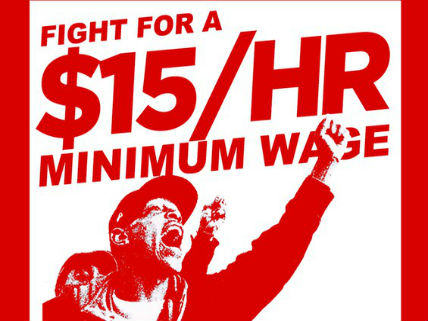
The New York Times has a recent article discussing new research on the minimum wage presented at the annual meeting of the American Economic Association:
John Horton of New York University conducted an experiment on an online platform where employers post discrete jobs — including customer service support, data entry, and graphic design — and workers submit a proposed hourly wage for completing them.
…At first glance, the findings were consistent with the growing body of work on the minimum wage: While the workers saw their wages rise, there was little decline in hiring. But other results suggested that the minimum wage was having large effects. Most important, the hours a given worker spent on a given job fell substantially for jobs that typically pay a low wage — say, answering customer emails.
Mr. Horton concluded that when forced to pay more in wages, many employers were hiring more productive workers, so that the overall amount they spent on each job changed far less than the minimum-wage increase would have suggested…When the minimum wage increased, employers tended to hire workers who had earned higher wages in the past, suggesting that they were looking for a more productive work force.
If the pattern Mr. Horton identified were to apply across the economy, it would raise questions about whether increasing the minimum wage is as helpful to those near the bottom of the income spectrum as some proponents assume. The higher minimum wage could cost low-skilled workers their jobs, as employers rush to replace them with somewhat more skilled workers.
Another study found that when the minimum wage increases, employers may be put out of business. After identifying the ratings of thousands of restaurants in the San Francisco area, the researchers
found that many poorly rated restaurants tend to go out of business after a minimum-wage increase takes effect. By contrast, highly rated restaurants appear to be largely unaffected by minimum-wage increases, and over all, there is no substantial rise in restaurant closings after a minimum-wage increase.
The results are broadly consistent with a 2013 study…showing that a sizable minimum-wage increase in New Jersey resulted in many lost jobs as numerous businesses closed, but an almost offsetting number of new jobs as other businesses opened, which the authors argue were more productive.
Just add this to the growing evidence of adverse effects of the minimum wage.
Streep at the Berlinale premiere of Hail, Caesar! in February 2016 0 Glyn Lowe (CC BY 2.0)
Rod Dreher has a fantastic piece at The American Conservative about how the media is covering (or not) the awful kidnap-torture of a young, disabled man in Chicago. The super-short version? Although the young white man was kidnapped and brutally assaulted by black assailants who (while livestreaming on Facebook) shouted “F— Donald Trump!” and “f— white people” and although the crime is being investigated as a hate crime, several news outlets have gone well out of their way to delve deep into the story with nary an indication of the racial or political overtones of the story, some going so far as to insist that what is really going on is anti-disability stigma.[ref]That would be Salon, which now and then feels the need to run an article so ridiculous one can only assume it’s a pre-emptive strike against anyone taking them seriously ever.[/ref]
Now, we write a lot about political partisanship here at Difficult Run, and I want to reign things in before it becomes too much of a “look how bad those other guys are!” post, the kind we need to deplore no matter which side is targeted. And so I want to point out a few things.
Dreher does a good job of providing balanced, mature context for his piece, which I can’t cover because this is a summary. (Really, go read his piece.)
Some among the (alt-)right are blaming this whole thing on Black Lives Matter, which is a really solid attempt to make Salon look reasonable by comparison. (As if this needs any repeating: all sides have their crazies.)
The most interesting aspect of Dreher’s piece is his extended discussion of the mainstream media as cathedral, which is interesting enough to grab your attention even without the political implications
There’s one other story I want to toss into the mix, however, which Dreher did not get to. And that’s Merryl Streep’s take-down of Donald Trump. As David French reports at the National Review, the contrast between Streep’s attacks on Trump and her standing ovation for convicted child-rapist Roman Polanski is, shall we say, informative.
A lot of people are saying that Streep’s dressing-down of Trump are, more or less, the reason he won. Well, that’s only partially true. [ref]Keep in mind, I was, am, and always will be #NeverTrump.[/ref] To really understand the disgust with which many in America hold Hollywood and the liberal establishment in general (Hollywood, the mainstream media, and academia) you have to consider both Streep’s Trump tirade and her celebratory applause for Polanski.
So, back to Dreher:
About a decade ago, as a working journalist, it became clear to me that when it came to some subjects, the media thought it’s job was more about managing the news than reporting it. If you read, for example, The New York Times as if we were the USSR and it was Pravda, you better understand its meaning. The comparison is certainly not one-to-one, but it’s closer than it ought to be.
When the mainstream press tries to tell us that the Chicago attack was about disability or lauds Merryl Streep as some kind of exemplar of moral discernment, you can see exactly where the Pravda-comparison comes from.
Some General Conference talks hit me with such unexpected force that I can never be sure if there is something particularly forceful in the talk, something especially resonant in the hour, or some coincidence of circumstance that makes it stand out so clearly from the other (also good) talks of the session. I can’t explain it, but it’s what happened when I read Elder Marion D. Hanks’ talk, Trust in the Lord. I hope I can share a couple of reasons why I loved it so much.
The Lord delights to bless us with his love.
The idea that there is a God who not only does bless us with love, but who delights to do so is arresting. It reminds me of a quote from Jonathan Haidt that has always stuck with me:
Although I would like to live in a world in which everyone radiates benevolence towards everyone else, I would rather live in a world in which there was at least one person who loved me specifically, and whom I loved in return. (The Happiness Hypothesis, page 131)
Specificity is vital, and it goes both ways. God is not merely some generic, omnibenevolent abstraction. God is a title that refers to persons, like Jesus Christ and His Father, and they recognize and love each of us individually. This simple idea, that “The Lord delights to bless us with his love,” can pass by unnoticed like just another ornate phrase, but you should stop and really consider what it means. There is a person out there who sees you, who loves, and who is positively delighted to be able to bless your life.
But Elder Hanks’ talk is not all sunshine, and that is what made me love it all the more:
The power that remade Paul, that poured in love and washed out hostility and hate, did not save him from the great travails, from Nero’s dungeon or a martyr’s death. Christ lived in him, he said, he had found the peace of God that passed all comprehension. Nothing, not tribulation, distress, persecution, famine, nakedness, peril, sword, death, life, angels, principalities, powers, things present, things to come, height, depth, nor any other creature, could separate him from the love of Christ… Christ died on a cross, and won his victory; his disciples and followers also have been subject to the brute forces and foibles of this world, yet through enduring faith they have shared and will share in that victory.
The Problem of Evil is confounding, and yet I find that religion is never deeper, or more beautiful, or more vital than when it confronts this problem head-on. The idea of a loving God seems so absurd in contrast with a world full of tragedy, war, disease, and disaster. And yet, doesn’t the idea of a God being executed and hung on a cross seem just as absurd? The world mocked Christ and misunderstood His supreme victory as an ignominious defeat, confusing the end of His life with the beginning of our hope. This is a mistake we’ve made before.
Elder Hanks is not speaking theoretically, nor in the abstract:
I am not really thinking in the abstract, but I’m thinking of many noble souls who have met difficulties with courage, like my mother and many others who had little to rely upon—who had little but ingenuity and will and courage and faith. I’m thinking too of a more recent scene—a beautiful young face whiter than the hospital sheet upon which she lay, her sorrowing parents nearby grieving, as a relentless disease consumed her life. Comfort came to them in the quiet knowledge of the nearness of a Savior who himself had not been spared the most keen and intense suffering, who himself had drunk of the bitter cup.
It is awful what some of us are asked to go through. And—in terms of principles like fairness or justice—it is just as awful that so many of us are inexplicably not required to pay the same high price. I don’t think I could ever love or even respect any leader—including a God—who asked their followers to go through what they were not willing to do. But Jesus is not the kind of leader. Jesus did not shy from the shadows; he walked through the deepest shade.
This talk is more than a meditation on suffering and joy and darkness and light. It is a stirring and humble call to action:
We know that the Lord needs instruments of his love. He needs a Simon Peter to teach Cornelius, an Ananias to bless Paul, a humble bishop to counsel his people, a home teacher to go into the homes of the Saints, a father and mother to be parents to their children.
This is one of those talks that makes the General Conference Odyssey worth it for me. No matter how hectic and stressed my life becomes, my soul needs testimonies like these.
As some of my past writing should indicate, the concept of meaningful work is a major area of interest for me. What management researchers have found is the prevalence of both intrinsic and prosocial motivation when it comes to constructing meaning at work. As Wharton professor Adam Grant explains, “[P]sychologists have demonstrated that prosocial and intrinsic motivations involve different reasons for expending effort. For intrinsically motivated individuals, effort is based on interest and enjoyment; for prosocially motivated individuals, effort is based on a desire to benefit others.”[ref]Adam M. Grant, “Does Intrinsic Motivation Fuel the Prosocial Fire? Motivational Synergy in Predicting Persistence, Performance, and Productivity,” Journal of Applied Psychology 93:1 (2008): 49.[/ref] Psychologist Barry Schwartz highlights this kind of research in his short TED book Why We Work. For example, Schwartz explores the impact of “job crafting” and viewing one’s job as a “calling”:
It is people who see their work as a “calling” who find it most satisfying. For them, work is one of the most important parts of life, they are pleased to be doing it, it is a vital part of their identity, they believe their work makes the world a better place, and they would encourage their friends and children to do this kind of work. People whose work is a calling get great satisfaction from what they do (pg. 17).
This outlook is not necessarily brought about by the job description provided by the company, but often through aligning one’s values and job performance with the ultimate purpose (the Aristotelian telos) of the organization. It is especially motivating to be in contact with those who are positively affected by your work. While I at times quibbled with his economic reasoning (or the absence thereof), I was pleased to see Schwartz acknowledge the “positive-sum structure” of market transactions in which everyone benefits:
What this market logic means is that virtually every job that people do can be seen as improving the lives of customers, even if only in small ways. And what that means is that virtually every job that people do can be made meaningful by focusing on the way sin which it improves the lives of customers, as long as it’d done right and done well (pg. 30).
For those unfamiliar with the research behind meaningful work, this book can serve has a nice introduction. You can see Schwartz’s TED talk below.
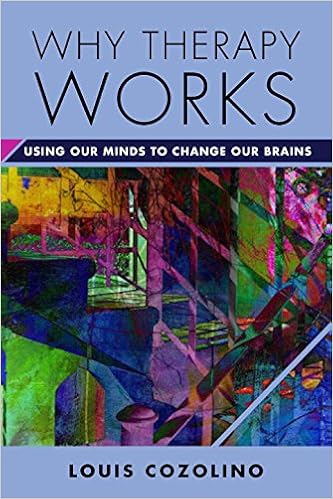
I don’t think I’ve ever mentioned this before on here, but, as some of you may have guessed, I go to therapy. I haven’t as of late for various reasons, but for a solid two years I went pretty much every other week. My interest in shame and vulnerability has been largely due to my personal work in therapy. This is why as soon as I heard of psychologist Louis Cozolino’s book Why Therapy Works: Using Our Minds to Change Our Brains, I immediately picked it up. Granted, like most of my books, it sat dormant for quite a while until I finally finished it up toward the end of last year.
Cozolino walks the reader through the findings of cognitive neuroscience, discussing the “fast” (i.e., “primitive systems, which are nonverbal and inaccessible to conscious reflection, [that] are referred to as implicit memory, the unconscious, or somatic memory”, pg. 5) and “slow” (i.e., “conscious awareness…[which] eventually gave rise to narratives, imagination, and abstract thought”, pg. 5) systems of the brain. Because of this “fast” system, we often have negative internalizations that we’re not even consciously aware of. This is what Cozolino calls “core shame”:
Core shame needs to be differentiated from appropriate shame and guilt that emerge later in childhood. Appropriate shame is an adaptation to social behavior required by the group. Core shame, on the other hand, is an instinctual judgment about the self, and it results in a sense of worthlessness, a fear of being found out, and a desperate striving for perfection. In essence, core shame is tied to our primitive instinct to be a worthy part of the tribe; it is a failure to internalize a deep sense of bonded belonging. As a result, people with core shame feel damaged, unlovable, and abandoned. Thus, core shame becomes a central factor in the perpetuation of insecure attachment and social status schema (pg. 10).
The brain, according to Cozolino, “is a social organ” and “we can leverage the power of human relationships to regulate anxiety and stimulate learning” (pg. xxii). This makes the relational nature of therapy all the more important and effective:
The reasons for our struggles often remain buried in networks of implicit memory, inaccessible to conscious reflection. Psychotherapy guides us in a safe exploration of our early experiences and helps us create a narrative that associates these early experiences with the ways in which our brains and minds distort our current lives. In the process, our symptoms come to be understood as forms of implicit memory instead of insanity, character pathology, or plain stupidity. This process can open the door to greater compassion for oneself, openness to others, and the possibility for healing (pg.9).
The book is comprehensive and excellent for both laypersons and scholars. You can see short interview clips with Cozolino below.
I’ve been a fan of British philosopher Roger Scruton ever since I stumbled on his BBC documentary Why Beauty Matters as an undergrad. I picked up his Oxford-published Beauty[ref]I believe it was republished as Beauty: A Very Short Introduction.[/ref] at the UNT library soon after. I found Scruton’s ideas to be powerful and provocative, even if the writing was at times difficult or lackluster compared to the concepts.
Viewed through the lens of scientific reductionism, all existence is fundamentally the bouncing around of various material particles, some arranged in the form of gene-perpetuating machines we call humans. Mr. Scruton almost agrees—we are, in fact, gene-perpetuating machines, and the finer, higher aspects of human existence emerge from, and rest upon, biological machinery. As he points out, though, it’s a long jump from this acknowledgment to the assertion that “this is all there is.” The jump, according to Mr. Scruton, lands us in “a completely different world, and one in which we humans are not truly at home.” A truly human outlook involves the intuition of intangible realities that find no place in even our most sensitive systems of biology, chemistry or physics.
For Scruton, this reductionism “overlook[s] the aspect of our mental states that is most important to us, and through which we understand and act upon each other’s motives, namely, their intentionality or “aboutness”” (pg. 4). The theism presented by Scruton is a kind of general classical theism, one that could be embraced by someone outside a specific religious tradition. His last few chapters discussing art, music, and the faces of others are especially enlightening. Just as no one would reduce the Mona Lisa to mere pixels on a canvas or the music of Bach to random sounds, to reduce humans and nature to their mechanical functions is to misunderstand reality and suppress our own daily experiences of the world. Thought-provoking stuff.
You can hear a brief snippet of an interview with Roger Scruton below.
How much is entrepreneurship predetermined by family background? According to a new study,
Parent Role-Modelling
recent papers have collectively suggested that entrepreneurship might be more predetermined than previously thought – entrepreneurship education has been proven to be effective in primary school (Huber et al 2014) and, to a lesser extent, in secondary school (Elert et al 2015), but not at all when individuals are older, that is, students (Oosterbeek et al 2010) or adults (Fairlie et al 2015). Moreover, strong intergenerational associations in entrepreneurship have attracted considerable attention. While part of this relationship has been shown to be genetic (Nicolaou et al 2008), parental role-modelling appears to be the main driver of the intergenerational association in entrepreneurship (Lindquist et al. 2015). Additionally, exposure to a dense entrepreneurial environment during formative years also increases the likelihood of entry into entrepreneurship (Guiso et al. 2015).
So the policy-relevant questions arise: To what extent is entrepreneurship predetermined? Have we spent (public) funds wisely by implementing policy measures and education aimed at changing the behaviour of adult people?
In a recent paper, we assess the predetermination of entrepreneurship outcomes by calculating and analysing sibling correlations (Lindquist et al 2016). We argue that sibling correlations are more complete and precise measures of predetermination, including the importance of genes, family background, and neighbourhood effects as determinants of entrepreneurship. Sibling correlations have been used before to study outcomes other than entrepreneurship and provide much broader measures of the importance of family background and neighbourhood effects than intergenerational associations (Solon 1999). Their interpretation is also straightforward – the higher the sibling correlation, the larger the importance of family background.
Their results?:
25% of the variance in individuals’ decisions to become self-employed is explained by family background and community influences;
For incorporation, this is close to 35%;
These percentages are slightly higher when we consider measures of successful entrepreneurship such as above median years of self-employment and incorporation;
Brother correlations are always larger than sister correlations;
The largest correlation is for males with above median years of incorporation, which is close to 50%;
Mixed sibling correlations are consistently smaller than same-sex correlations.
Parental entrepreneurship status is quite important;
Parental education and income matter much less; and,
Family structure and immigrant status do not matter.
Parental self-employment is a prime explanatory force in individual self-employment, but not incorporation; and
Parental incorporation explains individual incorporation best, but not self-employment.
Between 56–78% of the sibling correlations in self-employment; and
Between 38–46% of the sibling correlations in incorporation.
The researchers conclude “that parental entrepreneurship and genes are the two most important factors generating sibling similarities in entrepreneurship.” Policy wise, the authors explain that “children appear to be able to learn about entrepreneurship through their family and community environment, which implies that it may be possible to teach entrepreneurship to young people.”
 Technically, perhaps, but it’s difficult to feel bad for the top 10-15 percent.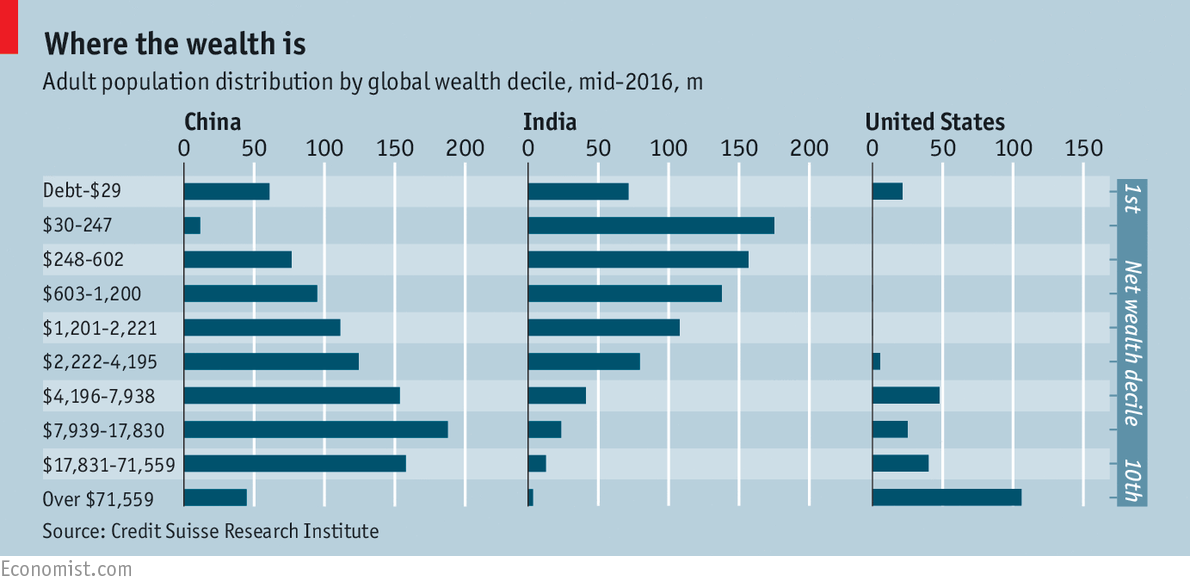
 Estimates document that the bombing of South Vietnamese population centres backfired, leading more Vietnamese to participate in Viet Cong (VC) military and political activities and increasing VC attacks on troops and civilians. The initial deterioration in security entered the next quarter’s security score, increasing the probability of future bombing and hence leading to sustained increases in VC activity. Moreover, while US intervention aimed to build a strong state and engaged civic society that would provide a bulwark against communism after US withdrawal, bombing instead reduced the probability that the local government collected taxes, decreased access to primary schools, and reduced participation in civic organisations. To the extent that spillover effects of bombing on other locations exist, the impacts tend to go in the same direction as the effects on the locations that were bombed.

 John Horton of New York University
 .jpg)

 As some of my
  I don’t think I’ve ever mentioned this before on here, but, as some of you may have guessed, I go to therapy. I haven’t as of late for various reasons, but for a solid two years I went pretty much every other week. My interest in
  I’ve been a fan of British philosopher Roger Scruton ever since I stumbled on his BBC documentary