The SJW who cried “police brutality.” The LEO who cried “self-defense.”

Asking for evidence of police brutality doesn’t make you blindly pro-cop. Being skeptical of the officer’s POV doesn’t make you blindly anti-cop.

The Boy Who Cried Wolf by paperlait

I’ve seen people defend Officer Sean Groubert shooting Levar Jones even after Groubert was fired and charged with a felony count of assault and battery (he has since plead guilty). I’ve had arguments with people who claim the video of Officer Michael Slager repeatedly shooting Walter Scott in the back was deceptively edited, even though Slager has since been fired and charged with murder and obstruction of justice. There are people for whom no amount of evidence is enough.

So when someone says “We weren’t there. We don’t know what happened. We shouldn’t jump to conclusions,” I’m sure I’m not the only one who feels weary and angry. I get frustrated because so many times those statements are insincere; so many times, when it comes down to it, the person patiently calling for objectivity and evidence doesn’t actually care about evidence at all. He says “Give the investigation time,” but he means “no matter what surfaces, I’ll assume the officer was in the right. No matter the injustice, I’ll believe the dead deserved it.”

But I need to be careful about my assumptions. On the surface there’s no way to tell the difference between the person who is really just going to side with the LEO no matter what and the person who genuinely cares about clear thinking and due process. It’s unfair to assume anyone calling for more information falls into the former category.

It’s also unhelpful. I want more people to consider the possibility that serious systemic problems are at play here; accusing people of bigotry just for asking for evidence isn’t likely to start a thoughtful conversation.[ref]When I think about a lot of the problems in our current political climate, shutting down tricky conversations with accusations of bigotry seems to be a recurring theme.[/ref]

The principles of (1) innocent until proven guilty and (2) proof beyond a reasonable doubt inevitably mean truly guilty people will go free. Our justice system is (supposed to be) designed to err on the side of freeing the guilty rather than imprisoning the innocent. In fact, jurors are given explicit instructions to this end: if they’re presented with multiple theories about how a crime happened, they are supposed to pick whichever is most reasonable. But if there is more than one reasonable theory, they are supposed to pick the reasonable theory that finds the defendant innocent.

In the case of an officer-involved shooting, that means if there’s a reasonable chance the officer acted in self-defense and there’s a reasonable chance he did not, the jury is supposed to assume it was self-defense. Given how often LEOs do have to fear for their lives[ref]As I write, I’m reading about the shootings in Dallas last night that have left several officers dead. We can both call for LEOs to be held to high standards and acknowledge and respect the dangers their jobs entail.[/ref]–and given that the dead can’t talk–this means an officer can claim self-defense and, absent extremely explicit evidence to the contrary[ref]And I don’t just mean video evidence that an LEO hurt or killed a citizen. I mean video evidence that the LEO hurt or killed a citizen and could not have reasonably believed the citizen was a threat.[/ref], the jury will assume that’s the truth.

I would think that’s what we’d all want for ourselves if we were accused of a crime. We’d want the evidence to have to show beyond a reasonable doubt that we did the deed before we could be found guilty. Of course we would.

I would also expect we’d all want the right to defend ourselves in dangerous situations. That’s why I think it really undermines the Black Lives Matter movement and its allies when people fail to distinguish between LEO self-defense vs LEO abuse of power. For example, I’ve seen a few posts along these lines:
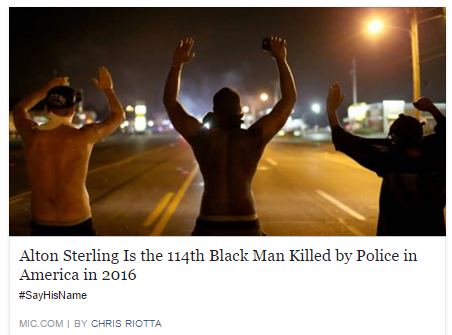
mic article

This article references a database put together by The Washington Post to track officer-involved shooting deaths. But the stat is for everyone shot and killed by police, whether those citizens were a danger to the officers’ lives or not. While I think it’s important to track that kind of information, I also think it’s misleading to use it in the context of police brutality.

Police brutality is unwarranted LEO aggression and violence, but not all LEO aggression is unwarranted. Good cops acting in self-defense shouldn’t be lumped in with corrupt cops abusing their power or even with incompetent cops dangerously overreacting. And victims of police brutality shouldn’t be lumped in with people killed attempting to commit violence against others. Equivocations like these are part of the reason so many hesitate to condemn a given shooting, instead asking for more information. It’s “the Social Justice Warrior who cried ‘police brutality,'” and many people aren’t interested in more accusations until all the facts are in.

The problem with that, though, is that there are a lot of cases in which the facts are never all in.

The Walter Scott case is a great example of what so many people now fear and expect: Officer Slager is being charged not just with murder but also with obstruction of justice because, after repeatedly shooting Scott in the back, Slager told investigators that Scott had been advancing toward Slager with a taser. It was only when a citizen turned over a cell phone video that it became clear Scott had actually been running away from Slager. If the citizen hadn’t come forward with the video, what are the odds Slager would’ve been charged with anything?

Similarly, when multiple deputies beat Derrick Price, two of them later submitted falsified reports claiming Price had resisted arrest. According to court documents, security footage later revealed that “Price was compliant and immobilized during the entire time of the beating.” The two deputies subsequently plead guilty to deprivation of rights, but if there had been no security footage it’s unlikely their false reports would’ve been discovered.

These are examples of officers being willfully deceptive, but I expect there are plenty of situations where an officer recounts events sincerely and still gets them wrong. Eyewitness testimony is notoriously unreliable; I see no reason this would apply less to officers than anyone else.

For example, Officer Groubert suggested he shot Levar Jones because he perceived Jones to be a threat, claiming Jones “dove” into his van. Groubert may very well have believed that, but his own dash cam footage shows Jones simply reach into the van directly after Groubert asked for Jones’ license and registration. That footage contributed to Groubert being fired and charged, but if there had been no dash cam footage, would citizen safety still depend on Officer Groubert’s judgement?

Officer Timothy Runnels tased teen Bryce Masters until Masters went into cardiac arrest. Police later claimed Masters had been uncooperative during the stop, but dash cam footage shows Masters only asking whether he was under arrest before Runnels tased him and dropped him face down on the pavement. Runnels has since been fired and plead guilty to civil rights violations, but if there had been no dash cam footage?

Some people say these cases show our system does work because–given sufficient evidence–officers are charged with crimes. But I hope you can see how problematic this is. These cases are rare in that there was clear-cut video footage. How often do officers overreact, like Goubert did, or willfully try to deceive, like Slager did, with no video evidence to catch them? Perhaps it almost never occurs, and the exceedlingly rare times when it does occur happen to be disproportionately caught on video.

But I doubt it. A lot of people doubt it. Each time an LEO is caught not only unlawfully hurting citizens but also trying to cover it up, it greatly erodes public trust. And each time seemingly damning evidence proves insufficient to even indict an officer, it greatly erodes public trust. Each time there’s no major repercussion for anyone from the LEO himself to his superiors for, at best, grave errors in judgement, it greatly erodes public trust.

And once the public no longer trusts the system, cautioning people to reserve judgement until all the facts are in starts to sound a little too much like telling people to never judge an officer-involved death at all. In most cases all we can do is wait for one side of the story, and we already know what that side will say. It’s “the LEO who cried ‘self-defense.'”

So, while I understand people calling for calm and for evidence–a good approach not just here but in general–I also understand a lot of people feeling completely disillusioned and distrusting of the evidence-gathering process. I understand why having a jury decide an officer shouldn’t be indicted or isn’t guilty doesn’t necessarily convince the public the officer actually isn’t guilty.

People seem to believe this level of suspicion can only stem from a general anti-cop sentiment, but I don’t agree. Given the known cases of officers abusing power and then lying about it, it’s reasonable for people who respect the profession in general to still have major concerns about this issue specifically. I don’t agree with Jon Stewart on everything but I thought he was spot on here:
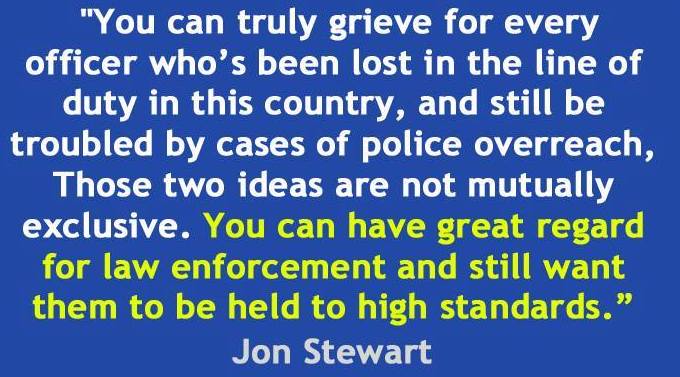
jon stewart quote

I don’t pretend to have a simple solution to all of this. I want to live in a society where people of color and LEOs are safe. I want us to respect the principles of “innocent until proven guilty” and “proof beyond a reasonable doubt.” I want law enforcement agencies to responsibly police their own ranks. It doesn’t seem like any of that is happening right now.

I’m not sure what to do, but I am sure that assigning the worst motivations to the other side doesn’t help anything. We may not be able to fix everything quickly, but we can at least try to understand where people are coming from.
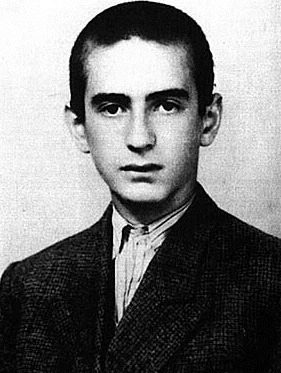
 

Soul on Fire: Appreciating Elie Wiesel

Elie Wiesel departed this world at the age of eighty seven. He has had a tremendous influence on my life, though I never met or corresponded with him. His books were always in the house when I was growing up, and I remember my mother retelling for me the plot of Dawn, but I cannot remember how old I was. Perhaps I was nine. The details have faded but the memory remains and comes to mind quite often. Honestly, it was sobering and a bit frightening to realize that no one is exempt from life’s horrors, that even I might be forced at some point to choose between two ugly outcomes. I still hope that I never will, but it was Elie Wiesel who forced me to acknowledge the possibility that it could happen.

I have not rushed to post on Wiesel’s death because I have been picking up his works again and pondering his life. He deserves as much. I confess that it has been at least a year since I last read something of his. Wiesel himself resisted tidy conclusions. Still, something that I have noticed while following  media coverage is just how much is misunderstood about Wiesel. He had his flaws and failings, of course, and valid criticisms can (or is it should) be leveled at him. There were even survivors with more compelling views on the universality of the Holocaust than his own,[ref]I’m thinking mainly of Simon Wiesenthal and Primo Levi[/ref] and Wiesel sometimes clashed with them, but he was a powerful voice for good nonetheless. Then there was the disgraceful spectacle of people like Max Blumenthal, who possess the moral stature of a Chihuahua, publishing tweet after tweet vilifying Wiesel not long after his death was announced.

Something that I can see even in many valid criticisms is that Wiesel is being judged by our own image of a Holocaust survivor and champion of human rights should be rather than by what Wiesel actually was. To understand Wiesel we must set aside such grand images as citizen of the world and its conscience, and start with the Elie Wiesel who was deported to the kingdom of night, as he would put it. A shy but ardent Hasidic youth who viewed everything through a spiritual lens. His parents had to force him to set some time aside for secular studies, such was his religious fervor. Then came the Holocaust, an outburst of the forces of evil so intense that it destroyed his ability to believe as he once did. Wiesel always wanted to recover that simple faith, but could not. This is the thread running throughout his works, the source of the enigmatic laughter and silences that fill his stories.

Night is a powerful novel. Really needs no introduction. Dawn is not as well known, but as noted above, perhaps more compelling and troubling because it deals with the internal struggle of a Holocaust survivor faced with making an awful choice. If Night is about surviving in a kingdom where God does not act, Dawn looks at the choices one must make when acting in history instead of God. Night will make you weep, and Dawn will chill you, but if you want to get at the man behind Wiesel’s public persona then read Souls on FireSouls is a collection of sayings, stories, and character sketches of several 18th-19th century Hasidic masters, leaders of a Jewish revivalist movement in Eastern Europe. Wiesel has written quite a bit on this or that Hasidic master. It is a prominent topic in his writings, and though I have never bothered to quantify this, I would not be surprised if he has written more frequently and directly about Hasidism than he has about the Holocaust, but everything that he wrote eventually touched upon his experience in the camps.

The Hasidic master, or Rebbe, acts as bridge between his followers, the Hasidim, and God. The Rebbe was central to how they approached the world, so telling stories about these masters practically became a sacred duty. These were stories about hidden saints and holy beggars, miracles and prophecies, uplifting the poor and downtrodden, intense longing for the Messiah as if he were due any minute, putting God on trial for neglecting his children, and a host of other colorful episodes, but most of all about the soul and how to mend it. Sometimes cryptic and paradoxical, they all share a love of truth. These stories were used to draw man closer to God rather than simply entertain. Wiesel did that, too. “I don’t believe the aim of literature is to entertain, to distract, to amuse.”

Hasidism, then, was the world of Wiesel’s innocence, where God was close, always ready to intervene on behalf of those who loved him, a world filled with warm memories of conversations with his grandfather the devout Hasid. It was he who taught Wiesel his first stories and embodied their virtues. Hasidism was about faith. Not mental affirmation, but an attitude of trust and devotion.

In the chapter entitled Disciples IV,[ref]Wiesel, Elie, Souls on Fire: Portraits and Legends of Hasidic Masters, Random House (New York: 1972), 164-168. All following quotations are from this chapter.[/ref] Elie Wiesel relates a Hasidic legend of how Satan protested the birth of a particular Rebbe so holy that he would draw enough followers closer to God so as to destroy Satan’s kingdom effortlessly. The heavenly court recognized the unfairness of that scenario, and decided to send a rival – a counterfeit Rebbe – whom no one would suspect of serving God’s rival.

How is one to know? How does one recognize purity in a man? And how can one be sure? I remember putting this question to my grandfather. He chuckled and his eyes twinkled when he answered: “But one is never sure; nor should one be. Actually, it all depends on the Hasid; it is he who, in the final analysis, must justify the Rebbe.”

It is hard not to see this as really being about God, about Wiesel’s relationship with him. This answer to a childhood question, I think, lies behind the anger in Night, and behind the moral calculus in Dawn. Like the old chestnut, show me your friends and I will show you who you are. With Wiesel, though, there is never a simple affirmation of man’s moral superiority to God. That is a subtle nuance which even as fine a film as God on Trial (inspired by a Wiesel experience and story) misses. Man is responsible for affirming his devotion to truth through his actions and choices, perhaps even to transform his master through them. His failure to do so can have acute repercussions because God and man are inseparably linked.

“You’ll grow up, you’ll see,” my grandfather had said. “You’ll see that is more difficult, more rare to find a Hasid than a Rebbe. To induce others to believe is easier than to believe…”

Another story is shared of a Rebbe scolding God for keeping an old man like him waiting all his life for the messiah, then Wiesel’s own memory of his grandfather blessing him to see the messiah end evil, and how that caused him to tremble in Auschwitz for his grandfather. A story about a holy dance invites Wiesel to wonder how his grandfather died. For him, it is all connected. He expressed what he experienced in the camps in terms of these Hasidic tales and sayings.

One of Hasidism’s finest tales relates that the founder of Hasidism went to a certain spot in the woods to perform a ritual and utter a prayer to avert a disaster. His successor could not remember the ritual, but knew the spot and the prayer. The next Rebbe knows only the spot, and, finally, only the story remains. This must suffice, or can it? Wiesel suggests that we might be past that stage.

The proof is that the threat has not been averted. Perhaps we are no longer able to tell the story. Could all of us be guilty? Even the survivors? Especially the survivors?

That last question alone opens up a world of anguish that the trite and easy phrase survivor’s guilt can never fathom. It also lends urgency to the task of storytelling. There are no easy answers to any of these questions which occupied Wiesel his entire life.

Two sayings of Hasidic masters are given in the chapter with no commentary. “To pronounce useless words is to commit murder,” and, “Nothing and nobody down here frightens me… But the moaning of a beggar makes me shudder.” Both of these encapsulate Wiesel’s approach as author and witness. Waste no word on things that do not teach truth and fear nothing as much as another’s suffering.

There is much more that could be discussed. Instead, read Souls on Fire, especially the moving postscript describing why he wrote it. Your time will be greatly rewarded.

To end like I began, on a personal note: I was surprised to feel no sorrow at Wiesel’s passing. In fact, I almost felt happy. I typically get very emotional thinking about the Holocaust at any length. Why not now? In Jewish thought death is often considered a passage from the world of illusion to the world of truth. Wiesel loved truth but was haunted by it. He was truly a soul on fire, so perhaps now he will be able to see things as they really are, and meet with God to reconcile differences and finally have his questions answered. A chance, I feel, to regain his childhood faith.

The Food Industry’s Dirty Secret: DNA

Does DNA = Frankenfood? The American public seems to think so. As reported in The Washington Post,

Last year, I wrote about an Oklahoma State University survey indicating that over 80 percent of Americans support “mandatory labels on foods containing DNA.” A new study written by economists Brandon McFadden and Jayson Lusk (who also helped author the OSU survey) similarly finds that 80% of the public support labeling of foods containing DNA (though in this case the question does not clearly indicate whether the labeling should be mandatory or not). Katherine Mangu-Ward has some additional discussion of the study here.

Obviously, such DNA labels would be absurd. Nearly all food contains DNA, and there is no good reason to warn consumers about its presence. As McFadden and Lusk and explain, the survey answers on this subject are an indication of widespread scientific ignorance, proving that many of the respondents “have little knowledge of basic genetics.” Other data from the study also support this conclusion, including the fact that 33 percent of respondents believe that non-GMO tomatoes do not contain any genes, and 32 percent think that vegetables have no DNA. Our vegetables would be blissfully free of DNA if not for the nefarious corporations who maliciously insert it into the food supply!

The authors note that the proportion of respondents who support labeling of foods containing DNA is very similar to the percentage who support mandatory labeling of GMO foods (84 percent).

The unintended consequences of DNA…

Something often missed in the debate over mandatory labels is that “”free” information is not really free at all. Labels cost money. Those costs will often be passed down to consumers. They also take up the time of consumers, and potentially divert their attention away from more valuable information. Mandatory labeling of substances that are not actually risky can also mislead people into thinking that a threat exists even where it does not.”

Given our previous posts on GMOs here at Difficult Run, you can imagine that I wasn’t too thrilled about this information.


Cosmopolitan or Global Elitist?

Over at The New York Times, Ross Douthat has a fairly damning piece on so-called cosmopolitans:

Genuine cosmopolitanism is a rare thing. It requires real comfort with real difference, with forms of life that are truly exotic relative to one’s own. It takes it cue from a Roman playwright’s line that “nothing human is alien to me,” and goes outward ready to be transformed by what it finds.

The people who consider themselves “cosmopolitan” in today’s West, by contrast, are part of a meritocratic order that transforms difference into similarity, by plucking the best and brightest from everywhere and homogenizing them into the peculiar species that we call “global citizens.”

This species is racially diverse (within limits) and eager to assimilate the fun-seeming bits of foreign cultures — food, a touch of exotic spirituality. But no less than Brexit-voting Cornish villagers, our global citizens think and at as members of a tribe.

They have their own distinctive worldview (basically liberal Christianity without Christ), their own common educational experience, their own shared values and assumptions (social psychologists call these WEIRD — for Western, Educated, Industrialized, Rich and Democratic), and of course their own outgroups (evangelicals, Little Englanders) to fear, pity and despise.

Here’s to you, global citizen.

But the sledgehammer comes toward the end:

They can’t see that the paeans to multicultural openness can sound like self-serving cant coming from open-borders Londoners who love Afghan restaurants but would never live near an immigrant housing project, or American liberals who hail the end of whiteness while doing everything possible to keep their kids out of majority-minority schools.

The whole thing is worth reading and reflecting on (especially given my own snobbishness).[ref]To be clear, this isn’t a condemnation of actual cosmopolitanism. It is a condemnation of a tribe of elites who have attempted to hijack the word to help boost their own sense of moral superiority.[/ref]

To Bear Our Trials More Beautifully Than We Ever Dreamed

 More details Sculpture of Atlas, Praza do Toural, Santiago de Compostela. (Photo by Luis Miguel Bugallo Sánchez)

Sculpture of Atlas, Praza do Toural, Santiago de Compostela. (Photo by Luis Miguel Bugallo Sánchez)

This post is part of the General Conference Odyssey.

As I was reading the Saturday morning session of the April 1973 General Conference, I realized that there are seven sessions for this GC! They had two each on Friday, Saturday, and Sunday and then the priesthood session. That’s hardcore!

The talk that stood out the most to me was (then) Elder Monson’s Yellow Canaries with Gray on their Wings. It centers, as so many of his talks always do, on a story. In this case, an elderly woman passed away and left her two beautiful canaries to others, but left her favorite—a canary with gray on its wings—to Elder Monson, writing in a note: “He is my favorite. Billie looks a bit scrubby, and his yellow hue is marred by gray on his wings… He isn’t the prettiest, but his song is the best.”

The symbolism is straightforward, but that’s not actually what drew my attention. This is:

Can we not appreciate that our very business in life is not to get ahead of others, but to get ahead of ourselves? To break our own records, to outstrip our yesterdays by our todays, to bear our trials more beautifully than we ever dreamed we could, to give as we have never given, to do our work with more force and a finer finish than ever—this is the true: to get ahead of ourselves. [emphasis added]

This is one of those quotes that contains a confounding, counterintuitive twist that you won’t even notice if you’re not paying close attention. The idea that we’re competing against ourselves and not against others, that our struggle is to improve rather than to win, is as true as it is familiar. I just gave this advice to my little kids after they were disappointed with their placement in their very first swim meet. But between those bookends is something rather unconventional, the aspiration “to bear our trials more beautifully than we ever dreamed we could.”

Shifting from beating someone else to beating our own past selves is totally conventional (and very good advice), but who out there really aspires to bear trials in any sense? Overcome trials, sure. Avoid trials, even more so. But to accept trials, to bear them, and to find excellence in the endurance of them? I don’t think it’s something we generally consider.

A friend asked me the other day what I’d learned from the GCO thus far, and I mentioned a few of the things that have stuck out repeatedly (first, the consistent teachings about the family going back nearly a half century and second, the surprising gentleness of a lot of the teachings), but I forgot to mention a third that I’ve just started to pick up on: a lot of the kinds of nuance that some folks complain about not hearing from our leaders is there. The role of common sense in obedience, the importance of exceptions to the rules and—in this case—the important realization that being righteous doesn’t get you out of troubles.

Because that’s the implication, right? If sincere disciples pray to “bear our trials more beautifully” then clearly discipleship isn’t exclusively about avoiding trials (by, for example, avoiding sin and thus the painful consequences) or even overcoming trials (by, for example, having faith to be healed).

If we really embraced this, then the endemic judgmentalism that often infects our wards—a kind of small town, everyone-knows-everyone’s-business consequence of our tightly integrated communities—would be nipped in the bud. If we really understood this, then a lot of the disappointment and even bitterness that happens when faithful members can’t understand why—after doing basically whatever they’ve been taught to do—life throws tragedy, failure, and disappointment in their path.

One of the common responses my parents get to their books (like The God Who Weeps and The Crucible of Doubt) is something along the lines of, “Well, that’s wonderful and lovely, but I don’t recognize it as the Mormonism I was taught growing up.” Culturally, there’s a lot of truth to that. Culturally, Mormonism has its problems because it’s a human culture. But, theologically, a primary goal of my parents is to unearth truths and teachings that have been there all along.

When we make good choices, we do avoid a lot of unnecessary heartache and pain. When we have faith, we can overcome a lot of obstacles that would otherwise be insurmountable. But no one should assume from these two statements (which are true) that making good choices and having faith makes life easier. It’s like they say: the reward for work well-done is more work. There are two simple reasons for that. The first is that the object of our mortal lives is to grow, and we can’t grow by just doing things we already know that we can do. The second is that, quite frankly, there just aren’t ever enough good people to go around. It’s not like there is a deficit of hard work for us to take on. If we understand this, then our expectations for what we get out of discipleship are going to be radically different. Not lower, necessarily, although it might seem like that at first, but different.

If this teaching seems novel, it shouldn’t. It’s right there. It’s been there all along, baked into our scriptures (with their emphasis on progression and growth) and it’s also in the words we hear in General Conference, such as (also from this talk): “to live greatly, we must develop the capacity to face trouble with courage, disappointment with cheerfulness, and triumph with humility.” Again, the clear implication is that a great life is going to have trouble and disappointment. There’s no avoiding them.

Just in case this sounds a bit depressing to anyone (what’s the point, if you’re just going to end up with trouble and disappointment no matter what?) here’s a little analogy I thought of. Imagine a hard-working child learning math. Over years of public school and into college, they move on from basic arithmetic, learn some algebra, eventually get into geometry, and then take on calculus and even real analysis and group theory. If this student has good teachers, then at every step along the way they are challenged. Perhaps, in terms of grades, this student is a B+ student from start to finish. That means that they are failing, on average, at 15% of the time (give or take). There is trouble. There is disappointment. There is failure. It never goes away.

And yet, looking back, this young person can see how much they have gained, trouble and disappointment and failure notwithstanding. By the time this young person has become proficient in differential equations, of course they could go back and do high school geometry more or less perfectly. But how pointless would that be?

That’s why sincere discipleship doesn’t spare us troubles and trials, disappointment and failures. Because—just as with school—the point is to be challenged.

And that is why, following President Monson, the dream of bearing our trials more beautifully is, itself, a beautiful dream.

Check out the other posts from the General Conference Odyssey this week and join our Facebook group to follow along!

The Jew Who Helped Invent the Modern Islamic State

MuhmmedAsad

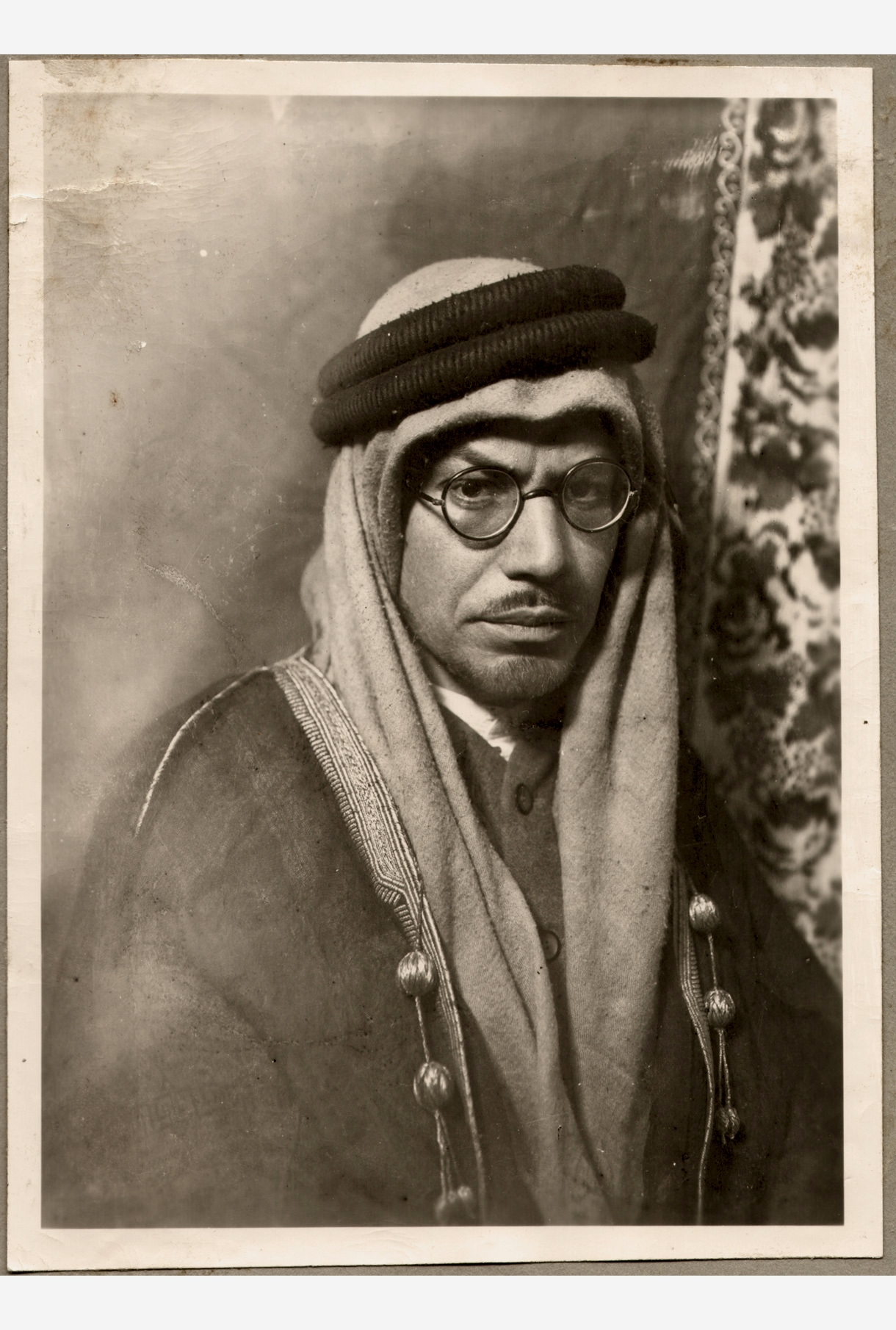
Despite the misleading title, Tablet has an excellent essay by Shalom Goldman on Muhammad Asad, one of the most important Muslim thinkers of the 20th century. What makes Asad’s story particularly remarkable is that he was born Jewish, in what is now western Ukraine. After converting, Asad gained such proficiency in the Quran and other classical Muslim texts that lifelong Muslims such as the founders of Saudi Arabia and Pakistan sought his advice on how to run a modern state in harmony with religious values. The essay is not a blanket endorsement of Asad (and it only scratches the surface) but if you want to go beyond the headlines when it comes to Islam, sharia, and just politics and religion in general, this is a great place to start.

Citizen stops potential mass shooter, Snopes quibbles.

Gotta say I’m pretty pissed at Snopes about this one.

Jody Ray Thompson shoots into a crowd, injuring three. Then a citizen with a conceal carry permit shoots Thompson. Now one side says the  citizen “stopped a mass shooting.”

When people quote the outrageous number of mass shootings that have happened in a short time frame, they’re usually using the Shootingtracker.com (FBI-derived) definition of “mass shooting”: “FOUR or more shot and/or killed in a single event [incident], at the same general time and location, not including the shooter.”

So Thompson shot three people and was stopped. He didn’t reach the level of a mass shooting (four people), but he was as close as you can get when he was stopped. So it seems pretty reasonable to say the citizen who shot him “stopped a mass shooting.”

But Snopes isn’t so sure, because now, for some reason, they’re defining “mass shooting” as: “one or more gunmen deliberately setting out to indiscriminately kill multiple randomly-selected victims.” [Emphasis added.] Snopes goes on to claim it’s unclear Thompson intended to kill anyone. [ref]Even though he purposefully shot repeatedly into a crowd of people. I mean who is to say?[/ref] So is it really a “mass shooting”?

Snopes even has a previous article discussing the different definitions of “mass shooting,” and, spoiler, none of the definitions they review discuss motive.  Yet in this Thompson article they assert that motive is “typically” part of the definition. Just not typical enough to have been mentioned in their article about mass shooting definitions.

It was annoying enough that I could only find this story on Fox and Washington Times (traditionally conservative outlets) and no other major outlets. Even more annoying that Snopes would grasp at straws so hard to avoid simply marking the story as “true.” Snopes in a nutshell:

Well technically I guess a legal gun owner stopped another dude from shooting more people but the shooter wasn’t a psychopath per se, so this is iffy.

What a bunch of crap.

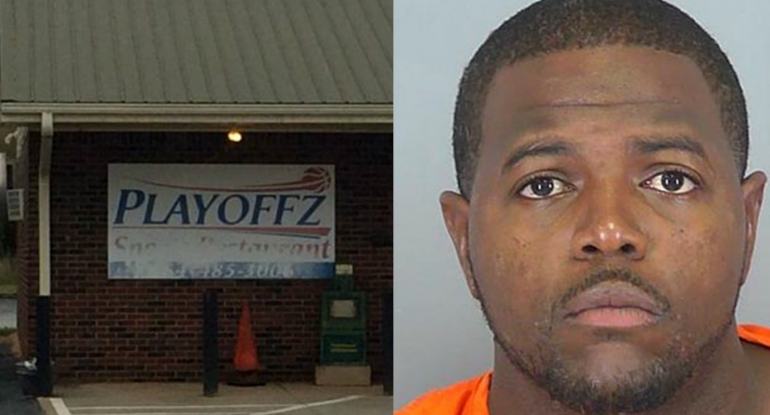
Left: Playoffz night club where the shooting occurred. Right: Jody Ray Thompson, the shooter.
Left: Playoffz night club where the shooting occurred.
Right: Jody Ray Thompson, the shooter.

The Uncertainty of Brexit

Over at The Washington Post, GMU law professor Ilya Somin has a great piece on Brexit that touches on similar points I made in my first post on the subject. After taking a look of political theorist Jacob Levy’s fantastic arguments against Brexit, Somin makes several important observations:

  • “First, he implicitly assumes that the UK will not become significantly more pro-free market than it was before Brexit. If you think that a Conservative government led by Boris Johnson or Theresa May will adopt much more market-oriented policies than it did in David Cameron, then its possible that the leaving the EU will facilitate such reforms. So far, however, I see little evidence of any such free market revolution in the offing.”
  • “Conversely, it is also possible that, even if the EU has not made British economic policy much more interventionist so far, it might have done so in the future had Britain voted for Remain.”
  • “Finally, it is possible that free trade and migration will be preserved intact if Britain joins the European Economic Area – the so-called “Norway option” favored by some Brexit proponents. EEA membership requires free trade and migration for EU citizens, and would also subject the UK to many (though not all) EU economic regulations. From a libertarian standpoint, the Norway option retains most of the good features of the European Union, while freeing Britain from at least a few of the bad ones. “

In short,

there is still a lot of uncertainty over the long-term impact of Brexit. But Jacob’s analysis should at least give pause to those who expect that Brexit will lead to a more libertarian Britain, or a more free-market Europe more generally.


Revolutionary Leaders and Mass Killings

Revolutionary leaders are more willing to commit mass murder than nonrevolutionary leaders according to a new study by political scientist Nam Kyu Kim. While this may not come as a surprise to anyone paying attention to history, it’s always nice to have confirmation. The abstract reads,

This article argues that revolutionary leaders are more willing to commit mass killing than nonrevolutionary leaders. Revolutionary leaders are more ideologically committed to transforming society, more risk tolerant, and more likely to view the use of violence as appropriate and effective. Furthermore, such leaders tend to command highly disciplined and loyal organizations, built in the course of revolutionary struggles, that can perpetrate mass killing. This study uses time series cross-sectional data from 1955 to 2004 to demonstrate that revolutionary leaders are more likely to initiate genocide or politicide than nonrevolutionary leaders. The violent behaviors of revolutionary leaders are not limited to the immediate postrevolutionary years but also occur later in their tenure. This demonstrates that the association of revolutionary leaders and mass killing is not simply indicative of postrevolutionary instability. This article also provides evidence for the importance of exclusionary ideologies in motivating revolutionary leaders to inflict massive violence.

The full paper can be found here.


Opposing GMOs is a first world luxury.

107 Nobel Laureates just signed a letter slamming Greenpeace over GMOs

In summary:

  1. 40% of children under 5 in the developing world have vitamin A deficiency, which is a leading cause of childhiood blindness and death.
  2. We could prevent up to 2 million deaths per year if we could increase access to Vitamin A.
  3. GMO crop golden rice is genetically designed to provide vitamin A. Since rice is an inexpensive staple crop for much of the world, this has a lot of promise.
  4. And yet anti-GMO protesters, including Greanpeace, are trying to block the use of golden rice, even destroying research crops.

I guess they have a point. We wouldn’t want to feed children anything “unnatural.” Better to let them suffer natural handicaps and die natural deaths.

golden rice