“We Kill People Based on Metadata”

2014-03-14 President ObamaWhen it comes to telephone calls… nobody is listening to your telephone calls. That’s not what this program is about. As was indicated, what the intelligence community is doing is looking at phone numbers, and durations of calls. They are not looking at people’s names, and they’re not looking at content. But by sifting through this so-called metadata, they may identify potential leads with respect to folks who might engage in terrorism. – President Barack Obama

It’s just metadata, folks. Not names or content. No big deal, right? On the other hand:

But metadata alone can provide an extremely detailed picture of a person’s most intimate associations and interests, and it’s actually much easier as a technological matter to search huge amounts of metadata than to listen to millions of phone calls. As NSA General Counsel Stewart Baker has said, “metadata absolutely tells you everything about somebody’s life. If you have enough metadata, you don’t really need content.” When I quoted Baker at a recent debate at Johns Hopkins University, my opponent, General Michael Hayden, former director of the NSA and the CIA, called Baker’s comment “absolutely correct,” and raised him one, asserting, “We kill people based on metadata.”

So, yeah. Guess President Obama’s “it’s only metadata” comfort isn’t so comforting after all. The rest of the article from whence that quote came is a description of the USA Freedom Act: what’s good, and where it doesn’t go far enough. I’m not sure I really follow all of the arguments. I do agree with the author, David Cole, that we need to balance safety against civil liberties, and that merely saying “people will die if we don’t record everyone’s metadata” is not, all by itself, enough to justify recording everyone’s metadata. But they key word there is balance.

I’m not sure that effectively rolling the clock back to the 20th century and pretending that Big Data isn’t a thing is really the way forward, either. There is immense power in the aggregation and analysis of vast quantities of data, and this isn’t just about terrorism. It’s about tracking disease outbreaks, learning more about the economy, making traffic safer and more efficient, and applications we haven’t even thought of. The potential to make the world a better place or a worse place based on data analysis is too big to ignore and, quite frankly, too enticing to resist.

Just like the European Union and their sadly laughable “right to be forgotten,”[ref]I see no practical way for Google or anyone else to actually enforce this law[/ref] laws based on trying to pretend that the data isn’t there or force people to not use it are likely to only succeed in making sure that the folks who harness and use the data that is already there do so in the shadows. And that’s creepy, whether it’s the NSA deciding who to kill based on metadata or Target sending pregnancy-related advertisements to teenager girls. Rather than prohibition, what I think we need is more clarity about how to collect and use the data in a way that is transparent and commensurate with a new understanding of what privacy really means in the 21st century.

The one thing we can be sure of? It won’t mean what people are used to it meaning. That’s OK. After all, in Scandinavian countries like Sweden, Finland, and Norway, every citizens individual tax returns are published publicly every year. Very different from what we’re used to, sure, but no one really cares over there. I’m not saying we should move to that model. I’m just saying that what certain folks have in mind when they think of “privacy” as a civil liberty is actually a lot less like an inalienable right and a lot more like an individual cultural preference. But if we can’t have a conversation about radically new understandings of privacy to go along with our radically new capacity to aggregate and analyze data, then we can’t take a hand in choosing our own fate.
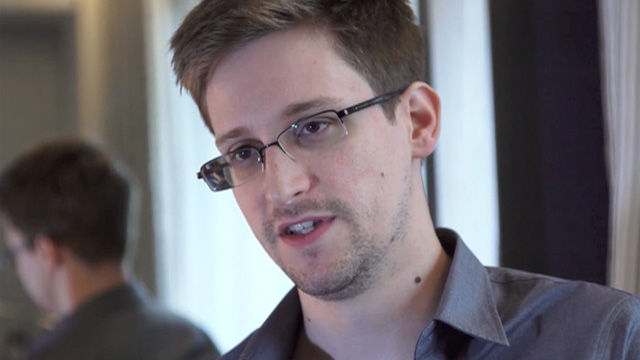
 

Edward Snowden: Super Spy

NSA whistleblower Edward Snowden: 'They're going to say I aided our enemies' - video interview

That’s the gist of a Wall Street Journal opinion piece which points out that “only a handful of the secrets [taken by Snowden] had anything to do with domestic surveillance by the government and most were of primary value to an espionage operation.” More specifically, General Dempsey says that “The vast majority of [the stolen docs] were related to our military capabilities, operations, tactics, techniques and procedures.” According to one off-the-record interview with an Obama official, the Snowden story has only three possible explanations:

  1. It was a Russian espionage operation
  2. It was a Chinese espionage operation
  3. It was a joint Sino-Russian operation.

I’m not sure what to believe. I do think that the most idealized version of Snowden as a self-sacrificing altruist crusading independently for civil liberties is impossible to believe. To me the question is mostly: to what extent was he manipulated vs. co-operating? And with whom? This doesn’t negate the good that has come from the revelations–and good has come from them–but it certainly complicates the whole narrative. Then again, I’m in a jaded mood these days, so the absence of any clear heroes of villains from the story fits.


James F. McGrath on Science Fiction and Religion

What does science fiction have in common with the Bible? More than we might expect. Both grapple with profundities. Both ask, among other key questions: How did we come to be? Where are we headed? How should we conduct ourselves? Where do we put our faith? The answers are not necessarily agreed upon…Thus, science-fiction fandom, with its canons, debates, and conundrums, has intriguing and instructive overlaps with the domain of religion.

So says biblical scholar James F. McGrath in an interesting article in the Spring 2014 issue of Phi Kappa Phi Forum.[ref]He actually co-edited the volume Religion & Doctor Who: Time and Relative Dimensions of Faith.[/ref] I’d actually considered writing a post on this topic given my more recent choice of entertainment, including The Dresden Files and Doctor Who.[ref]Mormon scholar Hugh Nibley tackled this same subject in his Temple & Cosmos. Atheist author Jason Colavito has argued that H.P. Lovecraft’s tales paved the way for the “ancient astronaut” theories found on the History Channel.[/ref]McGrath discusses TV shows like Lost, Star Trek, and Doctor Who, making for a fun read. In the end, he concludes, “Bottom line, science fiction is less about the future or past and more about our reflections on them. This type of speculation can be fascinating and meaningful, not merely diverting or academic…[S]cience fiction is a wonderful window into how humans perceive religion in the present.”

Check it out.


Mercatus Center and Regulations

Several new studies out of the Mercatus Center at George Mason University this month cover the impact of regulations on the economy:

Check them out.


The Co-Opting of Austrians by Classicals

Image result for mises
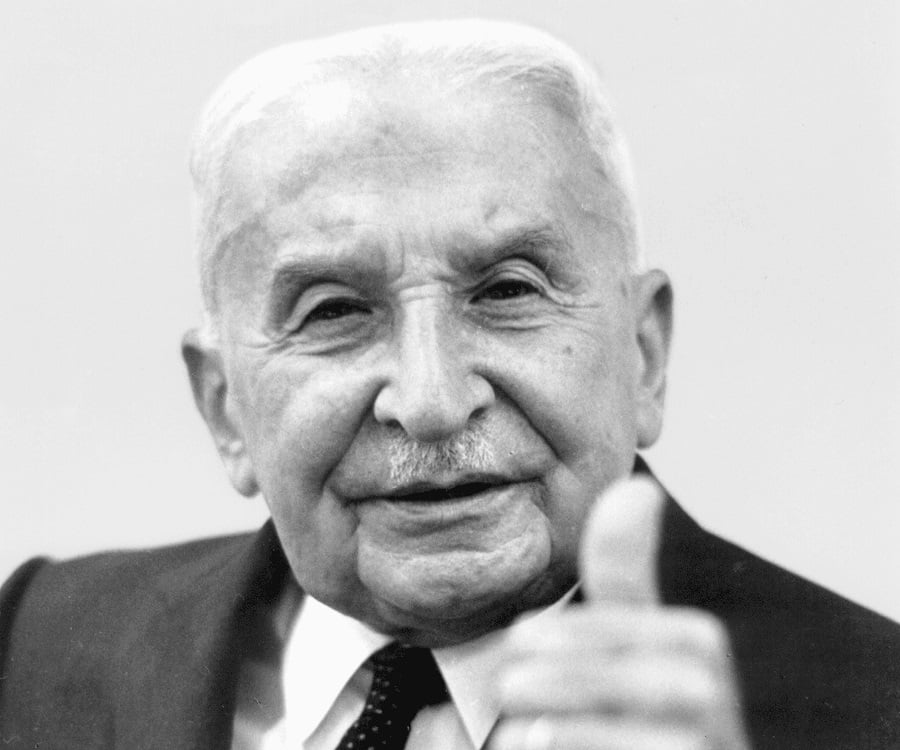
Ludwig von Mises

Economist Noah Smith has an interesting piece in The Week explaining how mainstream macroeconomics (“New Classicals”) “shares just enough similarities with the Austrian school to basically steal all their thunder.” Smith lists a couple similarities and differences:

Similarities

  • Human Action Axiom vs. rational expectations and the Lucas Critique
  • Praxeology vs. “Theory ahead of measurement”
  • Deep suspicion of government intervention

Differences

  • Formal mathematical modeling
  • Causes of the business cycle

As Smith concludes,

So it basically seems to me that the New Classicals captured and improved on the basic ideas of the Austrians in almost all of the ways that matter, while vastly improving on the presentation. New Classical concepts of rationality, distrust of empiricism, and distrust of government intervention are more moderate and nuanced than those of the Austrians, and their mathematical style is simply much more appealing to modern academics than the dense, turgid prose of von Mises or Hayek. Thus, if you were a smart young macroeconomist in 1980 who believed that people were both rational and smart, that government intervention was a bad idea, and that theory was the best way to investigate human behavior, you did not become an Austrian; you became a New Classical.

In other words, the New Classicals drank the Austrians’ milkshake.[ref]Reminds me of the Sept. 2012 issue of Cato Unbound.[/ref]

Can a $7 USB Stick Provide Computer Access to Billions?

2014-05-12 USB Stick

I like this idea, but it doesn’t go far enough.

The concept is to take a customized version of Google’s Android operating system[ref]Which, itself, is a variant of Linux[/ref] and install it on a USB drive. Then give the drives to poor folk, starting with students and staff at schools in Nairobi slums. On its own, the USB drive isn’t very useful, but if you plug it into a computer (any computer, including old computers and computers with broken hard drives) you get a customized, easy-to-use PC. In addition to ease of use and the ability to run on just about any hardware you can find, the device will store all your info on itself, so you can plug it into a different computer next time and all your files and settings will still be there.

So you get lower hardware requirements, simplicity of use, and portability of data. Not bad!

But, as long as we’re talking about deployment in the developing world and using Android’s OS, why not go a little farther. Instead of running on a USB stick, you could put the data on a micro SD card that can be inserted into a cell phone. Then you’d expand the program to include computers and cell phones. Given that lots of folks in the developing world interact with the Internet primarily through cell phones rather than through laptops or PCs, this seems like it would be a bigger step forward. Honestly, a technology did that would be something that could sort of unify the way the developed and developing world interact with technology and each other. I’d love to have a kind of seamless computing experience that followed me from light computer use on my phone to serious number-crunching on a dedicated work station.

The Slow Hunch: Reorienting the Purpose of Business

Michael E. Porter
Michael E. Porter

Competitive strategy expert Michael Porter gave a TED talk arguing for the ability of business to solve social problems. The talk is quite good and the idea is important. I connect it back to the United Firm, one of the earliest communal projects in Mormonism (which also happens to be a business organization), over at The Slow Hunch. Check it out.

LSE Report: “Ending the War on Drugs”

The failure of the UN to achieve its goal of ‘a drug free world’ and the continuation of enormous collateral damage from excessively militarised and enforcement-led drug policies, has led to growing calls for an end to the ‘war on  drugs’. For decades the UN-centred drug control system has sought to enforce a uniform set of prohibitionist  oriented policies often at the expense of other, arguably more effective policies that incorporate broad  frameworks of public health and illicit market management. Now the consensus that underpinned this  system is breaking apart and there is a new trajectory towards accepting global policy pluralism and that  different policies will work for different countries and regions.

So begins a brand new report from the London School of Economics examining the War on Drugs. Its findings suggest

  • A “drug-free world” is not plausible
  • Prohibition isn’t necessarily the problem, yet isn’t the answer
  • Stop sacrificing human rights
  • End mass imprisonment of drug offenders
  • Learn from mistakes

It should also be pointed out that legalization could run drug cartels out of business. Check it out.

Monogamy is a Moral Trinket and Other Profoundities

2014-05-06 Monogamy_Not_For_Me_xlarge

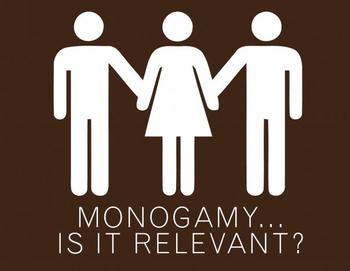
I realize that paying too much attention to what someone writing for The New Republic has to say about sexual morality is beyond silly, so I will try to keep this brief. The most interesting thing about Helen Croydon’s piece It’s Time to Ditch Monogamy is that it never really bothers to mount a serious argument. Not even a little bit. It approaches sexual morality with all the gravitas of discussing the latest fashion trends. In fact, less. I’ve seen more care and attention paid to articles on normcore than I have to this articles take on why monogamy is so five minutes ago. I cannot emphasize enough that I’m being earnest here. Normcore fashion is treated with more seriousness than monogamy. Literally.[ref]As in: the actual, original definition of the term.[/ref]

I’m also not going to indulge in any of the usual sky is falling rhetoric here. The sky has been falling and will continue to fall for the foreseeable future, but this article contributes nothing original or noteworthy to that ongoing process except as a prototypical example of “not with a bang, but with a whimper.” The debate over monogamy, among those who don’t see the point, is over precisely because they don’t even grasp that there’s anything intellectually serious to talk about. I mean, this is an article which includes “For these girls, Cameron Diaz is a good role-model.” as an ironically non-ironic statement.[ref]Meaning: Croydon realizes that’s a ridiculous thing to say. But she says it and she means it. We’re now looking to Hollywood stars not only as moral paragons, but also trenchant social commentators.[/ref]

I’ll make one final observation, and this simply that this death-rattle of monogamy (at least among a very particular cultural segment of the United States) is just the inevitable conclusion of Disney’s version of romance carried to the extreme.[ref]It’s worth nothing that Frozen was a daring departure from that con-job.[/ref] First we make a fetish out of that euphoric, transient phase of romantic love and then we realize that euphoric, transient phases aren’t really relevant or important to the real world. Well, that’s true. They aren’t.

But what does that have to do with love and marriage, again? Don’t ask Croydon. She hasn’t the faintest clue.

Gary Becker, 1930-2014

Nobel economist Gary Becker died this last weekend at the age of 83. Plenty of articles from various sources–The Washington Post, The New York Times, Forbes, The Wall Street Journal, Quartz, and many others–have been written praising the impact of Becker’s work. For our readers who may have an interest in the man himself, I recommend the video below. The world has perhaps lost the “greatest living economist.”