Acting on a tip from spelunkers two years ago, scientists in South Africa discovered what the cavers had only dimly glimpsed through a crack in a limestone wall deep in the Rising Star Cave: lots and lots of old bones.
The remains covered the earthen floor beyond the narrow opening. This was, the scientists concluded, a large, dark chamber for the dead of a previously unidentified species of the early human lineage — Homo naledi.
The new hominin species was announced…by an international team of more than 60 scientists led by Lee R. Berger, an American paleoanthropologist who is a professor of human evolution studies at the University of the Witwatersrand in Johannesburg. The species name, H. naledi, refers to the cave where the bones lay undisturbed for so long; “naledi” means “star” in the local Sesotho language.
For me, the only moment of genuine passion and conviction in the entire GOP debate came when Carly Fiorina linked the Iran issue (“the defense of the security of this nation”) with abortion (“the defense of the character of this nation”) Here is what she said:
Fiorina has been excoriated in the media for this statement, not least because the debate was the most-watched event for CNN. Planned Parenthood has been in damage-control mode over the ongoing release of undercover videos documenting the sale / donation[ref]A legal distinction without a meaningful ethical difference in this case.[/ref] of human organs procured during abortions. This kind of coverage does not help make their federal funding any safer.
This pro-Fiorina article from First Things (Fiorina Was Right) gives a good rundown of some of the criticism Fiorina has faced, for example, straight from Planned Parenthood:
The images show nothing like what Carly Fiorina said they do, and they have nothing to do with Planned Parenthood. The video footage that she claims exists—and that she ‘dared’ people to watch—does not exist. We have a word for that: It’s a lie.
Glenn Stanton, writing the First Things piece, argues that the video is real and provides the YouTube link with time stamps to see exactly what Fiorina is referring to. I don’t like watching these kinds of videos, but I did for the sake of understanding. The video produced by the Center for Medical Progress shows exactly what Fiorina describes. However, the video of the unborn human being with a beating heart and twitching leg is clearly not footage from the undercover sting operation. So what’s going on? Here’s MSNBC:
What does exist is a video interview of a former employee of StemExpress, a tissue procurement agency like the fictitious group represented by the anti-abortion activists behind the video. In it, she claims she saw a fetus with a heartbeat, and says her supervisor planned to procure the fetus’s brain for medical research. The video also includes unrelated stock footage of a fetus outside the womb that purports to be from an abortion… No one in the videos has even alleged that a fetus was kept alive to harvest a brain, nor is there footage of it.[ref]MSNBC also notes that the Center for Medical Progress has passed off images of stillbirths as images of abortions in the past. That’s a legitimate point in general, but not relevant in this particular case as we’ll see in a couple of paragraphs.[/ref]
So here’s what happened: the Center for Medical Progress (which has been releasing the undercover videos) used stock footage from another pro-life group called the Center for Bio-Ethical Reform during this segment of the video. They cut back and forth between an interview with a former “Procurement Technician” from Stem Express, LLC[ref]A real-live company that makes money acting as a middleman between abortionists and medical researchers who want human organs[/ref] describing the incident that made her quit her job and stock footage. The footage is clearly labeled, as this image (cropped to avoid any disturbing imagery) shows:
This isn’t dishonest on the part of CMP. They were interviewing a woman about what she was asked to do (cut through the face of an unborn human being to harvest the brain) and why she was unable to do it (it was too horrific for her to go through with). Showing footage of a fetus of the same gestational age during the interview is neither misleading nor gratuitous given the content of the interview. Furthermore, the CMP video does not allege that the footage of the fetus was from the specific incident being described by the interviewee. In fact, that would be strange because if they had undercover video of that incident they would be playing that video in addition to / instead of an interview. You interview people precisely because you don’t have primary evidence of the thing you are interviewing them about. That is what, to a large extent, interviews are for. Nor does the CMP video allege that the fetus in the footage is aborted, and why should they? That is not actually relevant. The fetus that is the subject of the interview was aborted, the fetus in the stock footage is there as an illustration to show viewers what we’re talking about. This woman was asked to cut through the face of an unborn human being. This is what an unborn human being looks like. Given euphemisms about “products of conception” and “uterine contents” and so forth, the inclusion of illustrative footage is entirely legitimate.
So let’s turn to Fiorina’s comments. It’s clear that she, either in watching the video or in remembering it after the fact, conflated the stock footage with actual footage of a fetus that was about to have its brain harvested. I do not think it was a lie because I do not think it was intentional. People misremember. That’s part of being human. More importantly: I don’t think it matters.
Think about the Planned Parenthood rebuttal for a moment. A woman testifies that PP conducted an abortion that led to a living, intact fetus and then ordered this women to harvest that fetus’s brain. Fiorina passionately declares that this kind of barbaric treatment is a threat to our national character. Planned Parenthood says, “Aha, but you don’t actually have video of that specific incident.”
This non sequitur is as morally bankrupt as one of Donald Trump’s failed enterprises. Does it really matter if this particular fetus in this particular video is the one that had its brain harvested? Or doesn’t it actually matter whether or not there was such a fetus that had its brain harvested on or off camera? Does Planned Parenthood think that something morally repugnant becomes morally acceptable just because it was not caught on video?
The specific video that Fiorina thought existed does not exist. But the kind of incidents that threaten our national character did take place and continue to take place. Which of those truths matters more? Planned Parenthood doesn’t really care; they just want you to think there’s nothing to see here so that you’ll move along without looking too closely.
Turns out, there’s even a site–DraftMit.org–where you can go and sign up to do your part to try and drat Mitt into the 2016 campaign. Yeah, I went and signed up.
The reality is, there are several GOP contenders that look promising to me: Rubio, Fiorina and yes, even Jeb Bush.[ref]It grates on me to say that, but I thought he did well in the debate and I deeply respect his refusal to cave into ignorant populism on the immigration issue.[/ref] But as long as none of them are even seriously challenging Trump, why not hold out hope for my favorite?
While we’re at it: Rubio or Fiorina would make really great VP candidates.
One of the most famous phrases in Mormon scriptures comes from Lehi’s farewell message to his son Jacob[ref]I called this Jacob’s sermon when I first wrote it. Oops. Fixed after a commenter pointed out the error.[/ref] in the Second Book of Nephi: “For it must needs be, that there is an opposition in all things.” The entire verse reads:
For it must needs be, that there is an opposition in all things. If not so, my firstborn in the wilderness, righteousness could not be brought to pass, neither wickedness, neither holiness nor misery, neither good nor bad. Wherefore, all things must needs be a compound in one; wherefore, if it should be one body it must needs remain as dead, having no life neither death, nor corruption nor incorruption, happiness nor misery, neither sense nor insensibility.[ref]2 Nephi 2:11[/ref]
As I was compiling my notes from my read-through of Steven Pinker’s The Blank Slate, I came across this really stunning echo of that concept. It’s a long quote, but definitely worth the read:
Donald Symons has argued that we have genetic conflicts to thank for the fact that we have feelings toward other people at all. Consciousness is a manifestation of the neural computations necessary to figure out how to get the rare and unpredictable things we need. We feel hunger, savor food, and have a pallet for countless fascinating tastes because food was hard to get during most of our evolutionary history. We don’t normally feel longing, delight, or fascination regarding oxygen, even though it is crucial for survival, because it was never hard to obtain. We just breathe.
The same may be true of conflicts over kin, mates, and friends. I mentioned that if a couple were guaranteed to be faithful, to favor each other over there kin, and to die at the same time, their genetic interest would be identical, wrapped up in their common children. One can even imagine a species in which every couple was marooned on an island for life and their offspring dispersed at maturity, never to return. Since the genetic interests of the two mates are identical, one might at first think that evolution would endow them with a blissful perfection of sexual, romantic, and companionate love.
But Symons argues, nothing of the sort would happen. The relationship between the mates would evolve to be like the relationship among the cells of a single body, whose genetic interests are also identical. Heart cells and lung cells don’t have to fall in love to get along in perfect harmony. Likewise, the couples in the species would have sex only for the purpose of procreation (why waste energy?), and sex would bring no more pleasure than the rest of reproductive physiology such as the release of hormones or the formation of the gametes:
There would be no falling in love, because there would be no alternative mates to choose among, and falling in love would be a huge waste. You would literally love your mate as yourself, but that’s the point: you don’t really love yourself, except metaphorically; you are yourself. The two of you would be as far as evolution is concerned, one flesh, and your relationship would be governed by mindless physiology… You might feel pain if you observed your mate cut herself, but all the feelings we have about our mates that make relationship so wonderful when it is working well (and so painful when it is not) would never evolve. Even if a species had them when they took up this way of life, they would be selected out as surely as the eyes of a cave-dwelling fish are selected out, because they would be all cost and no benefit.
The same is true for emotions towards family and friends: the richness and intensity of the feelings in our minds are proof of the preciousness and fragility of those bonds in life. In short, without the possibility of suffering, what we would have is not harmonious bliss, but rather, no consciousness at all.
The idea that our capacity to experience love is tied to the imperfections in our relationships, to their fragility and capacity to fail, is profound.
Brown University professor Daniel D’Amico has a staggering essay in the latest issue of Cato Unbound on the origins of mass incarceration in the U.S. titled “Why Nations Jail.” The common proposals for decreasing incarceration are “controls against racial bias, better social programs for the poor, drug decriminalization, and less punitive policing.” While D’Amico acknowledges that these elements matter, they do not account for global or historic patterns in prison growth. While economic factors like “unemployment, welfare spending, and union power correlate with cross-country imprisonment rates,” multiple studies fail to confirm a “consistent relationship between more liberal market economies – or higher economic performance – and larger prison populations.”[ref]He notes that more economically free countries actually have less homicide, yet have better crime reporting.[/ref] After continually demonstrating that the common narratives fall short when one examines the data, D’Amico offers a more compelling explanation: organizational structures of institutions. He uses the example of the American “war on drugs” to make his point:
Most countries prohibit drugs, but only America launches an ominously but fittingly titled “war on drugs.” It is not so much that we prohibit drugs, but rather how we finance and manage that prohibition, which sets us apart. I believe that America’s drug war, American criminal justice services more generally in recent decades, and those criminal justice systems that have behaved similarly, are all united by how much more power they afford to the national as opposed to local levels in criminal justice decisionmaking. And the result is mass incarceration.
Theory shows that more hierarchical organizations commit more errors of overidentification. Increases in criminal legislation, arrest rates, convictions, and sentence lengths would all seem to be relevant manifestations. Similarly, many public choice scholars have noticed that by concentrating perceived deterrent benefits while dispersing costs, democratic politics rewards the expansive spending, employment, and voter appeasement accomplished through criminalization and prison growth.
As D’Amico continues, he provides evidence that heavily hierarchical institutions and centralized power lead to higher incarceration rates. For those in support of prison reform, this essay and the research behind it are important.
I’m writing this post not as commentary but as one who doesn’t really know what to think about a topic. I’ve been contemplating for weeks now what exactly defines the limits of the law. We have various actions we consider immoral. Within immoral actions, some are illegal, and some are legal. Where do we draw the line? How do we decide which immoral actions to tolerate and which ones to outlaw? I will take for granted that no one here is Lord Devlin[ref]Lord Devlin was British lawyer, judge, and jurist who wrote that “I think, therefore, that it is not possible to set theoretical limits to the power of the State to legislate against immorality. It is not possible to settle in advance exceptions to the general rule or to define inflexibly areas of morality into which the law is in no circumstances to be allowed to enter.”[/ref] (or Judge Dredd) and simply does not believe the law has limits.
As the SEP entry on the limits of the law notes, the harm principle, as articulated by John Stuart Mill, is the best known answer. I know Nathaniel isn’t a big fan of the harm principle, but it does seem like a good place to start a conversation on the limits of the law. The Harm Principle may not end up fully capturing why we make some actions illegal and others not, but it does seem to define the most basic level of law. If absolutely nothing else, we have to keep Jones from murdering Smith.
If we accept the harm principle, the big question then is defining what exactly constitutes harm. Murder once more is a good place to start. Direct, grievous, bodily harm seems easy enough to identify as harm. But what about more diffuse harm like societal harm? If we do recognize diffuse, societal harm, how does one draw a line? We obviously cannot prevent all societal harm. How we do decide what to combat and what to leave alone? Is it simply another utility calculation of greater and lesser harms? And what of self-harm?
A further consideration is when, in attempting to prevent harm, we end up creating more harm instead. The SEP entry addresses this idea as well. Prohibition of alcohol increases alcohol consumption and adds criminal elements to a previously legal enterprise. Complete illegalization of prostitution drives vulnerable women further underground and away from law enforcement. To some extent, these problems can be avoided by more intelligent lawmaking (like the Nordic Model on prostitution, which protects prostitutes by making the purchase of sex illegal while the sale of sex is legal), but intelligent lawmaking can only go so far in the continual struggle with human nature. For example, I don’t think any amount of intelligent lawmaking would have made prohibition work. In effect, there seems to be a certain amount of pragmatism to lawmaking. We only have so many resources. We cannot change human nature. At what point do we surrender and accept a certain tolerable amount of harm?
Stepping away from the harm principle, what role does morally right action and social cohesion play in lawmaking? The idea (apparently called legal moralism) seems to have been totally banished from the modern mind (particularly proponents of the harm principle), but I don’t know if we can simply throw it out without a second thought. We shouldn’t go so far as Plato to suggest that the state should regularly and actively enforce the cultivation of moral virtue, to the point that there simply is no distinction between the moral and the legal, but I think there’s room in between Plato’s Republic on one end and a society whose laws are totally indifferent to virtue and social cohesion on the other end. Here I think Lord Devlin is more on target even if I don’t agree with his overall view:
For society is not something that is kept together physically; it is held by the invisible bonds of common thought. If the bonds were too far relaxed the members would drift apart. A common morality is part of the bondage. The bondage is part of the price of society; and mankind, which needs society, must pay its price.
I also suppose I take the ancient view that virtue and social cohesion are one and the same. Moral virtue produces harmony both in the individual person and society at large. Immorality produces disharmony in both the soul and society. But, as mentioned earlier, I recognize the need for pragmatism in this matter. The attempted enforcement of virtue can and often does produce the opposite effect or simply no effect at all. So we get neither virtue nor social cohesion and we waste state resources to boot.
On the topic of legal moralism, the SEP entry starts hitting on a subject that does conflict me greatly, the topic of marriage. I realize people are a bit tired of this topic, but I think it’s greater fodder for contemplation on the limits of the law. On the one hand, I recognize marriage as having specific characteristics (monogamous, heterosexual, and permanent) and purposes (the good of the spouses and procreation of children). These characteristics and purposes are central to the well-being of both individual persons, especially children, and society in general. But then I jump over to another topic, contraception, where I believe a simultaneously personal and societal harm exists, and I have zero interest in making contraception illegal. So what gives? How do I differentiate any legal objections I might have to gay marriage or divorce or polygamy from my total legal acceptance of contraception?
I can already tell this entry is a bit of a mess. I’m jumping around, mixing and matching moral outlooks (like utilitarianism and more virtue-based outlooks), not defining or exploring presuppositions, etc. It’s pretty bad. But I think this mess is still useful for generating a discussion. Let me know what y’all think.
I’ve had a Twitter account forever. Thought I’d try something new with it tonight and live tweet the GOP debate on CNN tonight, starting at 8pm. Follow me on Twitter if that sounds interesting: @NathanielGivens.
If I’m happy with the results–who knows?–I’ll post them here.
Ahmed’s clock, pic from the Irving police (via Wired).
That is a picture of a homemade clock that Ahmed Mohamed took to school to show his teachers. This turned out to have been a bad idea, as The Dallas Morning News reports:
Ahmed’s clock was hardly his most elaborate creation. He said he threw it together in about 20 minutes before bedtime on Sunday: a circuit board and power supply wired to a digital display, all strapped inside a case with a tiger hologram on the front.
He showed it to his engineering teacher first thing Monday morning and didn’t get quite the reaction he’d hoped for.
“He was like, ‘That’s really nice,’” Ahmed said. “‘I would advise you not to show any other teachers.’”
He kept the clock inside his school bag in English class, but the teacher complained when the alarm beeped in the middle of a lesson. Ahmed brought his invention up to show her afterward.
“She was like, it looks like a bomb,” he said.
“I told her, ‘It doesn’t look like a bomb to me.’”
The teacher kept the clock. When the principal and a police officer pulled Ahmed out of sixth period, he suspected he wouldn’t get it back.
He suspected that he wasn’t going to get it back, but he probably didn’t expect to get interrogated, intimidated by his principle, and then led away in handcuffs. For making a clock.
Ahmed being led away in handcuffs. Thats’ a NASA shirt he’s wearing, by the way. Very ominous, am I right?
Since then, some semblance of sanity has apparently returned and the police say that Ahmed will not be facing any charges. That’s good. On the other hand, they are standing by their initial decision. That’s hardly surprising. It will be a cold day in Hell before a police force in this country (or any country) voluntarily acknowledges that they made a mistake. That’s how authoritative institutions work: they preserve their own power at any cost.[ref]A notable example, in case you’d like a refresher, would be the Georgia county that refused to pay medical costs after police dropped a stun grenade in a toddler’s crib and blew a hole in his chest. This is par for the course, folks.[/ref]
At a press conference today, a police spokesperson claimed that the device was both “a hoax bomb” and a “naive accident.” That position makes no sense. A hoax is a deliberate attempt to deceive people. An accident is not. Which is it? Given that Ahmed’s behavior it is obvious to any sane human being that it’s really neither. It’s just a talented kid who wanted to show something cool that he’d made to his teachers.
The outrage factor on this one is high, and–while I admit I’m seething–I’d like to step back from just shouting at stupid people doing stupid things because they are stupid. That’s not productive. What might be instructive is this article from Gawker: 7 Kids Not Named Mohamed Who Brought Homemade Clocks to School And Didn’t Get Arrested. So: Let’s not pretend that Ahmed’s name is not irrelevant here. Obviously it is.
Although charges were never filed by the police, Ahmed was suspended for three days by his principle. For what? According to US Today:
The principal referred questions to the district, which released a statement: “We always ask our students and staff to immediately report if they observe any suspicious items and/or suspicious behavior.”
So. “If you see something, say something.” The problem with vigilance is that if you don’t know what to be vigilant for you’re not actually being vigilant. You’re being paranoid. His English teacher was scared. What does his English teacher know about explosives? Or electronics? Not much. The police were scared. One said, “It looks like a movie bomb to me.” Clearly we’re dealing with professionals here.
I know I’m veering into sarcasm again, but there’s a sincere point I want to make. Prejudice obviously played a role in this case, and prejudice obviously plays a role in a great deal of the injustice that happens in our world. But prejudice alone doesn’t explain everything. What happened in Irving took prejudice but also ignorance and especially fear. Fear and ignorance are catalysts that exacerbate underlying prejudices.
If you want to make the world more just and more fair, don’t exclusively oppose prejudice. Prejudice is hardcoded into human nature at a pretty low level. We generalize (make groups) and we infer (draw conclusions about general categories based on individual examples). Neither generalization nor inference are going away, nor should they; we need them to think. But as long as they are around, trying to train people to not apply generalization or inference in certain cases is fighting an uphill battle. It’s worth fighting, but maybe we don’t need to put all our eggs in that basket.[ref]There are other approaches to combating prejudice, and some are better than others, but all are going to face this problem when put into practice.[/ref]
I’ve written about fear a lot recently, once in the specific context of refugees and migrants and more generally when it comes to security and safety. The message in both cases is pretty similar. First, we need to be willing to assess risks rationally to the best of our abilities. Second, doing the right thing means confronting fear. There is no progress without a general willingness to take risks. They come down to the same thing: don’t let fear be in control.
There’s a saying that all motivations in life boil down to two things: love and fear. Or, less poetically but more accurately: attraction and aversion. Even the tiniest microorganism has to make that decision constantly: do I approach (a potential food source) or avoid (a potential predator)? As a general rule, I think life goes better when we let love lead the way. When we are motivated by what we want to go towards rather than what we’re trying to get away from. When we strive towards what we want to make happen by rather than what we want to prevent.[ref]This can be taken too far, obviously, but I like it as a general approach.[/ref]
So, in addition to our conversations about prejudice, it might help to also have a conversation about basic bravery. About setting aside our worship of fear. When 9/11 happened, it made the country better in a lot of ways: it brought us closer together (for a while, at least), it focused our priorities on what really matters (for a while, at least), and it reminded us of what real heroism and sacrifice look like (we seem to be doing a better job of remembering that one). But it also had some dark effects, and those effects are lingering stubbornly. Chief among them: it taught us a new kind of fear. That fear has already convinced us to trade away an awful lot of money, an awful lot of lives, an awful lot of our principles, an an awful lot of our civil liberties. We’ve spent an awful lot of time–individually and as a nation–being motivated by aversion. By fear. Maybe it’s time to change the motivation.
They say that we should never forget 9/11, but I think that depends on exactly what you’re trying to enshrine in memory. If you’re talking about the sacrifices and bravery of first responders and the folks on Flight 93[ref]And I think that’s usually what people mean.[/ref], then of course we all agree. But maybe there’s more we should remember, like what it was to be an American on 9/10, before our national psyche was scarred. I think there were some things we did better then. Like not overreacting to some poor geek[ref]I say that as a geek.[/ref] and his harmless hobby just because his name is Ahmed. We can’t just turn the clock back. We can’t literally forget, and we shouldn’t. But if we can get back even a little bit of that openness and confidence it will mean something. Because this time it we will be choosing openness and confidence and bravery in spite of fear rather than merely stumbling into them.
Let’s recognize prejudice for what it is and fight it. Let’s do the same with fear.
Jesse Singal makes a simple but worthwhile point at NYMag: Liberty University Students Survived the Unsafe Space Created by Bernie Sanders and His Pro-Choice Views (somehow). The backstory is simple: Bernie Sanders came to speak at notoriously conservative Liberty University and, although he faced tough questions from a generally hostile crowd, no one protested to deny him the opportunity to speak and no one interrupted his speech. Contrast that as Singal does, with basically any liberal-dominated college you can think of:
For example, Emily Yoffe, who has written about the connection between alcohol and sexual assault, had a speaking offer at a West Coast college rescinded after a student organization told her that her presence would make victims of assault “feel unsafe.” At my alma mater of the University of Michigan, for example, a showing of American Sniper wascanceled (though later un-canceled) after students complained that the movie’s depiction of Iraqi Muslims would make “students feel unsafe and unwelcome.” Unsuccessful attempts to get Bill Maher and George Will canceled as speakers at the University of California – Berkeley andMichigan State, respectively, involved similar arguments about creating dangerous-feeling environments.
There are plenty more examples where those came from, of course.
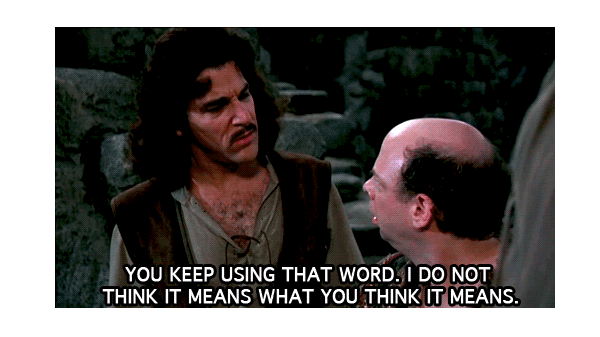
I’ll tell you one thing: the word liberal sure doesn’t mean what it used to mean.
There’s a thought-provoking article in the recent issue of Nautilus on futurism’s blindspot: culture. The author argues that our “innovation-obsessed present” conditions us
to overstate the impact of technology not only in the future, but also the present. We tend to imagine we are living in a world that could scarcely have been imagined a few decades ago. It is not uncommon to read assertions like: “Someone would have been unable at the beginning of the 20th century to even dream of what transportation would look like a half a century later.” And yet zeppelins were flying in 1900; a year before, in New York City, the first pedestrian had already been killed by an automobile. Was the notion of air travel, or the thought that the car was going to change life on the street, really so beyond envisioning—or is it merely the chauvinism of the present, peering with faint condescension at our hopelessly primitive predecessors?
…We expect more change than actually happens in the future because we imagine our lives have changed more than they actually have.
I think this point about technology is debatable. However, the main thesis is that “Ideas, not technology, have driven the biggest historical changes. When technology changes people, it is often not in the ways one might expect:
…Why is cultural change so hard to predict? For one, we have long tended to forget that itdoes change. Status quo bias reigns. “Until recently, culture explained why things stayed the same, not why they changed,” notes the sociologist Kieran Healy. “Understood as a monolithic block of passively internalized norms transmitted by socialization and canonized by tradition, culture was normally seen as inhibiting individuals.”
In other words, “when it comes to culture we tend to believe not that the future will be very different than the present day, but that it will be roughly the same. Try to imagine yourself at some future date. Where do you imagine you will be living? What will you be wearing? What music will you love?”
Predicting the behaviors and ideas of the future are far more difficult than predicting the technology.
Acting on a tip from spelunkers two years ago, scientists in South Africa discovered what the cavers had only dimly glimpsed through a crack in a limestone wall deep in the Rising Star Cave: lots and lots of old bones.





 One of the most famous phrases in Mormon scriptures comes from Lehi’s farewell message to his son Jacob[ref]I called this Jacob’s sermon when I first wrote it. Oops. Fixed after a commenter pointed out the error.[/ref] in the Second Book of Nephi: “For it must needs be, that there is an opposition in all things.” The entire verse reads: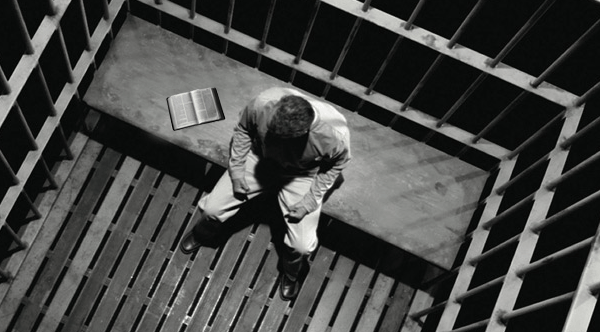

 r underground and away from law enforcement. To some extent, these problems can be avoided by more intelligent lawmaking (like
  e the ancient view that virtue and social cohesion are one and the same. Moral virtue produces harmony both in the individual person and society at large. Immorality produces disharmony in both the soul and society. But, as mentioned earlier, I recognize the need for pragmatism in this matter. The attempted enforcement of virtue can and often does produce the opposite effect or simply no effect at all. So we get neither virtue nor social cohesion and we waste state resources to boot.


 There’s a thought-provoking article in the