Our blast into the General Conference past continues with my second installment of this 14-year project. Once again, this session has a mixture of gems, doozies, and pleasant, if not forgettable, instruction for the Latter-day Saints.
Marion G. Romney begins the April 1971 Saturday afternoon session by focusing on the existence of Satan (an odd topic in my view). “A corollary to the pernicious falsehood that God is dead is the equally pernicious doctrine that there is no devil,” he pronounces. “Satan himself is the father of both of these lies. To believe them is to surrender to him. Such surrender has always led, is leading now, and will continue to lead men to destruction. Latter-day Saints know that there is a God. With like certainty, they know that Satan lives, that he is a powerful personage of spirit, the archenemy of God, of man, and of righteousness. The reality of the existence of both God and the devil is conclusively established by the scriptures and by human experience.” While Romney engages in decontextualized scriptural proofs (e.g. the Satan of Job is not the Satan of the New Testament; Moses 1 seems to draw on Matthew 4), I was somewhat drawn to the declaration of the reality of spiritual entities and, by implication, spiritual warfare. It must be remembered that while
the early Christians did indeed regard the gods of the pagan order as false gods, they did not necessarily understand this to mean simply that these gods were unreal; they understood it to mean that the gods were deceivers. Behind the pieties of the pagan world, Christians believed, lurked forces of great cruelty and guile: demons, malign elemental spirits, occult agencies masquerading as divinities, exploiting the human yearning for God, and working to thwart the designs of God, in order to bind humanity in slavery to darkness, ignorance, and death. And to renounce one’s bonds to these beings was an act of cosmic rebellion, a declaration that one had been emancipated from (in the language of John’s Gospel) “the prince of this world” or (in the somewhat more disturbing language of 2 Corinthians) “the god of this world.” In its fallen state, the cosmos lies under the reign of evil (1 John 5:19), but Christ came to save the world, to lead “captivity captive” (Ephesians 4:8), and to overthrow the empire of those “thrones, dominions, principalities, and powers” (Colossians 1:16, 1 Corinthians 2:8, Ephesians 1:21, 3:10) and “rulers on high” (Ephesians 6:12) that have imprisoned creation in corruption and evil. Again, given the perspective of our age, we can scarcely avoid reading such language as mythological, thus reducing its import from cosmic to more personal or political dimensions. In so doing, however, we fail to grasp the scandal and the exhilaration of early Christianity.[ref]David B. Hart,Atheist Delusions: The Christian Revolution and Its Fashionable Enemies (New Haven: Yale University Press, 2009), 113-114.[/ref]
The metaphysics are interesting. The talk not so much.
ElRay L. Christiansen’s address has some fairly pointed criticisms of the easily angered: “To become upset and infuriated over trivial matters gives evidence of childishness and immaturity in a person.” While this doesn’t really take into consideration natural temperament and environmental factors (and thus the need for anger management), Christiansen’s talk is nonetheless important in drawing attention to our often harmful behaviors that are influenced by anger. “Anger does not contribute to good,” he states. “It is a destroyer, not a builder.” Righteous anger is justified in his view (such as Moses breaking the tablets or Jesus “cleansing” the temple), “[b]ut to lose our temper, to explode, to become ugly, punitive, and hateful when faced with frustrations is inexcusable!” Anger “destroys wisdom and sound judgment. When we become upset, reason is suppressed, and anger rushes in.” To have an “uncontrolled temper is [to be] like an undisciplined child.” Such a person expresses “emotions explosively or by sulking, and disregards the feelings of those about him.” In short, “[o]ne of the greatest accomplishments of a person in this life is to develop and practice self-control.” While anger can lead to inspired actions (one must not forget the wrath of God toward evil), many times in our modern age it leads to nothing more than divisive outrage statuses on Facebook or Twitter. “Your anger is a gift” only if it leads to action that actually helps people. Otherwise, it is just ego masturbation.
In the most uninteresting of the talks, S. Dilworth Young explains to the audience that they should bug their non-member neighbors about the Church because that is what Peter and Paul would apparently do. Moving on.
Milton R. Hunter’s talk on adultery is nothing new. However, I do like how he presents sexual morality in the context of human flourishing: “Frequently married people commit adultery and single people indulge their passions in acts of fornication. The results are unhappiness, the loss of love, breaking up of homes and destroying of family life, increase in the number of divorces, shame, loss of spirituality, apostasy, and eventually loss of eternal salvation.” This looks at sexual morality from the angle of eudaimonia; a perspective I tend to prefer. And while there are appropriate criticisms of the modern overemphasis on The Family™, Hunter provides an excellent reminder as to why the family plays such a large role in Mormonism: “The greatest of all laws in this gospel plan pertains to marriage for life and eternity. Thus it pertains to the family eternal. The sweetest joys and greatest blessings that can be gained in mortality and in the life to come are attained through family life lived in accordance with the gospel plan. Thus, a basic law in marriage is the law of chastity. Men and women cannot defile the fountain of life and reap a fullness of joy. Happiness and purity of heart and mind go hand in hand.” Family life is the context in which the good life is found.
So…Sterling W. Sill cusses over the pulpit:
Because we draw so much from the rebellion, weakness, and evil with which we are surrounded, we tend to load ourselves up too heavily with guilt complexes, mental problems, insecurity, and mediocrity. I recently heard of a man who compounded the problem by hoarding his mistakes. He often referred to the fact that his D.F.T. drawer was the largest file in his office. Someone once asked him what these file letters stood for, and he said they identified a collection of the damn fool things that he had done. Most of us are not bad people—we just let our D.F.T. files get too large (bold mine).
I fully plan on using this quote in a sacrament talk. What’s so great about it–beyond the ruffling of Mormon feathers–is that it addresses the all-too-common Mormon practice of self-flagellation. The talk highlights struggle and growth instead of impossible perfectionism and does so through the lens of optimism and hope. “The religion of Christ itself is not so much a set of ideas as it is a set of activities,” says Sills. “The purpose of the Church is to help us translate the principles of the gospel of Christ into constructive, meaningful human experience. And everyone should work toward this end by a daily practice of thinking some uplifting thoughts, listening to some fine music, reading some stimulating literature, doing some good deeds, and having some great experiences every day.” This fits with the above mentioned paradigm of eudaimonia. Sills offers a great reminder of how exciting life can be, beginning with one’s birth: “Great experience number one is that I managed to get myself born, and I have been very pleased about that ever since…I am very glad that [my parents] were not members of this modern breed of abortionists who are followers of King Herod in his program of slaughtering the innocents.” Drawing on Henry Thoreau, Sills believes “we should thank God every day of our lives for the privilege of having been born. And then he went on to speculate on the rather unique supposition of what it might have been like if we had not been born. Just suppose that you had never been born or that your parents had never been born. Think of all of the excitement and opportunities you would have missed as a consequence.” He then talks of rebirth, but not in the typical renew-my-covenants-every-week-via-the-sacrament way:
Phillip Brooks was once asked when he was born and he said, “It was one Sunday afternoon when I was twenty-five years old, just after I had finished reading a great book.” Saul of Tarsus was reborn on the Damascus road. Joseph Smith was born again after reading a great scripture. In 1932, Walter Pitkin wrote his book Life Begins at Forty, but that is ridiculous. Life begins every morning. Life begins when we begin. And our real lives begin when we determine to live by every word of the Lord.
This demonstrates that spiritual experiences can occur in many different ways through multiple forms and mediums. A good book is put on the same plane as Paul’s vision on the road to Damascus. It’s no longer strange to think that I may be far more moved by Pergolesi’s Stabat Mater or “Who Am I?” from Les Miserables than what I find in an LDS hymnal.
I appreciated Franklin D. Richards’ comments on wealth given the constant criticism (from both members and non) that the Church’s corporatism means it serves “mammon” instead of God. The first step to using wealth correctly according to Richards is responding to it with gratitude: “Regardless of the difficulties existing in the world today, we as a people must recognize that we have been blessed abundantly with the resources of this world; yet we know that whatever we have is the Lord’s and that he has blessed us with these things to see how we will use them.” Next, he touches on a subject I’ve written on for a forthcoming publication: the paradox of wealth as both a blessing and a curse.
It is interesting to note that here, as elsewhere in the scriptures, promises of earthly wealth and increased talents are made to those who live the gospel principles, and counsel is given to use our talents and wealth for the building of the kingdom. Many scriptures, however, contain words of admonition regarding temptations brought about through the acquisition of wealth and its use for unrighteous purposes…Throughout the history of the Church its leaders have taught the value of the principles of work, industry, and thrift; and as they have been practiced, Church members have prospered in numerous ways. Likewise, members have been counseled to establish and maintain their economic independence, and employment-creating industries have been encouraged. In furtherance of these teachings, every man who has property and means should live so as to obtain wisdom to know how to use them in the best possible way to produce the greatest amount of good for himself, for his family, for his fellowmen, and for the kingdom of God.
In summary, “the real test of a man is his attitude toward his earthly possessions.” However, the second half of the talk connects this with tithing. While I am convinced of the theological connection tithing has with the law of consecration, I can see this talk being interpreted as nothing more than a marketing ploy. The message?: Pay your tithing or you love money more than God. That’s a cynical interpretation, but possibly a valid one. What’s worse is it trumpets the rhetoric of the widow’s mite as being “as important and acceptable as the rich man’s offerings.” Yet, as New Testament scholar Craig Evans explains,
The context of the widow’s offering suggests…that it is an example of the very thing that Jesus warned about: the “house,” or estate, of the poor widow has finally been consumed. The traditional, popular interpretation that views the widow as a model of sacrificial giving probably has missed the point. Nor is the point that the smallness of her gift is in God’s sight equal to the much larger gifts of the wealthy. The point lies in the fact that the poor widow cannot afford her tiny gift, which amounts to “her whole life”…while the wealthy person who gives a large gift does not even miss it. The example of the widow’s mite is a tragic example of the exploitation of a temple establishment that has become oppressive, not generous and protective.[ref]Craig A. Evans, “Mark,” in Eerdmans Commentary on the Bible, ed. James D.G. Dunn, John William Rogerson (Grand Rapids: Eerdmans, 2000), 1093-1094.[/ref]
Nonetheless, Richards reminds us that the purpose of riches are for “doing good. Therefore, let us dedicate our means to the building of the kingdom of God. Let us this day resolve to be honest with the Lord in the payment of our tithes and offerings…The Church is designed to take care of the spiritual and temporal needs of its members, both living and dead; and the pattern encompasses programs such as educational, missionary, welfare, auxiliary, social services, genealogical, and many others.”[ref]For how much good the Church actually does around the world, see Ann M. Hansen, “The Minor Religions in International Relations: The Case of the Mormons in the 20th and 21st Centuries,” Ph.D. dissertation, Babes-Bolyai University (2013).[/ref]
Finally, Mark E. Petersen accompanies Spencer W. Kimball’s alarmist address with his own brand of apocalypticism: Crime rates are through the roof! The world is going to hell in a handbasket! Granted, crime had been rising for some time in 1971 and would continue through the 1990s. But crime has returned to 1970s rates. Furthermore, long-term trends show an overall decrease in violence worldwide. Even with slight upwards bumps in the U.S. homicide rate, the overall trend is one of decline. It’s data like these that makes it difficult to take claims that The World™ is getting worse seriously.
All in all, another enlightening, frustrating, and overall satisfying session of General Conference.
——
Here are the other folks participating in this grand scheme who have also written blog posts responding to the Saturday Morning session of the April 1971 General Conference. (If any of the links don’t work, try back later. They are all coming online during the day.)
Well someone with more legitimacy (at least in the political world) has picked up my theory that DT is a plant for the Democrats. I believe this theory because he has actually made me consider voting for Hillary, and that is a turn of events I find hard to believe.
Carlos Curbelo, a Republican congressman from Florida, has stated,
“Mr. Trump has a close friendship with Bill and Hillary Clinton. They were at his last wedding, he has contributed to the Clintons’ foundation, (and) he has contributed to Mrs. Clinton’s Senate campaigns. All of this is very suspicious.”
An article in Psychology Today by Peter Gray, a leading researcher in educational psychology, spends a lot of time lamenting the fragile state of college kids, which I am happy to say does not seem to be happening among my students (crosses fingers that this is not as much of a problem in the sciences, sorry humanities). But I believe it may be a general trend, and I think anyone concerned about the amount of play kids get and the policing of American parents will be interested in the final takeaways:
In previous posts … I have described the dramatic decline, over the past few decades, in children’s opportunities to play, explore, and pursue their own interests away from adults. Among the consequences, I have argued, are well-documented increases in anxiety and depression, and decreases in the sense of control of their own lives. We have raised a generation of young people who have not been given the opportunity to learn how to solve their own problems. They have not been given the opportunity to get into trouble and find their own way out, to experience failure and realize they can survive it, to be called bad names by others and learn how to respond without adult intervention. So now, here’s what we have: Young people,18 years and older, going to college still unable or unwilling to take responsibility for themselves, still feeling that if a problem arises they need an adult to solve it…
In my next post I’ll examine the research evidence suggesting that so-called “helicopter parenting” really is at the core of the problem. But I don’t blame parents, or certainly not just parents. Parents are in some ways victims of larger forces in society—victims of the continuous exhortations from “experts” about the dangers of letting kids be, victims of the increased power of the school system and the schooling mentality that says kids develop best when carefully guided and supervised by adults, and victims of increased legal and social sanctions for allowing kids into public spaces without adult accompaniment. We have become, unfortunately, a “helicopter society.”
The only other thing I’ll add is that letting kids not only play, but also experience hard work (sometimes we have to do things that are not fun but are necessary, like the dishes) will help them get through those (not rare) times in life that require hard work.
I used to be very frustrated when people I knew and respected who had very well-informed, thoughtful opinions on controversial political issues refused to speak up about them.
Now I get it.
And here are two pretty clear examples of where my sense of frustration comes from. These are two Facebook posts from friends that appeared literally one after another in my Facebook feed. Other than obscuring names, I haven’t changed them at all.
Exhibit A
Exhibit B
So, let’s talk about this.
First observation: 100PERCENTFEDUP.COM and ADDICTINGINFO.ORG. Really, people? Really? These are the sites that you want to post to your FB feed? Look, I understand that no media outlet is purely objective. Everyone has bias. Everyone has an angle. But the reality is that big-name outlets like the New York Times or NPR or the Wall Street Journal depend, at least in part, on their reputations. And that sets boundaries on their crazy. This is even true of outlets that have an openly declared partisan affiliation, like The Nation or National Review. They have a viewpoint, but they also rely on being taken seriously, even by their opponents. Do you think that RAGINGPOLITICALCLICKBAITY-CLICKBAIT.INFO, which has no reputation to protect, is going to exhibit any of that caution or restraint?
The mainstream media certainly roots for one team more than the other, but when CBS majorly screws upDan Rather gets fired and they make a movie about it. When FOAMINGMOUTHPOLITICS-AND-ADREVENUE.NET gets something totally wrong nobody notices and nobody cares. (And, more often than not, people keep linking to it anyway.)
Second observation: let’s just assume for the sake of argument that both the headlines are accurate summaries of the relevant events. Let’s say they are, in simplistic terms, true. Does that mean that the views which the articles are clearly designed to substantiate are reasonable? No. No, it does not. This is what you could call (quite politely) cherry-picking. The most important aspect of cherry-picking is that you don’t have to lie or fabricate to be wrong. Sometimes, every single thing you say can be true and your conclusion can still be so utterly detached from rationality, kindness, and common sense that it has passed “wrong” without stopping on the freeway to Crazyville to accept the keys to the city from Mayor Crazy McCrazyPants.
The point of posting articles like those illustrated above is purely to validate a pre-existing opinion that boils down to simply this: my team is angelic, your team is demonic. These articles come from mutually exclusive parallel realities where the truth is obvious, extreme, and absolute.
The problem with these kinds of articles is not that they are false in the sense in which saying 2+2=5 is false. They are false in the sense in which saying, “Today a stranger stabbed my son with a metal rod” gives a false impression if you’re describing your son getting his vaccination from a pediatrician. What’s lacking is context, perspective, synthesis, and analysis. We might have a couple of facts that are true in the strictest technical sense, but are they complete? Do we have the whole story? Do we understand what it means? Does it actually lead to the implied conclusion once other factors are taking into account?
We’re addicted to outrage. We’re high on the heady feeling of occupying the moral high ground. But that high is really just oxygen deprivation. The world is more and more complex and the way we interact with it is stupider than ever.
The saddest part, for me, is the extent to which people are willing to be mean to each other over these kinds of things. The fact is that the stakes are so incredibly low in a Facebook debate, even when the issue itself is so incredibly important. We confuse the importance of a news story with the importance of our little petty squabbles about it. The refugee crisis is a big deal, with implications that could shape our world for decades or even centuries to come. But your argument with your cousin’s co-worker about that refugee crisis just isn’t a big deal. It’s not worth being rude or unkind.
Now you could say: who cares if some sheltered, Western Facebook denizens get their feelings hurt? What does that matter compared to the plight of refugees fleeing for their lives or the possibility that innocent men and women will be slaughtered by terrorists? But here’s the thing: we cannot hope, as a society, to possibly rise to the challenge of those kinds of high-stakes, big picture questions if we lack the capacity to have even the barest measure of self-control in our conversations about them. One thing we should be able to agree on is this: even if we can’t agree on the right answers to these problems, we should be able to approach to them with maturity and empathy and rationality.
So what can we do?
Read more, and especially from diverse and established sources. Wait longer to write. As I prepare to post this, news is still breaking about a shooting in San Bernadino, California. No one knows anything, except that 1/3rd of my Facebook feed knows that this is caused by lax gun laws[ref]In California? Really?[/ref] and 1/3rd knows that we’re under attack from ISIS[ref]Because one of the killer’s name is Syed Farook. These guys should work for the NSA, with analytical prowess like that.[/ref] I’ve been guilty myself of rushing to post the first and snappiest retort to a developing news story. It’s a bad idea. Resist the urge.
And lastly: cultivate relationships of trust, respect, and even warmth with your friends (real and online). There is truth in the wisdom the united we stand and divided we fall. There is very little that people of good intention working together cannot make better, and very little that people divided by animosity and suspicion cannot make worse.
The Economist has a short piece on climate change and politics that is as obvious as it is interesting. The partisan divide on climate change began in 1997 “when a Democratic president, Bill Clinton, threw his weight behind the UN effort to introduce mandatory caps for greenhouse-gas emissions.” Political support of science often has nothing to do with scientific literacy (as the Cultural Cognition Project at Yale has demonstrated). “Knowledge of science makes little difference to people’s beliefs about climate change,” the article states, “except that it makes them more certain about what they believe. Republicans with a good knowledge of science are more sceptical about global warming than less knowledgeable Republicans.” Climate change also seems to a concern of the privileged:[ref]To be clear: this doesn’t mean we shouldn’t be concerned, but people who are comfortable and don’t have to worry much about money, food, education, and employment have time to worry about the climate.[/ref] “The rich are more concerned about climate change than the poor, who have many other things to worry about. A giant opinion-gathering exercise carried out by the United Nations finds that people in highly developed countries view climate change as the tenth most important issue out of a list of 16 that includes health care, phone and internet access, jobs, political freedom and reliable energy. In poor countries—and indeed in the world as a whole—climate change comes 16th out of 16.”
What is perhaps most interesting is that despite the gaps in percentage, the trends tend to be the same for Republicans, Independents, and Democrats.
For some reason, I allowed Nathaniel to drag me into this 14-year scheme of reading a new General Conference session every week (you can check his post for the details). My first reaction was a big nope. Quite honestly, General Conference bores me. I don’t find it particularly edifying and frankly find the style and content of most General Authority talks to be lacking (to put it kindly). So the idea of reading multiple talks a week and then writing about them couldn’t have been less appealing.
And yet…
As I thought about it, the project seemed more and more worthwhile. I would become truly familiar with the teachings and trends of modern Mormonism. I would understand more fully what my parents’ generation grew up with. Furthermore, I would be taking seriously the words of leaders I sustain as prophets, seers, and revelators.
The April 1971 morning session was a good place to start. It combined the things that I both love and hate about General Conference. The first two talks were less than stellar. Joseph Fielding Smith’s talk was (what would now be) a typical, unremarkable rundown of basic Mormon beliefs. His outline could be straight out of a manual. The talk has virtually no scriptural references or historical sources. While this probably shouldn’t bother me, it does. Mormon theology has evolved and I don’t think many members or leaders are aware of its evolution, despite the claim of “continuing revelation.” Granted, this was 1971. The New Mormon History was just starting to gain momentum (The Mormon Experience hadn’t even been published). Despite these misgivings, I did like this line: “…The Church of Jesus Christ of Latter-day Saints [is] the custodian and dispenser of [the gospel’s] saving truths…” Reminded me of Terryl & Fiona Givens’ claim in The Crucible of Doubt that members of the LDS Church are custodians of the temple.
Spencer W. Kimball’s talk was annoyingly alarmist, though intriguing from a historical view. Kimball engages in some inflammatory anti-gay rhetoric, being two years after the Stonewall riots. But considering the 1970s was a transformative decade for the LGBT community, it is interesting to see how some Church leaders were responding to the trends around them. Nonetheless, the “perversion” of homosexuality is not the main topic, but fits snuggly into Kimball’s apocalyptic rhetoric and worldview: “We are living in the last days, and they are precarious and frightening. The shadows are deepening, and the night creeps in to envelop us.” According to Kimball, the “world is now much the same as it was in the days of the Nephite prophet who said: “… if it were not for the prayers of the righteous … ye would even now be visited with utter destruction. …” (Alma 10:22.)” Our world is “sinking into depths of corruption. Every sin mentioned by Paul is now rampant in our society.” The “eccentricities and disobedience” of the youth are “laid at the feet of those parents who gave them an example of disobeying both government and God’s laws.” Among these sweeping statements, Kimball makes the following claim without a hint of irony: “Many voices, loud and harsh, come from among educators, business and professional men, sociologists, psychologists, authors, movie actors, legislators, judges, and others, even some of the clergy, who, because they have learned a little about something, seem to think they know all about everything.” Since I think the evidence is in favor of the world getting better overall, I found little to be salvaged from this talk.
However, Marvin J. Ashton’s talk struck home for me. With President Nixon declaring a “war on drugs” in June of that year, it is noteworthy that drug addiction plays a prominent role in Ashton’s talk. Yet, it isn’t the addiction or drug use that is Ashton target, but the reasons for it:
If we as parents and friends advise our youth that drugs are bad, evil, and immoral, and yet we do not try to understand why our youth turn to this evil substitute for reality, then the drugs themselves become the issue and not the symptom of the greater issue of unhappiness. We need to know why our loved ones want to run from their present life to the unknown yet dangerous life of addiction. What causes a strong, lovely, vibrant young person to allow a chemical to control his or her behavior? What is there at home, school, work, or church that is so uncomfortable that an escape seems necessary? If we were not faced with the evils of marijuana, LSD, speed, and heroin, we would be faced with some other type of escape mechanism, because some of us as brothers, sisters, parents, friends, and teachers have not yet been able to reach our youth in such a way as to give them the confidence and love they seek. Some of us are not providing the stability in the home, the respect, and the care that every person needs. They need more than Church upbringing—they need a loving home life.
“That’s why I’m a drunk. When I’m drunk, I can stand myself.”
Ashton’s approach recognizes the lack of human connection behind addiction. Without using the term, his description acknowledges drug use as a shame-based behavior: “May I reiterate that while drugs are a most serious problem, and while the Church is a flexible instrument in the Lord’s hands, we must not be diverted from our eternal and most effective course by problems that, though serious, are only symptoms of greater ills” (italics mine). The way to address these “greater ills” is to “strengthen their homes and personal lives through warm, loving reeducation around basic gospel principles.” Instead of responding undesirable behaviors with shame, anger, and fear, “it is imperative that there be love, understanding, and acceptance in the home so our youth can learn that only steadfast pursuit of God’s ways will bring a rich, happy life.” And though many “who are part of the drug scene tend to adopt unusual dress, hair styles, and other mannerisms which set them apart…we do only harm by rejecting them from our meetings and general fellowship.”[ref]Only if they “become offensive or unacceptable by reason of extreme behavior” should we exclude them.[/ref] He offers credible advice to parents:
Parents, let’s make certain our youth are not continually exposed to the idea that the stresses of daily life require chemical relief. Factual information about drugs should be constantly stressed rather than attempts to frighten or shame. We must try to rear our children so that they are neither deprived of affection nor spoiled. We must give our children responsibilities according to their capabilities and never overprotect them from the difficulties they will encounter. As sure as some adults—mothers and fathers—continue to sow the wind, they will reap the tornado. Let us more firmly entrench ourselves in the true purposes of family life and sow oneness and reap joy.
And what of those who feel they are “failing in the home” because of their wayward children?: “I believe we start to fail in the home when we give up on each other. We have not failed until we have quit trying. As long as we are working diligently with love, patience, and long-suffering, despite the odds or the apparent lack of progress, we are not classified as failures in the home. We only start to fail when we give up on a son, daughter, mother, or father.”
The contrast between Ashton and Kimball demonstrates that if apostles can see and address the world differently, so can local members.
Finally, Ezra Taft Benson offers a healthy, edifying testimony of our eternal nature, the Resurrection, and the need for an eternal perspective. It was an excellent follow-up to Ashton’s talk, reminding us of our inner divinity and potential: “As eternal beings, we each have in us a spark of divinity. And, as one who has traveled over much of this world, on both sides of the iron curtain, I am convinced that our Father’s children are essentially good. They want to live in peace, they want to be good neighbors, they love their homes and their families, they want to improve their standards of living, they want to do what is right, they are essentially good. And I know that God loves them.” But all these virtuous desires do not end here because of the Savior’s resurrection: “Yes, there is the ever expectancy of death, but in reality there is no death—no permanent parting. The resurrection is a reality.” Peace between peoples, good neighbors, loving homes and families will not end. They will continue because death has been conquered. I wholeheartedly agree with Benson’s declaration: “There is nothing in history to equal that dramatic announcement. “He is not here, but is risen.””
I take the good with the bad of General Conference. I’m excited to do so each week.
—-
Here are the other folks participating in this grand scheme who have also written blog posts responding to the Saturday Morning session of the April 1971 General Conference. (If any of the links don’t work, try back later. They are all coming online during the day.)
A few weeks ago I wrote a blog post for Times and Seasons[ref]The Assurance of Love[/ref] responding to a 1981 General Conference talk by President Hinckley[ref]Faith: The Essence of True Religion[/ref] that I found challenging. In the post, I worked through some thoughts about President Hinckley’s talk, and I included this sentiment about reading the word of modern prophets:
President Hinckley’s talk was given 34 years ago. I was a baby then, so of course I have no memory of this talk. I did not know that it existed until last week… And I must confess a sense of shame as I read it for the first time and realized that this past year was the first year (since my mission) that I even tried to listen to all the sessions of General Conference. How many more talks have been given over my lifetime that I have never heard? Never read? Never considered? I say that I sustain the apostles as prophets, seers, and revelators, and yet I have nearly two centuries of their official talks given in General Conference and I have never even considered that I might want to go back and systematically read them to see what they had to say. I think it’s time I change that.
Max Wilson, who runs the blog Sixteen Small Stones, pointed out that there was nothing preventing me from converting that sentiment into action. Together with a few others, we hatched a scheme. We decided to start with the April 1971 General Conference (the earliest readily available online) and read them all at a rate of one session per week.
I plotted this out in a Google Spreadsheet and found that, assuming General Conferences continue to include 6 sessions per year as they currently do[ref]That’s two general sessions each on Saturday and Sunday in addition to a General Women’s Session and a General Priesthood Session.[/ref], it would take us until 2029. Late in the summer of that year we will revisit the April 2029 General Conference and finish it up before the October 2029 General Conference begins.
Naturally, because we’re all bloggers and writers of some stripe or another, we also decided to do a post every week in response to one or more of the talks that we’d read the week before. So this post—in which I decided to write about President Ezra Taft Benson’s talk Life is Eternal—is the first in a weekly series that is going to go on for the next 14 years.[ref]My elementary school kids could be back from their missions before I’ve completed this survey. The duration of this project is longer than the present duration of my marriage. Just some examples of what a 14-year project looks like to me.[/ref]
My motivation is pretty simple: I seek to take modern prophets seriously. As members of the Church of Jesus Christ of Latter-day Saints, we believe that our leaders are fallible and make mistakes, but we also believe that they are inspired and serve as watchmen on the tower. I want to know what the watchmen have been telling us. I especially want to look across a really large volume of contemporary writings to see what trends, patterns, and themes stand out most prominently.
So, without further ado, let’s get started.
The first thing that struck me about President Benson’s talk was his optimism. “I am convinced that our Father’s children are essentially good,” he wrote, and then, “Again I say, our Father’s children, my brothers and sisters, are essentially good.”
And then I was struck by the simple beauty and simplicity of President Benson’s talk: “Yes, life is eternal. We live on and on after earth-life, even though we ofttimes lose sight of that great basic truth.”
I spend a fair amount of time thinking about death. Not in a morbid way, but with the attitude of someone who has a finite budget and aims to make the most of it. I don’t know how many years I will have, of course, but I want to have achieved basically two things when my time does come.
First, I want to have felt that I gave everything I had. “We should waste and wear out our lives,” Joseph Smith told the Saints from Liberty Jail.[ref]D&C 123:13[/ref] Time and energy are resources. We can conserve them in the short-run, but in the long run the objective is to spend everything. My father taught me that when I was young, and I decided then to do my best to live up to it.
Second, I want to meet my death with confidence. I’m too keenly aware of my own capacity for rationalization. I can imagine—if I was careless—spending a lifetime as an active member of the Church only to learn at the very end that it was a combination of wishful thinking and agile mental gymnastics that had kept me going that whole time, and that in the end I didn’t know—not really—what was coming.
It’s rather fashionable to discount faith as blind belief, but what those critics do not understand is that no one is more sensitive and apprehensive about the capacity for self-deception than a believer. This is doubly true for believer with an intellectual bent. Anyone with an interest in philosophical can easily invent arguments that take the risk out of faith. The problem is that what that leaves you with is counterfeit faith. Then you really do have nothing but wishful thinking and blind belief.
I’m not sure this is what he intended, but consider Pascal’s famous wager. The logic goes something like this: if you act as though you believe in God then at worst you will die and lose nothing (because there is no God) but at best you stand to gain eternal live. If you act as though you do not believe in God then at best you will die and gain nothing (because there is no God), but at worst you stand to miss out on eternal life. The argument is famous for its contribution to probability theory and decision analysis, but it’s also clearly an attempt to arbitrage our way out of risky belief.
Well I don’t think that’s possible. There are lots of temporal benefits from membership in the LDS Church: longer life expectancy, a warm community wherever you move in the world, a great place to raise your kids. These are all real benefits, and anyone can enjoy them no matter what the truth about Joseph Smith and the Restoration might be, but I don’t believe that in the end these benefits alone—the self-evident, temporal ones—are worth the price of admission. I don’t think they are worth the time we spend in meetings, the effort we put into our callings, or the vulnerability we incur when we tie so much of our lives to a bureaucratic institution run by ordinary mortals.
The real danger is in fooling ourselves into thinking that we can participate in the Church without facing the tough questions. If we let ourselves be lulled into a kind of passive, consumerist version of faith we run the risk of waking up one day and realizing that we got the cost/benefit calculations wrong, but not having the individual spiritual reserves to sustain our membership because for so long our spiritual witness has atrophied while we relied on the obvious benefits to paper over a need to ask hard questions and subject our faith to intense scrutiny. If we do not interrogate our own faith, then eventually life will, and our testimonies will wilt under the inquisition.
Or, returning to my fear, we might not reach our own moment of truth until we are facing death’s final question. Then, for the very first time, we may realize that we can’t rationalize our way around the final question. That’s the motive behind my second goal. I want to be able to face death with confidence because only then will I avoid finding out, when it is too late to do any different, that my faith is made of paper. [ref]Our ward did lesson 41 in Gospel Doctrine today, and I was struck by a phrase I hadn’t noticed before in Paul’s first letter to Timothy: “faith unfeigned.”(1 Timothy 1:5) I wonder if this is what he meant.[/ref]
And this is why, returning to the talk, I found President Benson’s words so full of resonance.
Our affections are often too highly placed upon the paltry perishable objects. Material treasures of earth are merely to provide us, as it were, room and board while we are here at school. It is for us to place gold, silver, houses, stocks, lands, cattle, and other earthly possessions in their proper place.
Yes, this is but a place of temporary duration. We are here to learn the first lesson toward exaltation—obedience to the Lord’s gospel plan.
And also:
Yes, there is the ever expectancy of death, but in reality there is no death—no permanent parting. The resurrection is a reality.
Symbolism and allegory are nice, but they are not what I am searching for in this life. What I am searching for is reality. I want to live with the real sense that my time spent on earth is time spent at a waystation. I want to face death with the conviction in my heart, as sure as my conviction that a dropped object falls to the floor, that I will live again. That is something that wishful thinking and blind belief cannot produce. Only real, genuine, tested and tried faith can produce that.
That’s the kind of faith that I believe our Father wants us to have, and I think that is one major reason why we face a life so full of chaos, uncertainty, and tragedy. If things made sense, we could rely on rationalization and philosophy. We could escape the hard question until it was too late. But things do not make sense. The world is, as Camus noted, absurd. The hard questions dog us like the stubborn hounds they are. It is the very absurdity of the world that gives us the chance—time and time again—to cast aside the crutches of convention, of inertia, of rationalization, of tradition, of herd mentality, and of anything else that can provide a façade of faith to seek to try and find the real thing.
I won’t stop until I find it. I won’t be satisfied with anything less.
Here are the other folks participating in this grand scheme who have also written blog posts responding to the Saturday Morning session of the April 1971 General Conference. (If any of the links don’t work, try back later. They are all coming online during the day.)
With the sting of the latest terrorist attacks still lingering, questions regarding radical Islam have once again surfaced, from the legitimate to the Islamophobic. When it comes to support for ISIS, the Economist reports that a Pew study from last spring finds that attitudes toward the terrorist group in 10 Muslim-majority countries were “overwhelmingly negative.”:
It found that 99% of Lebanese and 94% of Jordanians, for instance, held “very unfavourable” views of the group. Even in Saudi Arabia, a country whose Wahhabist creed is seen as a wellspring of jihadism, there is little indulgence: in a face-to-face poll in September sponsored by the Washington Institute for Near East Policy, a think-tank, a scant 4% of Saudi respondents expressed any degree of support for the group.
However, the same article provides this interesting, if not disturbing, insight about those who do support the terrorist organization:
“Teachers and preachers and professors declare support for the bombings, and stay in their jobs, and then we wonder why youths go and join [IS],” laments a Twitter message from Ali al-Jifri, a popular Sufi leader in Abu Dhabi. Muhammad Habash, an exiled Syrian Islamic scholar, argues on the website All4Syria that IS is not a product of some conspiracy but the outcome of mainstream religious teaching: he notes that one of the group’s most effusive Facebook cheerleaders is a former professor at a Saudi university and the daughter of a noted Syrian preacher. Interviewed on SkyNews Arabia, Ibtihal al-Khatib, a Kuwaiti writer, contends that IS did not emerge from a void but from a heritage that Islamic thinkers refuse to re-examine: “We are paying a price for keeping silent for many years, but now that harm comes knocking on our doors we have to accept responsibility.”
Research indicates that many terrorists are both educated and well-off financially. While increased education may slightly decrease support for terrorism, economist and Brookings fellow Madiha Afzal finds that ideological curriculum (specifically in Pakistan) may be responsible for the rising extremist views among the younger population:
My regressions also show that older people have more unfavorable opinions toward the Taliban, relative to younger people; this is concerning and is consistent with the trend toward rising extremist views in Pakistan’s younger population. The problems in Pakistan’s curriculum that began in the 1980s are likely to be at least partly responsible for this trend. Urban respondents seem to have more favorable opinions toward the Taliban than rural respondents; respondents from Punjab and Baluchistan have more favorable opinions toward the Taliban relative to those from Khyber Pakhtunkhwa, which as a province has had a closer and more direct experience with terror.
Afzal’s research finds that across the educational spectrum, an overwhelmingly majority hold unfavorable views of terrorism. But her data provides an important counterpoint to those who simply think education in the abstract is the answer. One can be highly educated, but when that education is ideologically biased, intolerant, and exclusionary, then those indoctrinated are likely to be as well.
There have been apologies at Yale, resignations at Missouri, and copy-cat protests (and resignations) are starting to spread to other schools. At Claremont McKenna College in California, the dean of students replied to a Hispanic student’s public complaints with an attempted overture, writing in a student paper:
Would you be willing to talk with me sometime about these issues? They are important to me and the [Dean of Students] staff and we are working on how we can better serve students, especially those who don’t fit our CMC mold.
I would love to talk with you more.
Despite the dean’s obvious concern and goodwill, her use of the phrase “don’t fit our CMC mold” prompted two CMC students to threaten a hunger strike. The dean promptly resigned.
I have a lot of good friends who are supportive of the protesters at Missouri, Yale, and elsewhere. I know that they are good people. They are guided by principles of justice and equality that I also value. And so, for me, the thing I have wrestled with the most over the last week has been the attempt to reconcile the dissonance between their stated principles and motivations and the outcomes: hair-trigger intolerance, a climate of fear, and disregard for free speech.
I have come to this belief: when good intentions pave the path to Hell, it is because better principles have been allowed to fall by the wayside. The reason this can happen, the reason there is a tendency to let go of better principles, is that once they become ubiquitous we no longer recognize their importance. Unless we take the effort to remember the past, we will not understand how much we stand to lose.
Nowhere is this contrast more poignant than at Yale. Early in the controversy, the President Salovey wrote an email reiterating the school’s commitment to free speech, “not as a special exception for unpopular or controversial ideas but for them especially.” This stance is official Yale policy thanks to the Woodward Report. This document, formally called the Report of the Committee on Freedom of Expression at Yale, was issued in 1975 and the first section of it was adopted as official policy. It’s not every policy that begins with lofty prose and poetry, but the first section of the Woodward Report begins with this quote from John Milton:
And though all the winds of doctrine were let loose to play upon the earth, so Truth be in the field, we do injuriously by licensing and prohibiting to misdoubt her strength. Let her and Falsehood grapple; who ever knew Truth put to the worse, in a free and open encounter.
Next come these words from Oliver Wendell Holmes:
If there is any principle of the Constitution that more imperatively calls for attachment than any other it is the principle of free thought – not free thought for those who agree with us but freedom for the thought that we hate.
The section then culminates with a stirring defense of the principle of free speech:
The conclusions we draw, then, are these: even when some members of the university community fail to meet their social and ethical responsibilities, the paramount obligation of the university is to protect their right to free expression. This obligation can and should be en forced by appropriate formal sanctions. If the university’s overriding commitment to free expression is to be sustained, secondary social and ethical responsibilities must be left to the informal processes of suasion, example, and argument. [emphasis added]
The principle of free speech is more than narrow legal statutes. It is an attitude of protecting unpopular views from silence and overbearing retaliation. The arguments of student protesters and their defenders are an explicit repudiation of this broad vision for free speech. Therein lies the danger. The pursuit of justice, divested of the burden of protecting unpopular opinions and unflinching fidelity to truth, risks veering into vigilantism and fanaticism. No matter how noble the ambitions, when we no longer take it upon ourselves as a matter of principle to defend unpopular ideas and to allow truth to wrestle falsehood in a “free and open encounter,” we abandon the first right and cornerstone of our pluralistic society.
2.Liberal Intolerance
The protests at Missouri and Yale should not be analyzed in isolation. They are part of a disturbing trend that has attracted criticism not only from the right but increasingly from the center and left. It will be worth our time to survey some of that context before we move on.
Andrew Sullivan launched the mainstream movement to legalize gay marriage when he wrote “Here Comes the Groom” for the New Republic in 1989. Twenty-five years later, he looked on in horror as the movement he had helped to launch spiraled out of control in what Sullivan described as “McCarthyism applied by civil actors.”
Sullivan was reacting to the forced resignation of Mozilla CEO Brandon Eich. Only days after being promoted to lead the company he had helped found in 1998, word spread across the Internet that Eich had donated $1,000 to California’s anti-gay marriage Proposition 8 in 2008. Although Mozilla had long been committed to diversity and support for gay rights, although there was not a single alleged incident of prejudicial conduct or statements by Eich, and although Eich publicly committed to preserve Mozilla’s progressive culture and policies, this donation tainted him irrevocably. The Internet-based outrage spread across Twitter and soon other companies (like dating site OKCupid) got into the act of pressuring Mozilla to fire Eich, who stepped down on April 3, 2014 after being CEO for less than two weeks. The next day, Sullivan wrote his blog post, arguing that:
When people’s lives and careers are subject to litmus tests, and fired if they do not publicly renounce what may well be their sincere conviction, we have crossed a line…This is the definition of intolerance… It’s staggering to me that a minority long persecuted for holding unpopular views can now turn around and persecute others for the exact same reason. If we cannot live and work alongside people with whom we deeply disagree, we are finished as a liberal society.
At about the same time, John McWhorter wrote an article for Time: “‘Microaggression’ Is the New Racism on Campus.” He argued that “the nature of microaggressions — subtle, unintended, occurring in the hustle and bustle of social interaction — is such that they will never cease to exist entirely,” and that this ubiquity entailed that “being white is, in itself, a microaggression.” This, he wrote, “is just bullying disguised as progressive thought.”
In December 2014, Jeannie Suk wrote “The Trouble with Teaching Rape Law” for The New Yorker. Rape law was not taught in law school until the mid-1980s, she writes, because rape was not taken seriously. Feminists fought to change that, and when they won law schools began to teach rape law. Now, however, some law professors are starting to abandon the topic again, this time because of hypersensitive students who are afraid of being traumatized. Suk describes just how far their paranoia extends:
Student organizations representing women’s interests now routinely advise students that they should not feel pressured to attend or participate in class sessions that focus on the law of sexual violence, and which might therefore be traumatic. These organizations also ask criminal-law teachers to warn their classes that the rape-law unit might “trigger” traumatic memories. Individual students often ask teachers not to include the law of rape on exams for fear that the material would cause them to perform less well. One teacher I know was recently asked by a student not to use the word “violate” in class—as in “Does this conduct violate the law?”—because the word was triggering.
In January 2015 Jonathan Chait wrote “Not a Very PC Thing to Say” for New York Magazine. He documented numerous examples of harassment and intimidation of those who dared question conventional socially liberal dogma and concluded that “the new political correctness has bludgeoned even many of its own supporters into despondent silence.” In February, Jon Ronson wrote “How One Stupid Tweet Blew up Justine Sacco’s Life,” for the New York Times Magazine. He observed that
In the early days of Twitter, I was a keen shamer. When newspaper columnists made racist or homophobic statements, I joined the pile-on. Sometimes I led it…Still, in those early days, the collective fury felt righteous, powerful and effective. It felt as if hierarchies were being dismantled, as if justice were being democratized. As time passed, though, I watched these shame campaigns multiply, to the point that they targeted not just powerful institutions and public figures but really anyone perceived to have done something offensive. I also began to marvel at the disconnect between the severity of the crime and the gleeful savagery of the punishment. It almost felt as if shamings were now happening for their own sake, as if they were following a script.
In February, Laura Kipnis wrote “Sexual Paranoia Strikes Academe” for the Chronicle of Higher Education. She criticized new dating policies strictly barring dating between students and professors for infantilizing students and dismissed the “prohibition and sexual terror surrounding the unequal-power dilemmas of today.” She went on:
If this is feminism, it’s feminism hijacked by melodrama. The melodramatic imagination’s obsession with helpless victims and powerful predators is what’s shaping the conversation of the moment, to the detriment of those whose interests are supposedly being protected, namely students. The result? Students’ sense of vulnerability is skyrocketing.
In March, Asam Ahmad wrote “A Note on Call-Out Culture” for Briarpatch Magazine (the sort of publication that, according to its Wikipedia page, “is printed by union labour on FSC-certified paper using vegetable-based ink.”) He noted that “It isn’t an exaggeration to say that there is a mild totalitarian undercurrent not just in call-out culture but also in how progressive communities police and define the bounds of who’s in and who’s out.”
depressing signs that liberal public opinion is evolving in the direction of theological certainties and illiberal forms of intolerance. These so-called liberals want Anderson to be shunned. Expelled from the community. Excommunicated from civilized life. Ostracized from the ranks of the decent. That is something that should trouble all fair-minded Americans.
In June, an anonymous professor wrote an article for Vox: “I’m a liberal professor, and my liberal students terrify me.” He explains that the thought of possibly offending one of his liberal students caused him “to comb through my syllabi and cut out anything I could see upsetting a coddled undergrad, texts ranging from Upton Sinclair to Maureen Tkacik,” and he laid much of the blame at the feet of “a totalizing, simplistic, unworkable, and ultimately stifling conception of social justice.”
In September, Greg Lukianoff and Jonathan Haidt wrote “The Coddling of the American Mind” for The Atlantic. They described some of the student protests that had already occurred by then as “border[ing] on the surreal.”[ref]In the week between my first draft of this article and posting it, news came out that the University of Ottawa canceled a yoga class for cultural appropriation. Absurd stories like this are too numerous to document.[/ref] They went on to contrast the current movement to the wave of political correctness that swept academica in the 1980s and 1990s:
The current movement is largely about emotional well-being. More than the last, it presumes an extraordinary fragility of the collegiate psyche, and therefore elevates the goal of protecting students from psychological harm. The ultimate aim, it seems, is to turn campuses into “safe spaces” where young adults are shielded from words and ideas that make some uncomfortable. And more than the last, this movement seeks to punish anyone who interferes with that aim, even accidentally. You might call this impulse vindictive protectiveness. It is creating a culture in which everyone must think twice before speaking up, lest they face charges of insensitivity, aggression, or worse.
All of these writers come from the left or the center of the American political spectrum. And all of these writers are united in their belief that a sea-change is taking place within American society. Something is wrong. Some new trend is tying together extreme emotional sensitivity, simplistic notions of social justice, and intolerance of thought or speech. What is going on? And how did it get so bad?
The best explanation comes from an academic article: “Microaggression and Moral Cultures” by Bradley Campbell and Jason Manning.[ref]The article was brought to my attention by Jonathan Haidt’s Righteous Mind blog, where you can read a good summary of the article. I have read the entire article, but I haven’t found a publicly accessible link to the full text that I can share.[/ref]
In their article, Campbell and Manning describe social evolution from honor cultures to dignity cultures and on to the dawning of a new culture: the culture of victimhood. Honor cultures tend to arise where central authority is weak. This leads to “self help” justice, so named “because it involves the aggrieved taking matters into their own hands rather than relying on the legal system.” Honor cultures are typified by extreme sensitivity to insult combined with a tendency towards direct confrontation. When more powerful formal authorities arise, honor cultures give way to dignity cultures. In a dignity culture, “self help” justice is itself punishable by the authority. As a result, minor offenses are ignored and major offenses result in formal appeals to central authority. In contrast to honor cultures, dignity cultures have low sensitivity and an aversion to direct confrontation.
Victimhood culture is something new, and according to Campbell and Manning it has evolved on college campuses in response to four key factors:
Increased equality and diversity. This may seem counter-intuitive, but Campbell and Manning point out that the more equal and diverse a society becomes, the less tolerant it is to violations of equality or diversity. Thus, the increase in equality and diversity on college campuses since the 1960s and 1970s creates an atmosphere where people are hypersensitive to comparatively minor violations of diversity or equal status.
The legal and administrative authority that college officials wield over their students has increased dramatically in recent decades. This means that students are more and more inclined to appeal to administrators for redress of insults or offenses.
Social atomization–the breakdown of small organizations like clubs, extended family networks, and mutual aid societies–makes it harder for individuals to respond to offenses directly. When these groups were stronger, they created a tendency toward direct confrontation because the group would support you. In their absence the tendency to avoid direct confrontation with an offender and seek official assistance has increased even more.
Social networking technology allows individuals to propagate a message to a very large audience. This factor is perhaps the most decisive, because it is the potential to reach a vast audience that allows offended parties to use public pressure to coerce university authorities into assisting them.
Campbell and Manning make one additional key point: appealing for official assistance to redress a grievance is significantly more likely to succeed when the grievance is seen as part of a pattern of offenses that target an identifiable, victimized group. That is why there is such a close connection between social justice and victim culture: victimhood is at its most potent when it is seen as a symptom of systematic oppression.
The Campbell and Manning model is a theoretically sound and compelling explanation for the observations of Sullivan, McWhorter, Chait and the rest. The reason it feels as though there is a seismic shift going on, with college students becoming hypersensitive to perceived offenses to diversity or equality resulting in draconian punishment, is that such a seismic shift is indeed taking place.
3. Instrumental Victimhood
Campbell and Manning chose to study microagressions because “the anatomy of microaggression… has broader implications,” not because victimhood is relegated only to this particular tactic. On the contrary, they write that other “tactics such as hunger strikes, hate crime hoaxes, and protest suicides” are all potent weapons that can implement the strategic logic of victimhood culture.
The strategic logic of honor culture is to deter attacks by maintaining a reputation for violent reprisal. The strategic logic of dignity culture is to avoid unsanctioned feuds or conflicts by ignoring offenses unless/until they are so severe that the central authority will decisively take your side. The strategic logic of victimhood culture is to proactively construct a narrative of perpetual victimhood that will enlist the central authority on one’s behalf while simultaneously providing immunity from that central authority.
This gets to the fundamental problem with victimhood culture: the perverse incentives of acquiring power through victimhood tend to the hijacking of genuine social injustice by those who seek power. Or, as Campbell and Manning bluntly put it, “whenever victimhood (or honor, or anything else) confers status, all sorts of people will want to claim it.”
As you can imagine, if victimhood has become a valuable social commodity, then the people most likely to be able to obtain it are those least likely to need it. Campbell and Manning make the same observation, remarking that “these campaigns for support do not necessarily emanate from the lowest reaches of society… rather… microaggression complaints and protest demonstrations appear to flourish among the relatively educated and affluent populations of American colleges and universities.” This is also why you will see ample evidence of social justice causes for blacks, gays, or women but will hear comparatively little about social justice activism for the mentally ill, young children, the unborn, or the infirm. It is not that blacks, gays, and women do not face systematic discrimination. They do. But these groups also include individuals who wield enormous social, political, and economic clout. And it is these individuals who are most able to powerfully establish a victimhood narrative and draft institutional authority into coming to their aid. The other categories, however, truly have no social capital. There are no industry tycoons or media moguls among the population of those living in psychiatric institutions , in foster homes, in their mother’s womb, or confined to their beds. And so it is no coincidence that the student who began the hunger strike at the University of Missouri comes from a prominent and extremely wealthy family.[ref]His father is a railroad executive whose compensation in 2014 totaled almost ten million dollars. The struggle is realer for some than others, apparently.[/ref]
Of course it is possible and even desirable for the most powerful members of oppressed communities to agitate for justice for those who are unable to do so as effectively. The problem, however, is that upper-class members of these groups may be so detached from the concerns of lower-class or ordinary members that—even despite their best intentions—their efforts may be unhelpful or even counter-productive.
This is another common theme from several of the articles we have seen already. Jeannie Suk, for example, describes how refusing to teach rape law rolls back decades of feminist activism. This fits with the U. S. Department of Justice observation that risk of rape is higher for women living in households with low income and rural households, not exactly the populations best represented at Harvard Law. Laura Kipnis also sees the paranoid fear of power imbalances as a repudiation of sexism, but—again—highly educated grad students are already in an position of relative power and privilege and so have the least to fear from the collateral damage of this particular victimhood narrative. As for race, John McWhorter has written that the social justice obsession with white privilege is practically useless and “seems almost designed to turn black people’s minds from what political activism actually entails.”
The worst-case scenario, of course, is when members of one of these groups act out in direct opposition to the interests of others within that group. Let’s explore one particular case to see how this plays out in practice. Just as with Campbell and Manning’s decisions to focus on microaggressions (instead of the full range of tactics available to victim culture), we will see that the anatomy of this controversy too has broader implications.
4. The Women You Are Not Supposed To See
This year has been a tough one for the science fiction community. A bitter controversy erupted over the annual Hugo awards (think: Oscars for science fiction) and eventually attracted national and international media attention.[ref]My blog posts on this issue have been some of the most widely read on my blog, for example: Lots of Hugo Losers and Some Sad Puppy Data Analysis.[/ref]
One side of the controversy consisted to two groups with unlikely names: the Sad Puppies and the Rabid Puppies. The Sad Puppies claimed that the Hugo awards were being dominated by an insular clique that privileged the right connections and the right politics over good writing. The Sad Puppies were led by Brad Torgersen this year, and under his leadership they sought to bring the awards back to the people. Their objective was to nominate a diverse slate of outsiders to break the social and political mold. The Rabid Puppies—spear-headed by Theodore Beale—took a different tack. If the Sad Puppies wanted to give the Hugos back to the people, the Rabid Puppies wanted to burn them down. The Rabid Puppies helped the Sad Puppy-nominated works make it onto the ballots just to provoke an angry reaction from science fiction’s many social justice-conscious writers and fans.
When the nominees were announced in April and it turned out that the Sad/Rabid Puppy nominations had swept much of the ballot, those angry reactions came fast and furious. The narrative that quickly emerged—promulgated by science fiction writers and fans with the assistance of sympathetic journalists in major outlets—was that the Puppies were a bunch of straight, white, males out to purge gays, minorities, and women from science fiction out of sheer homophobia, racism, and misogyny. This may seem like a cartoonish caricature of a wide swathe of the fanbase, but articles like Entertainment Weekly’s Hugo Award nominations fall victim to misogynistic, racist voting campaign show how seriously this narrative was taken.
The EW piece was so egregiously false that it was subsequently corrected, but the basic narrative was perpetuated in countless other venues. This is because victimhood culture requires control of narrative to a greater degree than honor culture or dignity culture. Honor culture relies on direct confrontation. Dignity culture downplays conflict until an appeal to formal authority is necessary and sure to win. Only victimhood culture treats the court of public opinion as a first resort.
To show how far journalists are willing to go in defense of their narrative, consider the most recent piece on the Sad Puppies from a major publication. That would be “Sci-Fi’s Hugo Awards and the Battle for Pop Culture’s Soul,” which Wired ran on October 30th, 2015. The piece, by Amy Wallace, did not indulge in subtlety. It was subtitled “Equality in a Digital Age.”
The most striking thing about the article are the choices Amy Wallace made in choosing whom to interview. She spoke to Brad Torgersen and Theodore Beale of the Sad and Rabid Puppies. She also spoke to several science fiction writers opposed to the Puppies. But there was one group in particular that Amy Wallace did not speak to. In fact, their names do not even appear in the article at all. They include people like Sarah Hoyt, Kate Paulk, Amanda Green, and Kary English. Who are they? Well, the first three are the leaders of this year’s Sad Puppies campaign and Kary English is one of the female authors nominated by last year’s Sad Puppies campaign. If you spend even a few minutes talking to them, which I did, you quickly see why Wallace wanted to steer clear. They threaten the narrative that vitcimhood culture depends on and that Wallace was so careful to help fabricate.
Let’s start with the fabrication. Leaving these women out of the picture is more than just an accidental omission. It is a deliberate decision to falsely characterize the leadership of the Puppies as all-male. “This time around, the leaders of the Puppies movement are sci-fi authors,” writes Wallace, before going on to name and discuss Larry Correia (who started the first Sad Puppy campaign), Brad Torgersen and Theodore Beale. But Sad Puppies 4 is active right now. It was officially announced on September 3. Their official website is not hard to find. What’s more, the leadership of Sad Puppies 4 had been common knowledge for months before September’s announcement. There is no way that Wallace did not know these women existed. So make no mistake, when Wallace talks about “the leaders of the Puppies movement,” she is leaving out the leaders that she doesn’t want to talk about.
Nor are these leaders late-comers. Sarah Hoyt was the first choice to head Sad Puppies 3 (ahead of Brad Torgersen). She had to drop out due to health concerns, and he took over at the last minute. This is something Wallace would have easily learned if she had talked to Hoyt, but she never did. According to Torgersen:
Amy Wallace lied to me. I knew she would be slanting her coverage against Sad Puppies, that wasn’t surprising. What surprised me was the fact that she promised me on the phone that she would contact Sarah A. Hoyt for the article Amy was doing for WIRED, and she never did.
I confirmed this with Sarah Hoyt myself. I also spoke with Kate Paulk, Amanda Green, and Kary English. Each and every one of them confirmed to me that Wallace made no attempt to contact any of them. [ref]Some of them even checked rarely-used email accounts for me, just to confirm that they hadn’t missed anything. They hadn’t.[/ref]
Of course, if you spend a few minutes talking to them, it’s not hard to see why Wallace wanted to stay clear. Her version does not survive contact with the reality they are more than happy to dish out. For example, Hoyt told me, when I asked her what she thought of Wallace’s article and it’s omissions, that “I’m tired of these people, who are the de facto power mongers and gatekeepers, speaking power to truth.” She continued, “These people want to be heroes for doing nothing. They are the ones silencing women.”
Upon learning that she, Hoyt, and Green had been scrubbed from Wallace’s account, Paulk told me “That’s so much bad faith you could open the gates to Hell with it.” Paulk went on to say, speaking of women who do not toe the right ideological line, that “We’re the women who are invisible. We’re ‘traitors to our gender.’”
And this brings us back to the main point of this example: what kind of feminism is it, exactly, that calls for the erasure of women?
Kary English is a good person to ask about that. English refused to withdraw her short story “Totaled,” from contention when it ended up on the Sad Puppy and Rabid Puppy nomination lists. English’s participation with the Sad Puppies has nothing to do with political alliances. She is a liberal with no love for Theodore Beale and the Rabid Puppies. In fact, a large part of the reason she continued to support the Sad Puppies was because she believed they were doing a better job of presenting a diverse set of works. “Sad Puppies 3 was run by a brown guy and a man in an inter-racial marriage,” she told me, referring to Larry Correia (who started the first Sad Puppies campaign and is Hispanic) and Brad Torgersen (who is married to a black woman). She went on, “The list included women authors, queer authors, and non-neurotypical authors. It included conservatives, liberals and authors whose politics no one knows.” A reader of Amy Wallace’s article—and a great many more—would know nothing of that.[ref]Wallace did mention that Torgersen is married to a black woman and that Beale is Native American. She did not mention that Correia is Hispanic, nor did she give the indication that the Sad Puppy nominated works were ideologically and demographically diverse.[/ref]
Because she refused to back down, English was punished by being “no-awarded” at the Hugos. Even though her story beat out all contenders, voters preferred to give out no award at all rather than let a woman associated with the Puppies win any way. When “No Award” was announced in her category, the audience applauded vindictively. (Booing “No Award” was barred by the emcee, who was an open critic of the Sad and Rabid Puppies.)
Not that backing down would have helped matters. English compares the way she and other nominees were treated to witch dunkings:
Once you’ve been accused of being a fascist, you get thrown into a pond with your arms and legs bound. If you’re innocent, you’ll withdraw. You’re dead and drowned as far as the award goes, but at least you’re not a fascist, right? If you stay in, if you float, you’re guilty and you’ll be burned at the No Award stake. Evidence? Who cares about evidence. If you were innocent, you’d have withdrawn.
And as for poor treatment of women, English points out that this does not seem to be a problem coming from the Sad Puppies side:
The women who remained on the Sad Puppies list were systematically attacked. We were called fascists, racists and homophobes despite the fact that there was zero evidence against us. We, along with our work, were dismissed as tokens and shields. Multiple media reports claimed that the Sad Puppy authors were all male. This is sexism. This is erasure. Where were our defenders and allies?
5. The Future of Social Justice Activism
I chose this example for two reasons. First, it illustrates how far the social justice / victimhood culture phenomenon has spread beyond the borders of college campuses. Where do liberal humanities and social science students go when they graduate? Well, a good number of them become journalists and authors, and in this way the social mutation of victimhood culture escapes the borders of the campus petri dish where it originated.
Second, it underscores the extent to which social justice activists—when infected with the values and tactics of victimhood culture—repudiate their own principles. Amy Wallace’s story for Wired—a story that was entirely typical of media coverage—reveals the extent to which feminists defending feminism are willing to sacrifice the dignity, voices, and identities of any women who get in their way.
This isn’t a critique of the principles of social justice. This isn’t an attack on equality, diversity, or the existence of systematic oppression. But it is an indictment of what happens when inattentiveness to other considerations—considerations of pluralism and truth and free inquiry—allows fervor to drift toward fanaticism. And it is a warning that, within the context of victimhood culture, social justice activism is particularly prone to being hijacked by upper-class activists who—intentionally or not—increasingly deploy the rhetoric and tactics of social justice activism not for the sake of justice, but for the sake of power.
My third guest post at Times & Seasons is titled ““That They Might Have Joy”: Conquering Shame Through At-one-ment.” I use Steve McQueen’s 2011 film Shame as a springboard for discussion about shame, vulnerability, and human connection. The post can at times be a little graphic given the subject of the film (sex addiction), but it offers the chance to explore shame, the addictive behaviors that often emerge from it, and its possible role in the Fall.

 Marion G. Romney begins the April 1971 Saturday afternoon session by focusing on the existence of Satan (an odd topic in my view). “A corollary to the pernicious falsehood that God is dead is the equally pernicious doctrine that there is no devil,” he pronounces. “Satan himself is the father of both of these lies. To believe them is to surrender to him. Such surrender has always led, is leading now, and will continue to lead men to destruction. Latter-day Saints know that there is a God. With like certainty, they know that Satan lives, that he is a powerful personage of spirit, the archenemy of God, of man, and of righteousness. The reality of the existence of both God and the devil is conclusively established by the scriptures and by human experience.” While Romney engages in decontextualized scriptural proofs (e.g. the Satan of Job is not the Satan of the New Testament; Moses 1 seems to draw on Matthew 4), I was somewhat drawn to the declaration of the reality of spiritual entities and, by implication, spiritual warfare. It must be remembered that while
 ElRay L. Christiansen’s address has some fairly pointed criticisms of the easily angered: “To become upset and infuriated over trivial matters gives evidence of childishness and immaturity in a person.” While this doesn’t really take into consideration natural temperament and environmental factors (and thus the need for anger management), Christiansen’s talk is nonetheless important in drawing attention to our often harmful behaviors that are influenced by anger. “Anger does not contribute to good,” he states. “It is a destroyer, not a builder.” Righteous anger is justified in his view (such as Moses breaking the tablets or Jesus “cleansing” the temple), “[b]ut to lose our temper, to explode, to become ugly, punitive, and hateful when faced with frustrations is inexcusable!” Anger “destroys wisdom and sound judgment. When we become upset, reason is suppressed, and anger rushes in.” To have an “uncontrolled temper is [to be] like an undisciplined child.” Such a person expresses “emotions explosively or by sulking, and disregards the feelings of those about him.” In short, “[o]ne of the greatest accomplishments of a person in this life is to develop and practice self-control.” While anger can lead to inspired actions (one must not forget the wrath of God toward evil), many times in our modern age it leads to nothing more than divisive outrage statuses on Facebook or Twitter. “Your anger is a gift” only if it leads to action that actually helps people. Otherwise, it is just ego masturbation.
It is interesting to note that here, as elsewhere in the scriptures, promises of earthly wealth and increased talents are made to those who live the gospel principles, and counsel is given to use our talents and wealth for the building of the kingdom. Many scriptures, however, contain words of admonition regarding temptations brought about through the acquisition of wealth and its use for unrighteous purposes…Throughout the history of the Church its leaders have taught the value of the principles of work, industry, and thrift; and as they have been practiced, Church members have prospered in numerous ways. Likewise, members have been counseled to establish and maintain their economic independence, and employment-creating industries have been encouraged. In furtherance of these teachings, every man who has property and means should live so as to obtain wisdom to know how to use them in the best possible way to produce the greatest amount of good for himself, for his family, for his fellowmen, and for the kingdom of God.






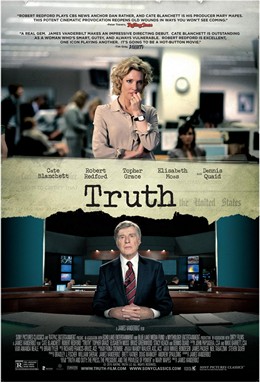
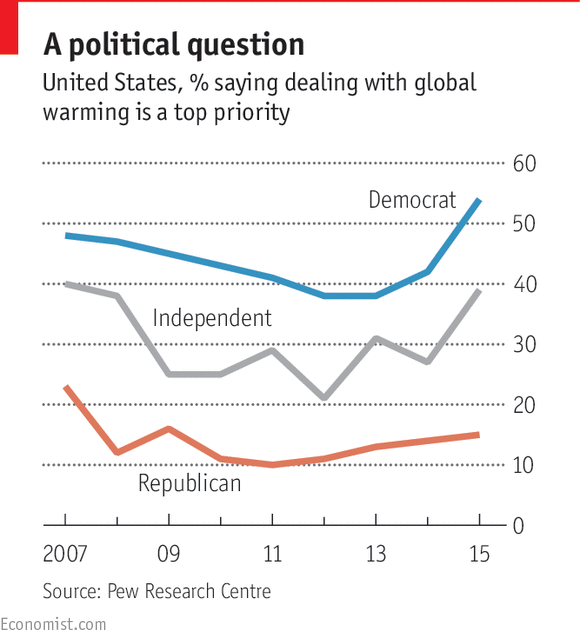






 My third guest post at Times & Seasons is titled “