Nobel Laureate’s Graduation Speech

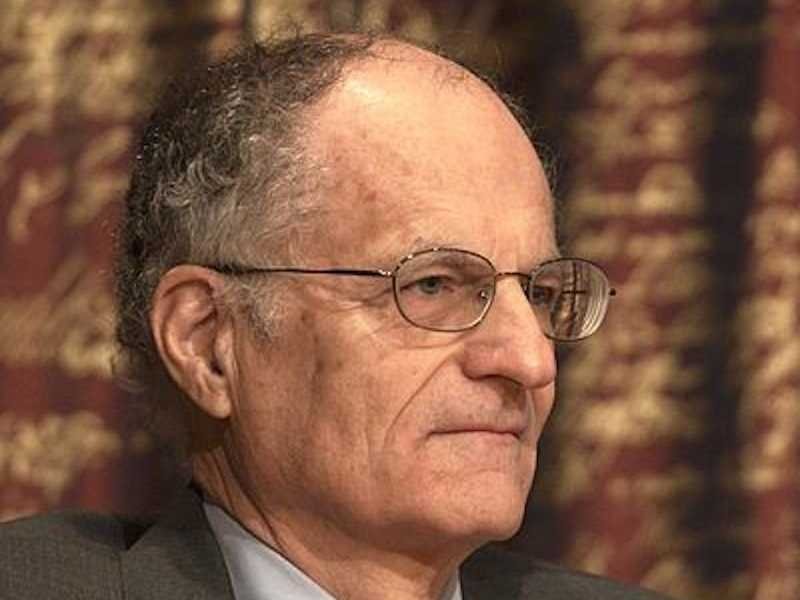
Nobel economist Thomas Sargent gave a 2007 graduation speech using 12 economic concepts:

1. Many things that are desirable are not feasible.

2. Individuals and communities face trade-offs.

3. Other people have more information about their abilities, their efforts, and their preferences than you do.

4. Everyone responds to incentives, including people you want to help. That is why social safety nets don’t always end up working as intended.

5. There are tradeoffs between equality and efficiency.

6. In an equilibrium of a game or an economy, people are satisfied with their choices. That is why it is difficult for well-meaning outsiders to change things for better or worse.

7. In the future, you too will respond to incentives. That is why there are some promises that you’d like to make but can’t. No one will believe those promises because they know that later it will not be in your interest to deliver. The lesson here is this: before you make a promise, think about whether you will want to keep it if and when your circumstances change. This is how you earn a reputation.

8. Governments and voters respond to incentives too. That is why governments sometimes default on loans and other promises that they have made.

9. It is feasible for one generation to shift costs to subsequent ones. That is what national government debts and the U.S. social security system do (but not the social security system of Singapore).

10. When a government spends, its citizens eventually pay, either today or tomorrow, either through explicit taxes or implicit ones like inflation.

11. Most people want other people to pay for public goods and government transfers (especially transfers to themselves).

12. Because market prices aggregate traders’ information, it is difficult to forecast stock prices and interest rates and exchange rates.
This explains exactly why I find economics so valuable.

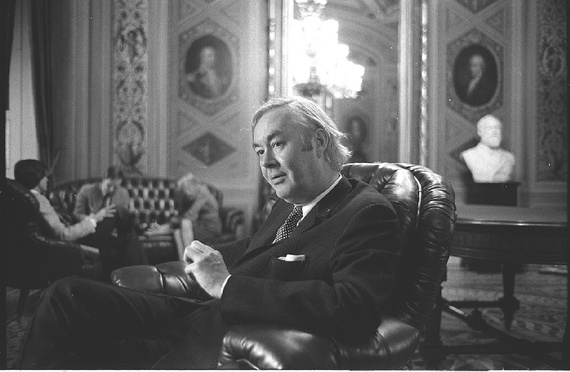
The Moynihan Report Revisited

moynihan

The Atlantic has an interesting historical piece on the Moynihan Report by Peter-Christian Aigner, who is writing a biography on Moynihan. The piece looks at Moynihan’s actual politics and motivations behind his now (in)famous report and reveals some surprises for both the Right and the Left:

If [the Right] knew what policies Moynihan hoped to spur with his report, they might view him as a Marxist radical to be forgotten, not a visionary martyr to remember. Moynihan stated these goals more than a few times, but new documents from his rich archive give a much fuller, clearer, and bolder illustration of his thinking and hopes.

“With a background in the labor movement and New York state government,” Moynihan “became convinced that poverty amid prosperity was not a “paradox,” as most said in the 1960s, but an inevitable result of the market’s “creative destruction.”” The author describes Moynihan as being influenced by “Catholic social doctrine and European policy thinkers,” causing him to worry “that America’s deep-seated individualism created a “values” framework that inclined the nation too easily to social Darwinism.” For Moynihan, “jobs ought to be a “right,” not a scarcity.” Moynihan was “particularly impressed by Sweden’s cradle-to-grave welfare state” as well as “the “family allowance” (cash transfers used to bolster low wages).”

But JFK and LBJ were not interested in committing large government resources to such policies, and Moynihan lost his biggest fight, to get these ideas into the War on Poverty. That’s when he decided to write “The Negro Family.” Originally, he included the two policy recommendations. But fearing Johnson would reject the memo outright, he chose in the final report to just emphasize poverty’s cultural devastation alone, using apocalyptic and occasionally controversial language. The central message of the 78-page document was that more than 200 years of the “worst” form of slavery in history, and nearly a century of Jim Crow and Great Depression levels of unemployment and poverty had nearly destroyed the black community. So great was the damage that now even the basic unit of society, the family, was coming apart.

The author notes that “years of research have confirmed his suspicion: break-up can indeed be a trigger for poverty, although it is most often a correlate, not a cause. More typically, as he suggested, the relationship is the other way around: Money problems exacerbate the difficulties of marriage and child rearing.” In conclusion, “Moynihan was genuinely concerned about family break-up and its results, but his understanding of the problem and solutions were radically different from that of the right today.”

While I think the author grossly and demonstably misinterprets the research over the past several decades on family structure and poverty,[ref]This has actually been a major area of interest and study for me. I’ve covered it here at DR many times, including here, here, here, here, and here to just name a few. A paper co-authored with Nathaniel on this very subject is currently in its earliest stage of development.[/ref] the historical context and background of the Moynihan Report is important. Check out the full article.

“Welcome to Good Burger, Home of the Good Burger…”

all that

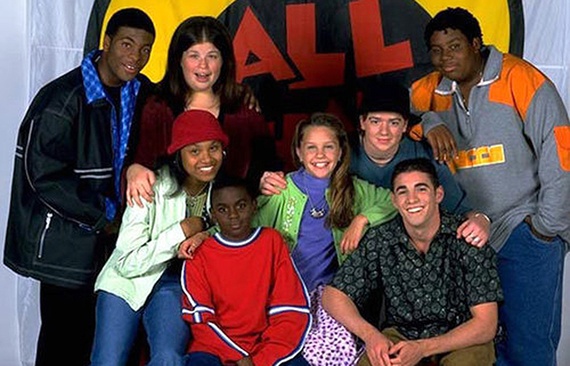
I totally watched All That growing up. This was back in elementary school days when I was really too young to be out very late on Saturday nights (plus, I had Mormon parents). And, of course, I couldn’t drive. SNICK @ Nite was the kid equivalent of shows like SNL. Every 90s kid has characters like Pierre Escargot, Repairman (Man, Man, Man…), Ed from “Good Burger,” and Ashley from the “Ask Ashley” segment etched in their memories. Hence, my joy and nostalgia over an article at The Atlantic titled “The Quiet Radicalism of All That,” which looks at just how different All That was compared to other kid shows (especially the teen nonsense on The WB).

A fun read. Check it out.

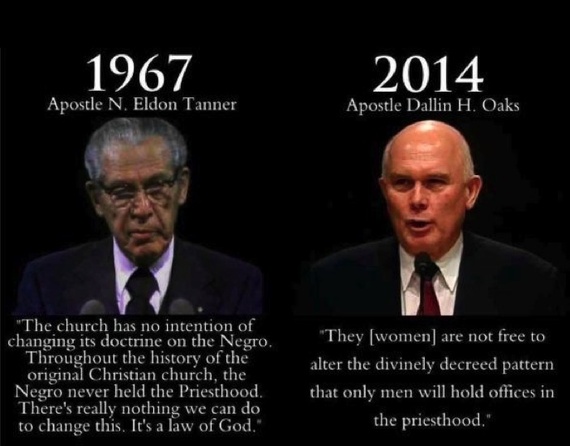
About that Elder Tanner / Elder Oaks Meme

2014-04-16 Tanner vs Oaks Meme

This image seems to have started making the rounds before Elder Oaks even finished his remarks on priesthood authority. I mostly ignored it at the time, but a couple days ago I came across this post which analyzed the origins of the two quotes. Biggest point? The Elder Oaks quote is wrong. He did not say that women are not free to alter the divinely decreed pattern. He said that the General Authorities are not free to make that change. That takes it from a kind of chauvinist slap-down to an expression of modest humility in what leaders can do. And, after all, the argument that God would have to reveal His will on this matter is something that even OW seems to support. 

Anyway, the background is interesting, so check out the whole article.

Kickstarter Censors Gosnell Documentary

Abortion Clinic Deaths

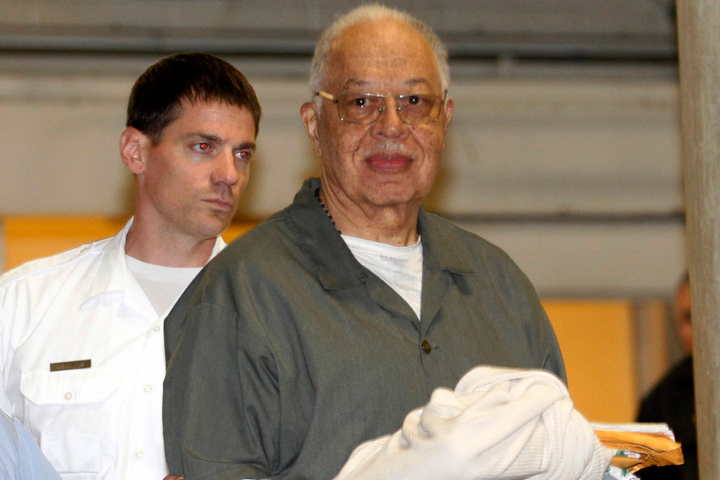
Phelim McAleer is a controversial documentarian whose past work includes FrackNation (a defense of hydraulic fracturing), Not Evil Just Wrong (a critique of global warming alarmism), and Mine Your Own Business (a critique of environmentalist opposition to the Roșia Montană mining project).[ref]I haven’t seen any of these, so can’t speak for or against them.[/ref] He used Kickstarter to garner $212,000 from 3,305 backers for his most recent film (that was FrackNation), and so he returned to Kickstarter for his current project: a documentary about Kermit Gosnell.

Not so fast.

Kickstarter wrote to tell us that it “couldn’t” go ahead with our posting — first, we needed to remove our (utterly factual) descriptions of “thousands of babies murdered” in order to “comply with the spirit” of the site’s “community guidelines.”

Well, that sounds sort of plausible at first glance. But wait.

This was shocking — and even more so when I looked at which projects don’t violate those standards. One project about a serial killer had a photograph of a dead body. There were 43 about rape, 28 with the F-word in the title or project description and one with the “C” word. There was even one called “Fist of Jesus” (don’t ask).

McAleer switched from Kickstarter to IndieGoGo to try and get the project going. Then Kickstarter decided to accept the project, but only on condition that they could subsequently cancel it at any time if they didn’t like McAleer’s updates. McAleer stuck with IndieGoGo.[ref]As of this writing, on April 10, they have raised  $556,673 out of their goal of $2,100,000 with 32 days to go.[/ref]

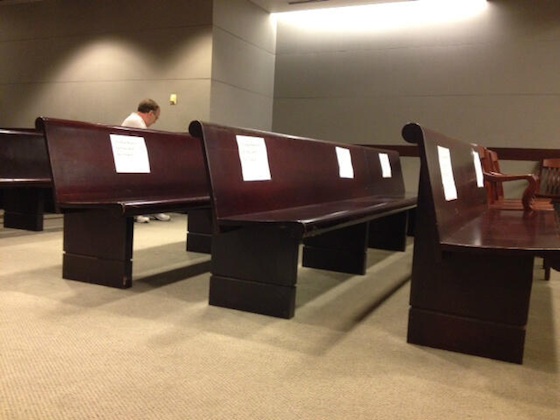
The attempt to squelch the Gosnell story is nothing new. Any other story about a serial killer would have been made into a movie by now, but when it comes to abortion no one wanted to touch the story. Just look at the empty seats at the trial that were set aside for media who never came.

2014-10-14 Gosnell Reserved Seats

It’d be nice if we could just write of the whole Gosnell incident as one isolated, horrific case. The problem is, we can’t. Just last week, Secular Pro-Life ran an article highlighting how New York state has inspected exactly 17 of its 225 abortion clinics in the last 14 years. That kind of political protection is what allowed Gosnell’s house of horrors to continue. Even if you’re not pro-life, anyone who is sincerely concerned with protecting women’s health ought to be concerned at the way the Gosnell story is being swept under the rug as though it had never occurred.

A Sweet Goodbye: Star Wars Funeral

My siblings and I often joke (probably a bit morbidly) that we are going to play The Animals’ “House of the Rising Sun” at Dad’s funeral. Not sure why–especially when you consider that it is about a brothel–other than the fact that he really likes that song and it has been ingrained in our memories since childhood. I shared some thoughts about a playlist a friend of mine had made for his grandfather’s funeral last year at The Slow Hunch. The choice of songs had meaning and personality and thus made the music and moments more special.

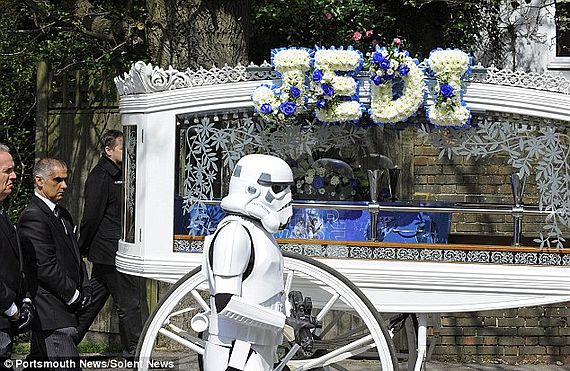
I was reminded of all this while reading about Jack Robinson, a 4-year-old of Hampshire, England who recently lost his battle with an inoperable brain tumor. “He was a huge Doctor Who fan, so when news got to Matt Smith, the 11th Doctor, the actor decided- in an act of great decency- to send his sick follower a touching video message. Jack also loved Gary Barlow’s single “Let Me Go” so the Take That front man decided to pay him a visit in hospital too.” But Jack’s parents sent him off with a loving, personalized goodbye: “an incredible Star Wars themed funeral complete with Stormtroopers; a Jedi wreath and a brass band playing John William’s Binary Sunset.”

Read this story, listen to Binary Sunsets, and try to keep from crying.

What It Would Take to Not Believe (Times And Seasons)

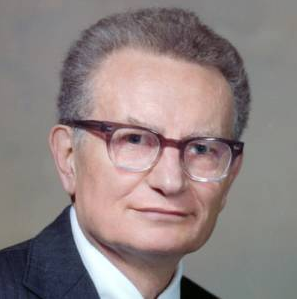
2014-04-14 Paul SamuelsonI got up early this morning and the kids cooperated by sleeping until nearly eight. As a result, I was able to finish up a post for Times And Seasons: What It Would Take to Not Believe. It’s a followup to the piece that I wrote two weeks ago called As Much As I Know Anything. In particular, I wanted to respond to a question from one of the commenters: “What would it take to convince you that (in as much as you know anything) propositions such as God exists or the BoM is historical are false? Or do you consider such propositions unfalsifiable?” That’s the question that I answered today, with a little help from Paul Samuelson and Karl Popper.

N.T. Wright in ‘Christianity Today’

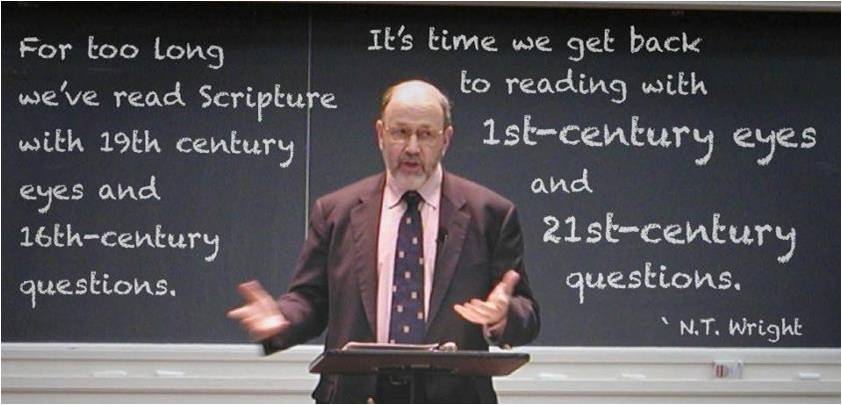
The April cover story of Christianity Today is an impressive piece on the Anglican theologian and New Testament scholar N.T. Wright. As the article’s opening explains, Wright

is the most prolific biblical scholar in a generation. Some say he is the most important apologist for the Christian faith since C. S. Lewis. He has written the most extensive series of popular commentaries on the New Testament since William Barclay. And, in case three careers sound like too few, he is also a church leader, having served as Bishop of Durham, England, before his current teaching post at the University of St. Andrews in Scotland.

The article’s author describes a story told by “a pastor friend” in which a church member walked into his office, “hands trembling as he held a copy of Wright’s Surprised by Hope: Rethinking Heaven, the Resurrection, and the Mission of the Church. “If this book is true,” he said, “then my whole life has to change.”” While my initial reaction to Wright’s work wasn’t quite that dramatic, it did help shift my biblical and religious studies from mere information gathering to theological application. Studying Second Temple Judaism(s) was no longer about neat historical tidbits or mere bible bashing ammunition, but proper understanding and appropriate application. I owe Wright a lot in this regard.

Check out the article. And then check out his work.

“Jesus Said To Them, ‘My Wife…'”

Discussions regarding Jesus’ marital status have become quite popular over the past few years. Unfortunately, it had nothing to do with any real familiarity of Gnostic writings (the Gospel of Philip is typically the one invoked) and more to do with The Da Vinci Code.

However, a controversial papyrus scrap reads “…’Jesus said to them, ‘My wife…” Recent tests on the papyrus’ ink and writing have dated it between the 5th and 9th century A.D. The results have been published in the April 2014 issue of Harvard Theological Review. While far removed from 1st-century Christianity, the text nonetheless is insightful. “Early Christians were grappling with the question of whether you should get married and have children, or whether it’s better to be celibate and virgin,” the study’s author Karen King told The Atlantic. “This fragment seems to be the first case we have where a married Jesus appears to be affirming that women who are mothers and wives can be his disciples.”

Be sure to check out National Geographic‘s coverage and Christianity Today‘s interview with Wheaton professor Nicholas Perrin about the fragment.

Land Rover Invents Transparent Hood

2014-04-12 Transparent Bonnet

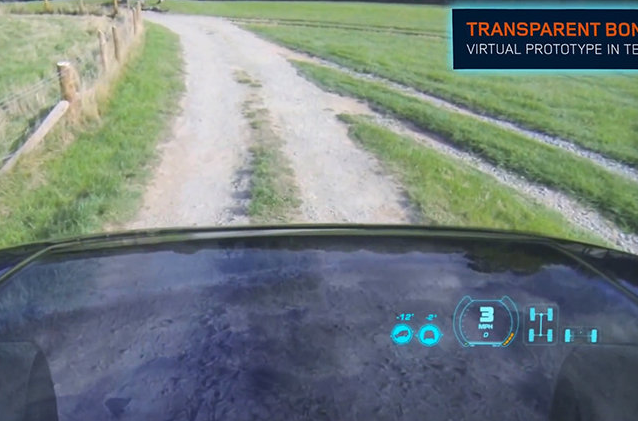
OK, so it’s not actually a hood that’s transparent. In a way, it’s even cooler. As The Verge describes it:

The Transparent Bonnet Concept utilizes cameras mounted in the car’s grille to capture a view of the road that’s usually obscured by the hood. This data is then fed to a heads-up display that shows the video in real-time at the bottom of the windscreen, overlaying where a driver sees their car’s bonnet and effectively giving the impression that it — and the engine — are transparent.

Sound cool? Watch the video. It’s even cooler.

I’m still holding out for self-driving cars, but this ain’t bad either.