“The Eucatastrophe of Man’s History”

Image result for jrr tolkien
Tolkien

In his famous essay “On Fairy Stories,” The Lord of the Rings author and Oxford professor J.R.R. Tolkien coined the term “eucatastrophe.” The word was meant to portray the opposite of tragedy and embody the “Consolation of the Happy Ending”:

The consolation of fairy-stories, the joy of the happy ending: or more correctly of the good catastrophe, the sudden joyous “turn” (for there is no true end to any fairy-tale): this joy, which is one of the things which fairy-stories can produce supremely well, is not essentially “escapist,” nor “fugitive.” In its fairy-tale—or otherworld—setting, it is a sudden and miraculous grace: never to be counted on to recur. It does not deny the existence of dyscatastrophe, of sorrow and failure: the possibility of these is necessary to the joy of deliverance; it denies (in the face of much evidence, if you will) universal final defeat and in so far is evangelium, giving a fleeting glimpse of Joy, Joy beyond the walls of the world, poignant as grief. It is the mark of a good fairy-story, of the higher or more complete kind, that however wild its events, however fantastic or terrible the adventures, it can give to child or man that hears it, when the “turn” comes, a catch of the breath, a beat and lifting of the heart, near to (or indeed accompanied by) tears, as keen as that given by any form of literary art, and having a peculiar quality (pgs. 22-23).

Being a devout Catholic and key figure in C.S. Lewis’ conversion to Christianity, Tolkien concluded his essay by writing,

I would venture to say that approaching the Christian Story from this direction, it has long been my feeling (a joyous feeling) that God redeemed the corrupt making-creatures, men, in a way fitting to this aspect, as to others, of their strange nature. The Gospels contain a fairy-story, or a story of a larger kind which embraces all the essence of fairy-stories. They contain many marvels—peculiarly artistic, beautiful, and moving: “mythical” in their perfect, self-contained significance; and among the marvels is the greatest and most complete conceivable eucatastrophe. But this story has entered History and the primary world; the desire and aspiration of sub-creation has been raised to the fulfillment of Creation. The Birth of Christ is the eucatastrophe of Man’s history. The Resurrection is the eucatastrophe of the story of the Incarnation. This story begins and ends in joy. It has preeminently the “inner consistency of reality.” There is no tale ever told that men would rather find was true, and none which so many sceptical men have accepted as true on its own merits. For the Art of it has the supremely convincing tone of Primary Art, that is, of Creation. To reject it leads either to sadness or to wrath…But this story is supreme; and it is true. Art has been verified. God is the Lord, of angels, and of men—and of elves. Legend and History have met and fused (pgs. 23-24).

Merry Christmas everyone.

Image result for incarnation

The Benefits of Globalization: Trade & Migration

We sharply disagree with this dismal view of globalisation.

Image result for free tradeSo write three scholars drawing on their latest research on globalization. “Our recent research,” they continue,

indicates that the gains from trade and migration are tremendous and that the world stands to benefit greatly from their further liberalisation (Desmet et al. 2016). The problem with virtually all quantitative and empirical evaluations of trade and migration is their static nature. They completely ignore the dynamic gains from globalisation. As we will later discuss, these dynamic gains quantitatively dwarf any short-run costs. 

After providing the theory of growth behind trade and migration, the researchers present their jaw-dropping conclusions:

Completely lifting all migration restrictions would increase real world output by 126% in present discounted value terms. Since such a policy may be unrealistic, consider instead a reform that liberalises migration so that 10% of the world population moves at impact. This would yield a present discounted value increase in real world output of 14%. Such a reform would cause some extra congestion in Europe and the US, implying that average welfare would increase by 9%, a smaller but still impressive figure. It is hard to think about any other policy that could readily be applied at the world level for which estimated benefits are as large. Migration is uniquely powerful in generating positive effects. In economic terms, having an open-door policy is a no brainer, not because of some abstract theoretical arguments, but because the measurement of the relevant forces tells us so.

Turning back the clock on trade would have equally dire consequences. Increasing trade costs by 40% would lower real world output by 30% in present discounted value terms. Although globalisation might create losers in the short run, allowing the free flow of goods and people across regions and countries is still one of the best ways we know to ensure our long-run wealth and well-being.

These numbers are astronomical. The potential good that can come from liberalized trade and migration makes the rising nationalism all the more disheartening.

Minimum Wage Abroad

Over at the World Bank’s Development Impact blog, doctoral candidate Andrés Ham looks at the effects of minimum wage hikes in developing countries. “Minimum wages in developing countries tend to be set higher, are less likely to be rigorously enforced, and labor markets are often segmented into formal and informal sectors with minimum wage policy only covering formal workers,” he writes.

Given these differences and that most developing countries implement minimum wage policies, understanding their consequences on labor markets is critical for economic growth, developing effective labor policy, and poverty alleviation.
 
My job market paper studies the impact of minimum wage policy on labor market outcomes and poverty in Honduras from 2005-2012 using repeated cross-sections of household survey data. The attributes of Honduran minimum wage policy and its labor market are similar to many developing countries, so the resulting conclusions from this case study may extend beyond its borders.

His results?

I find that a 10 percent increase in minimum wages reduces employment rates by about 1 percent. Because this result lumps formal and informal sectors together, it disguises the real effect: a significant change in labor force composition. The same minimum wage hike lowers the likelihood of employment in the formal sector by about 8 percent and increases the probability of employment in the informal sector just over 5 percent. The data indicate that individuals substitute wage earning jobs for self-employment as a direct consequence of minimum wage hikes. Wages in the formal sector increase but the observed influx of workers towards the informal sector leads to a negative net effect on informal sector wages.

Since informal sector jobs tend to be lower-paid part-time positions, average earnings in this sector often lie below formal sector incomes. Hence, there may be an adverse effect on individual well-being from these observed changes in labor force composition. To approximate the welfare effect of minimum wages, I estimate whether minimum wage increases help workers escape from extreme poverty. I find that a 10 percent increase in minimum wages has a negative but statistically insignificant effect on the risk of extreme poverty for the formal labor force. The same minimum wage hike significantly raises the risk of extreme poverty for the informal workforce by around 4 percent. This result indicates that on balance, higher minimum wages increase poverty.

I also find evidence that more formal workers are being paid less than the minimum wage. This occurs despite formal employers’ legal obligation to comply with minimum wages. Some non-compliance has always been observed in developing countries, mostly in response to imperfect enforcement from regulators (Rani et al. 2013). In Honduras, about one in three formal workers earns sub-minimum wages. As minimum wages increase, so does the level of non-compliance. I estimate that about 36 percent more formal sector workers, who should be receiving minimum wages, are underpaid by their employers.[ref]As Nathaniel pointed out to me, this indicates that Ham’s findings underestimate the negative impact of the minimum wage. If minimum wage laws were strictly complied with, the negative effects would be even greater.[/ref]

Ham concludes, “My findings imply that the costs of minimum wage increases outweigh their benefits in developing countries. The policy implication is that setting high minimum wages has detrimental effects on labor markets, well-being, and compliance.”

Hans Rosling: Combating Ignorance

Image result for hans rosling
Hans Rosling

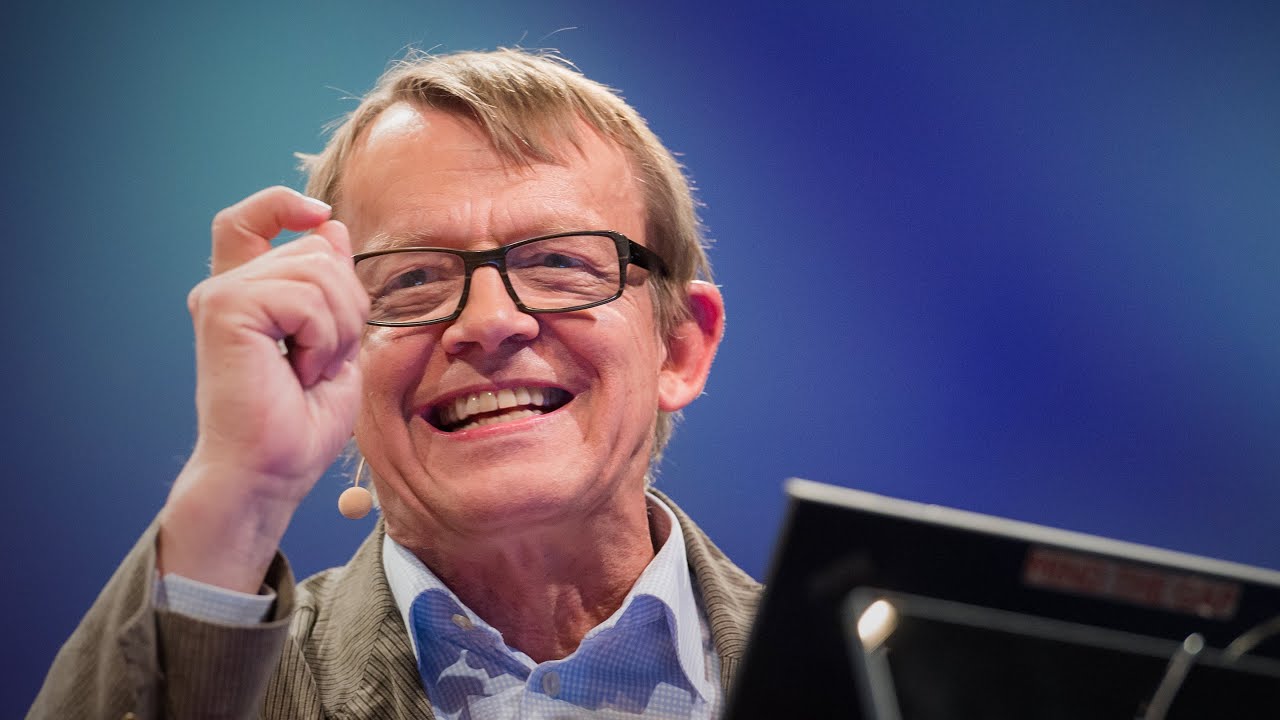
I’ve mentioned Swedish statistician Hans Rosling in a couple posts here at Difficult Run. A recent article in Nature[ref]Thanks to Robert Couch for the article.[/ref] takes a look at the influence Rosling is having throughout the world as a public intellectual. His graphics-based presentations[ref]See his site Gapminder.[/ref] of world poverty and health have helped audiences visualize the major changes that have taken place over the last couple centuries. Cognitive scientist “[Steven] Pinker admires the animations that Rosling uses. One, which depicts countries as bubbles that migrate over time according to wealth, life span or family size, allows viewers to grasp multiple variables simultaneously. “It’s a stroke of genius,” Pinker says. “He gets our puny human brain to appreciate five dimensions.”” Rosling’s approach was undoubtedly influenced by his feeling that

neither his students nor his colleagues grasped extreme poverty. They pictured the poor as almost everyone in the ‘developing world’: an arbitrarily defined territory that includes nations as economically diverse as Sierra Leone, Argentina, China and Afghanistan. They thought it was all large family sizes and low life expectancies: only the poorest and most conflict-ridden countries served as their reference point. “They just make it about us and them; the West and the rest,” Rosling says. How could anyone hope to solve problems if they didn’t understand the different challenges faced, for example, by Congolese subsistence farmers far from paved roads and Brazilian street vendors in urban favelas? “Scientists want to do good, but the problem is that they don’t understand the world,” Rosling says.

The whole article is worth reading. While some of Rosling’s academic colleagues may not appreciate his work, I certainly do. Combating ignorance about the state of the world is a worthwhile endeavor.

You can test your knowledge of the world with this quiz.

Did Mass Immigration Destroy Israel’s Institutions?

The pro-institution case for increased immigration continues to get better. A new working paper by Benjamin Powell and others looks to Israel as a natural experiment. From the abstract:

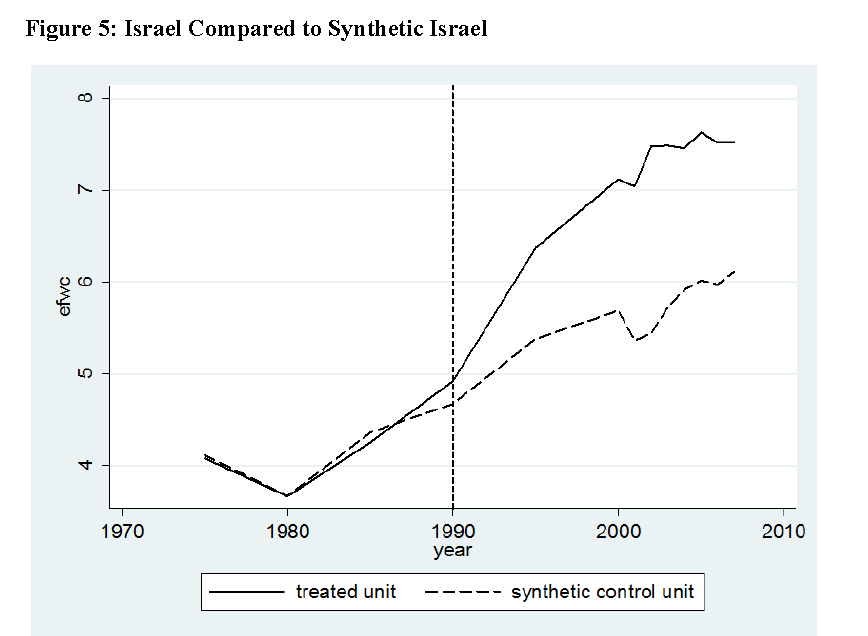
The relaxation of emigration restrictions in the Soviet Union and the State’s subsequent collapse led to a large exogenous shock to Israel’s immigrant flows because Israel allows unrestricted immigration for world-wide Jews. Israel’s population increased by 20 percent in the 1990s due to immigration from the former Soviet Union. These immigrants did not bring social capital that eroded the quality of Israel’s institutional environment. We find that high quality political institutions were maintained while economic institutions improved substantially over the decade. Our case study finds that the immigrants played an active role in this institutional evolution and we also employ a synthetic control to verify that it is likely that the institutions improvement would not have occurred to the same degree without the mass migration.

The authors conclude,

This finding in no way proves that in every case unrestricted migration would not harm destination country institutions. However, as a complement to Clark et. al. (2015) that found in a-cross country empirical analysis that existing stocks and flows immigrants were associated with improvements in economic institutions, it should increase our skepticism of claims that 26 unrestricted migration would necessarily lead to institutional deterioration that would destroy the estimated “trillion dollar bills” that the global economy could gain through much greater migration flows (pgs. 25-26).

The Garden of Enid: AuthorCast with Scott Hales

This is part of the DR Book Collection.

Image result for the garden of enidWhile Bill Watterson’s Calvin & Hobbes touched on childhood and life experience more generally, cartoonist Scott Hales delves into the details and nuances of Mormonism’s unique and somewhat odd culture while capturing the same kind of magic described above. His new graphic novel–The Garden of Enid: Adventures of a Weird Girl, Part One–follows the thoughts and experiences of Enid: a witty, contemplative, socially-awkward (“weird”) 15-year-old Mormon girl. The hilarity of the strips stems from the portrayals of embarrassingly familiar situations faced by young Mormons: stake dances, boring teachers, YW camp, EFY, etc. Reading them feels like being in on an inside joke. Their depth, however, emerges from the moments of loneliness, uncertainty, reflection, and flickers of human connection. For me, the heart of the graphic novel is summed up in Enid’s exchange with her McConkie-loving seminary teacher who dismisses her “weird questions” in favor of a supposedly “simple”, “black and white” gospel. By contrast, the God Enid believes in is a “colorful” one “who likes weird questions.” Similarly, life is not “black and white.” It’s not even gray. It’s vibrant.

The Garden of Enid is what it is to be an American Mormon in microcosm. Even though the main character is a Mia Maid, Enid’s experiences can resonate with Mormons of all ages and genders. For me, Enid is that ward member that you have an unexpected, but incredibly moving moment with; that member who totally “gets it” when you’re unable to put on a smile at church. But she also–like Calvin–can model what not to do and how to cut oneself off from others. Like the best comic strips, Enid allows you to both laugh and reflect. And it’s a nice reminder that not only is God colorful, but so is life.

You can see my full review (from which the above is taken) at Worlds Without End. You can listen to cartoonist Scott Hales interviewed on Greg Kofford Books’ AuthorCast here.

Climate Change and Economic Growth

Philosopher Joseph Heath has an enlightening working paper on the economics and ethics of climate change. Heath is emphatic that his goal is

not to make a case for the importance of economic growth, but merely to expose an inconsistency in the views held by many environmental ethicists. Part of my reason for doing so is to narrow the gap somewhat, between the discussion about climate change that occurs in philosophical circles and the one that is occurring in policy circles, about the appropriate public response to the crisis. One of the major differences is that the policy debate is conducted under the assumption of ongoing economic growth, as well as an appreciation of the importance of growth for raising living standards in underdeveloped countries. The philosophical discussion, on the other hand, is dominated by the view that ongoing economic growth is either impossible or undesirable, leading to widespread acceptance of the steady-state view. This view is, however, a complete non-starter as far as the policy debate is concerned, because it is too easily satisfied. As a result, its widespread acceptance among philosophers (and environmentalists) has led to their large-scale self-marginalization (pg. 31).

Drawing on the economic research of economists Nicholas Stern and William Nordhaus, Heath proceeds to point out how misleading language often distorts and exaggerates the negative impact of climate change:

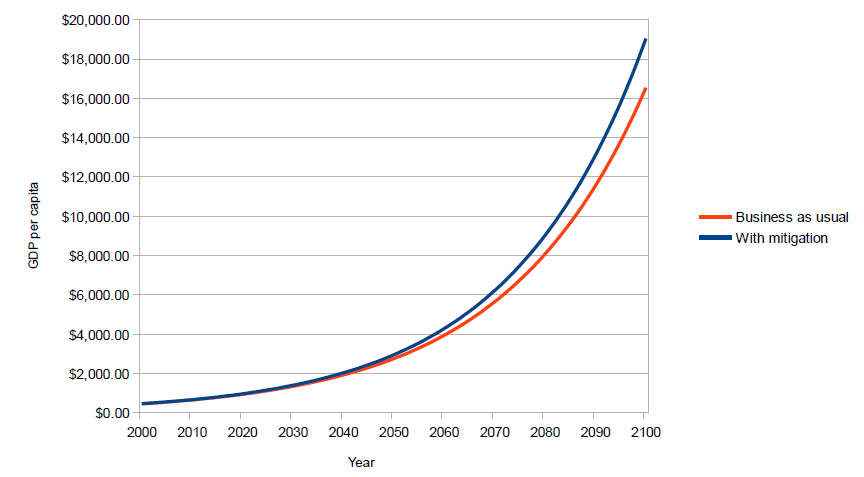
Stern adopts a similar mode of expression when he suggests that “in the baseline-climate scenario with all three categories of economic impact, the mean cost to India and South-East Asia is around 6% of regional GDP by 2100, compared to a global average of 2.6%.” The casual reader could be forgiven for thinking that the reference, when he speaks of “loss in GDP per capita,” is to present GDP. What he is talking about, however, is actually the loss of a certain percentage of expected future GDP. In some cases, he states this more clearly: “The cost of climate change in India and South East Asia could be as high as 9- 13% loss in GDP by 2100 compared with what could have been achieved in a world without climate change.” The last clause is of course crucial – under this scenario, GDP will not be 9-13% lower than it is right now, but rather lower than it might have been, in 2100, had there not been any climate change…In other words, what Stern is saying is that climate change stands poised to depress the rate of growth. This type of ambiguity has unfortunately become common in the literature. An important recent paper in Nature by Marshall Burke, Solomon M. Hsiang and Edward Miguel, estimating the anticipated costs of climate change, presents its conclusions in the same misleading way. The abstract of the paper states that “unmitigated climate change is expected to reshape the global economy by reducing average global incomes by roughly 23% by 2100.” The paper itself, however, states the finding in a slightly different way: “climate change reduces projected global output by 23% in 2100, relative to a world without climate change.” Again, that last qualifying clause is crucial, yet it was the unqualified version of the claim found in the abstract that made its way into the headlines, when the study was published (pgs. 15-16).

Heath acknowledges that

these potential losses are enormous, and they call for a strong policy response in the present. At the same time, what these economists are describing is not a “broken world,” in which “each generation is worse off than the last.” On the contrary, they are describing a world in which the average person is vastly better off than the average person is now – just not as well off as he or she might have been, had we been less profligate in our greenhouse gas emissions. It is important, in this context to recall that annual rate of real per capita GDP growth in India, at the time of writing is 6.3%, and so what Stern is describing is, at worst, the loss of approximately two years worth of growth. At the present rate of growth, living standards of the average person in India are doubling every 12 years. There are fluctuations from year to year, but the mean expectation of several studies, calculated by William Nordhaus, suggests that the GDP of India will be about 40 times larger in 2100 than it was in the year 2000 (which implies an average real growth rate of 3.8%). The 9-13% loss, due to climate change, is calculated against the 40-times-larger 2100 GDP, not the present one (pg. 16-17).

The full paper has more details and additional arguments. But this is the kind of serious cost/benefit analysis we need to be having about climate change.

PolitEcho and Difficult Run: Our Echo Chambers Examined

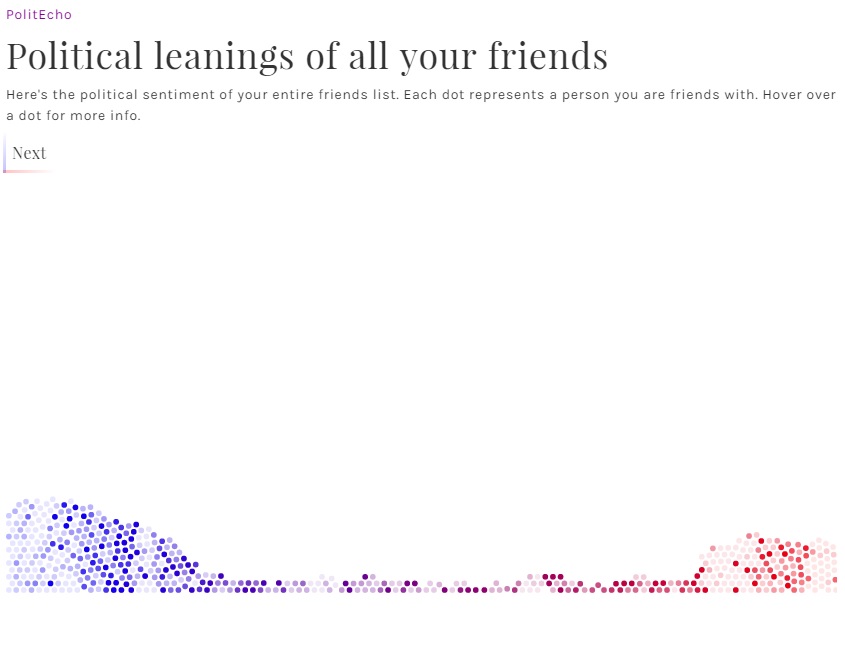
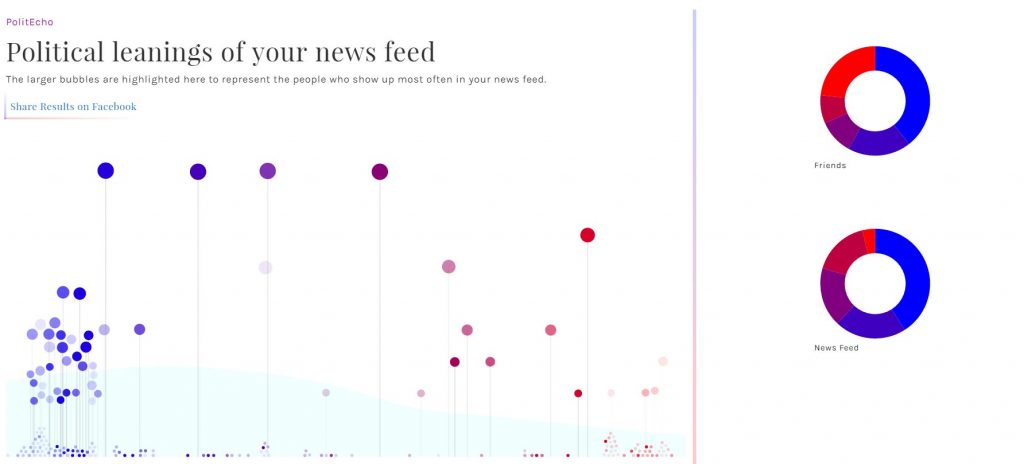
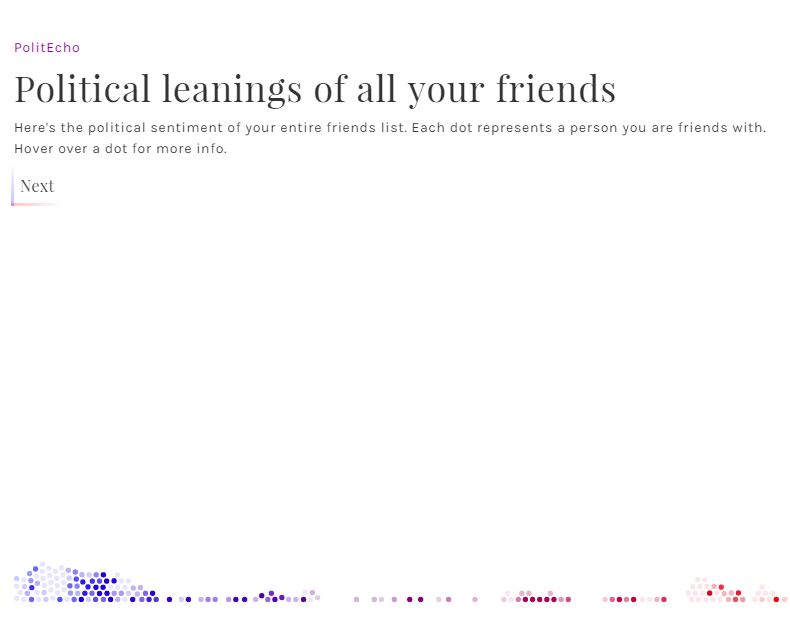
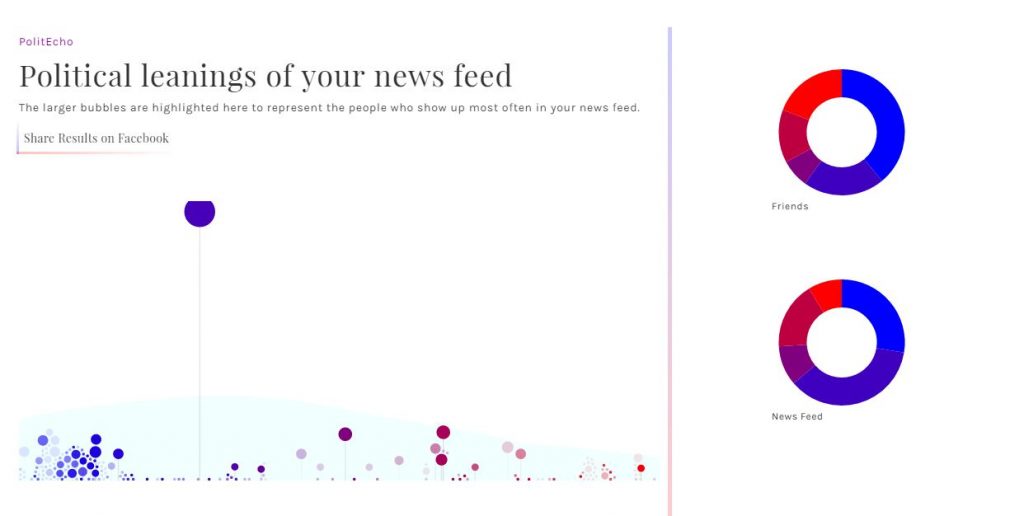
A week or two ago, I saw something interesting and new going around on Facebook: PolitEcho. It’s a cool idea. The app[ref]It’s a Google Chrome extension.[/ref] analyzes the politics of your friends on Facebook–and your feed–and then answers the question, “is your news feed a bubble?”

So I thought it would be fun to ask the Difficult Run editors to run the analysis on their own Facebook profiles and send me the results so that we could publish a little post that showed the respective bubbles of the folks who write for Difficult Run.

Now, before we get to the results, I have to lower expectations just a bit. Like a lot of data visualization projects, PolitEcho doesn’t really live up to its guiding concept. The way it analyzes political affiliation is very, very rudimentary. Instead of doing anything cool like using the Moral Foundations Word Count tool to conduct sentiment analysis on that things that your friends actually post[ref]This is just one example of what I’d love to do, given time and resources that I do not have.[/ref], instead PolitEcho just looks to see whether your friends have “liked” a variety of pre-screened news sources on Facebook. If they like Breitbart, for example, they’re conservative. If they like DailyKos, they’re liberal.  In other words, don’t read too much into this.

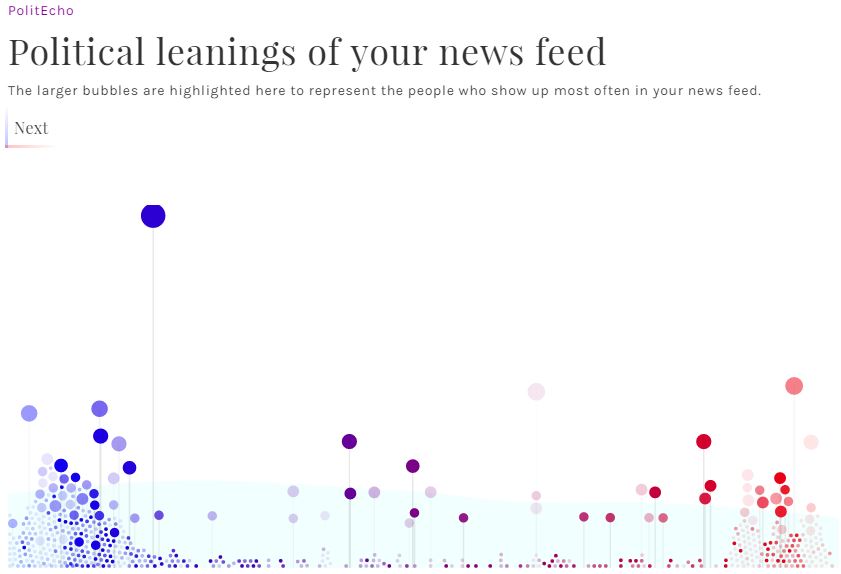
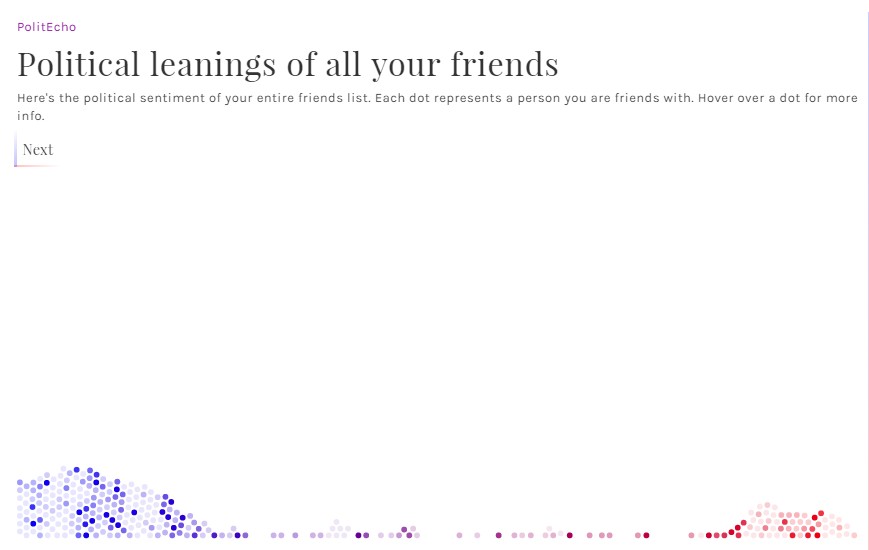
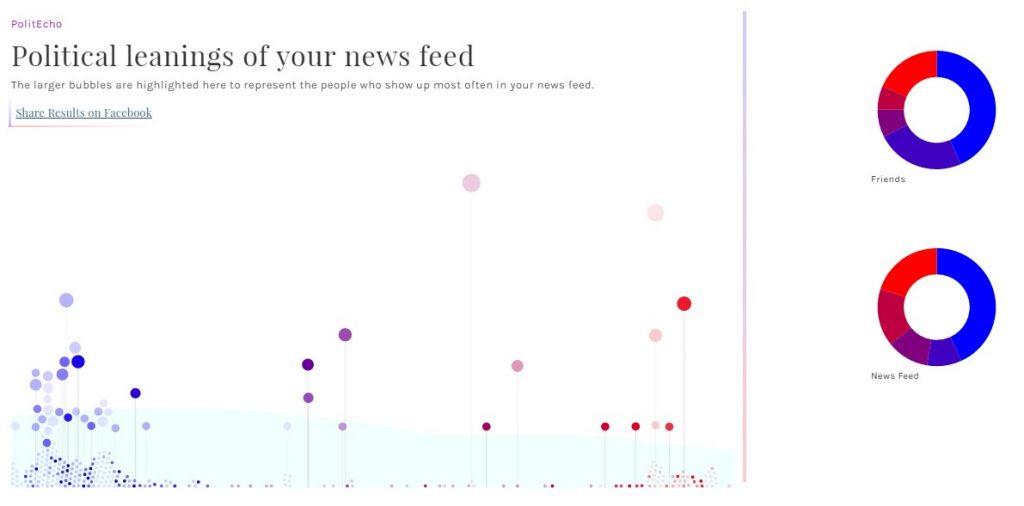
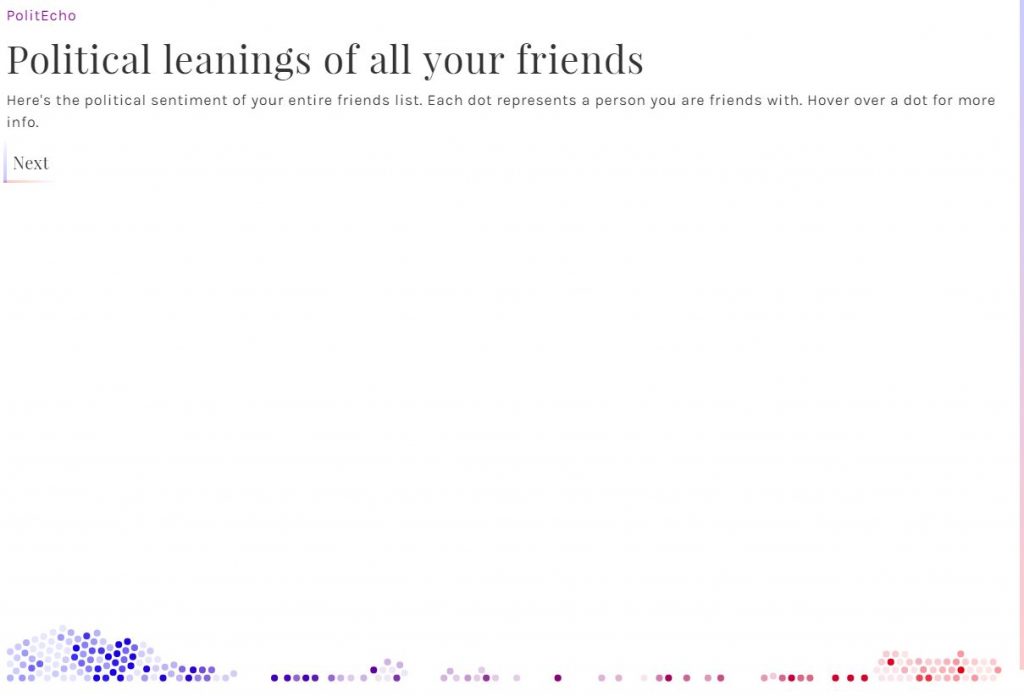
That said–and mostly for fun–here are what our political bubbles look like.

Nathaniel

Monica

Walker

Allen

So, that’s what our social networks look like, from one particularly naive political viewpoint.

How about yours?

Can Identity Politics Defend Liberty?

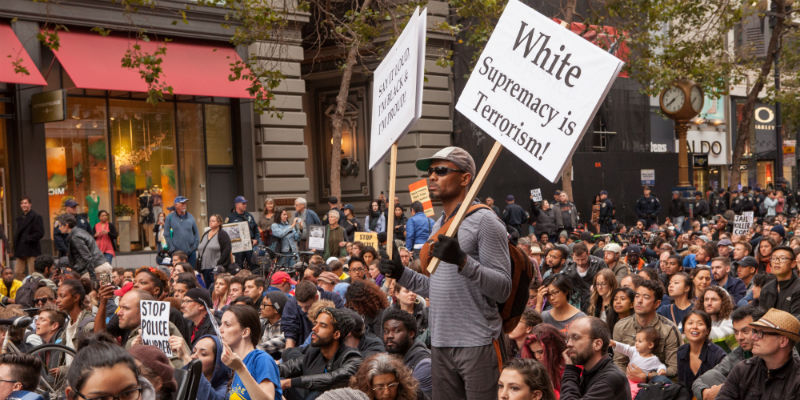
When Russell Fox highly praised an article with the headline The Defense of Liberty Can’t Do Without Identity Politics, I knew I had to read it. Between his praise and the tagline of the site–“moderation in pursuit of justice”–I was fascinated to see what a fusion of classical liberalism and identity politics might look like. As it turns out, however, it’s not an alliance that I can see any hope for.

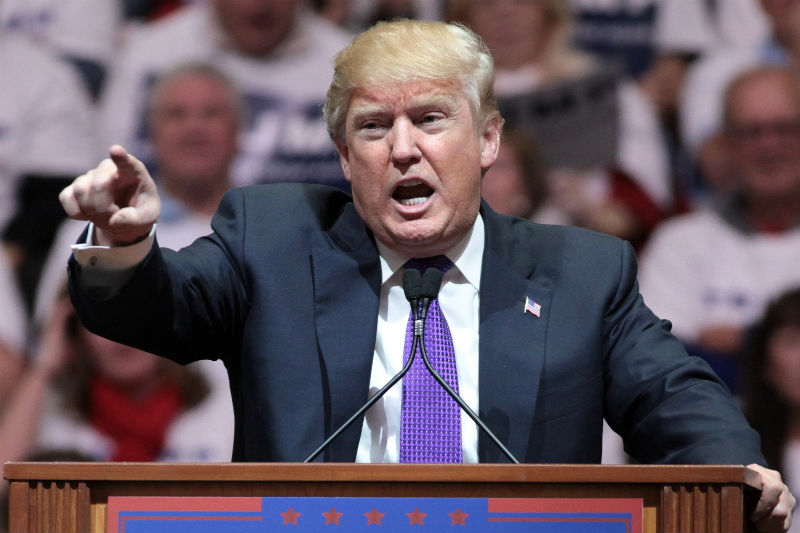
The first indication that things were going awry was author Jacob Levy’s dismissal of the Trump win as not even really needing an explanation:

Donald Trump received a smaller share of the popular vote than Mitt Romney did in 2012, but his Electoral College victory was so unexpected that it seems to call forth explanation after explanation.

The idea is that Trump’s apparently overwhelming victory is basically a figment of the peculiar nature of our voting system. In reality, it was about 80,000 votes in three states [ref]Pennsylvania, Michigan, and Wisconsin[/ref] that proved decisive, and such a small number of votes “is susceptible of almost endless plausible explanations.”

All of which is true. And all of which misses the point entirely. When someone as objectionable as Donald Trump performs about as well as your typical Republican candidate, that is not a reason to wave your hands dismissively. That is a matter for serious reflection, because Trump was far, far from a typical Republican politician. Levy seems to be saying that Trump did more or less as well–plus or minus an insignificant fraction of total voters–as anybody else would have: Jeb Bush, Marco Rubio, Mitt Romney, whatever. But that’s not an explanation of anything. It actually happens to be the very fact which demands an explanation!

The second misstep is fundamentally misconstruing the nature of political correctness. To hear Levy tell it, identity politics is basically indistinguishable from civility and common moral rectitude. Thus, Levy insists that Trump’s low points such as the attack on Judge Curiel or the Khan family or the Bobby Bush video, were all instances of Trump violating political correctness. Ergo, Trump did not rise when he contravened identity culture, but rather fell, and so you can’t credit any kind of anti-PC sentiment for his victory.

But to categorize these mistakes as exclusively or even primarily about political correctness makes little sense. The Khan family is a gold star family, and when has concern for the military ever been associated with political correctness or identity politics? Yes, the Khan family is also Muslim, but there’s no way to describe this as only or even mainly about political correctness. The same goes for the Bobby Bush tapes where–once again–Trump’s foul language and outright criminal behavior violated not only the norms of political correctness (for being misogynistic) but also of–as I said earlier–basic decency. The attack on Curiel was the only one that could fairly be categorized as substantially about political correctness and little else, and so it’s a fundamental mistake to draw the conclusion that whenever Trump violated PC norms his poll numbers fell. On the contrary, his penchant for trampling on political correctness were the defining attributes of his campaign.[ref]According to Pew, “By a ratio of about five-to-one (83% to 16%), more Trump supporters say too many people are easily offended. Among Clinton supporters, 59% think people need to exercise caution in speaking to avoid offending others, while 39% think too many are easily offended.” And that’s just one example.[/ref]

Speaking more broadly, however, Levy’s dismissive attitude towards the excesses of political correctness and identity politics fundamentally misapprehends what that movement is already about. On the issue of college campuses, he writes:

It turns out that 18-year-olds seized of the conviction of their own righteousness are prone to immoderation and simplistic views. (Who knew?)

But–as amusing as those stories are–he neglects the part where people lose their jobs as a result of these temper tantrums and how this very real threat has led to a climate of fear and paranoia.[ref]This is especially true when the protests and repercussions spill outside of college campuses. Go back to Brendan Eich and start from there.[/ref] Nor is that just a matter of anecdotes. In “Political diversity will improve social psychological science” a team of researchers[ref]José L. Duarte, Jarret T. Crawford, Charlotta Stern, Jonathan Haidt, Lee Jussim, and Philip E. Tetlock[/ref] substantiate the following claims:

  1. Academic psychology once had considerable political diversity, but has lost nearly all of it in the last 50 years.
  2. This lack of political diversity can undermine the validity of social psychological science via mechanisms such as the embedding of liberal values into research questions and methods, steering researchers away from important but politically unpalatable research topics, and producing conclusions that mischaracterize liberals and conservatives alike.
  3. Increased political diversity would improve social psychological science by reducing the impact of bias mechanisms such as confirmation bias, and by empowering dissenting minorities to improve the quality of the majority’s thinking.
  4. The underrepresentation of non-liberals in social psychology is most likely due to a combination of self-selection, hostile climate, and discrimination

So much for the kids will be kids approach Levy favors. Undermining free speech and open inquiry on collage campuses and beyond strikes me as a legitimately concerning trend, not just a kind of cute overzealousness..

Levy also characterizes identity politics as starting and ending with any particular concern for a particular group of individuals. Anti-sodomy laws used to discriminate gays can be written in apparently neutral terms (with regard to sexuality) and America’s racist criminal justice system is ostensibly colorblind. In order to reform these discriminatory systems, Levy insists, we have to have identity-conscious politics that refuse to give up at the most superficial veneer of impartiality.

agree with Levy on this point,[ref]See my review of The New Jim Crow for more info on why.[/ref] but what we agree on and what identity politics constitute are two different things. Take the criminal justice system, for example. The inequality is evident in statistics that indicate blacks and whites use drugs at roughly equivalent levels, but that blacks are more likely to be arrested, charged, charged with more serious offenses, and convicted. It is entirely possible to oppose this because you want blacks and whites to be treated identically. This is nothing new. It’s the same spirit–broadened and expanded–as “all men are created equal.”

But what does this have to do with the doctrine of intersectionality, a political idea rooted in the fundamental alienation of people based on categories of race, gender, and sexuality? How can a universal view of humanity where we’re all fundamentally alike–and should be treated that way–possibly coexist with a doctrine that takes as axiomatic the mutual incomprehensibility of our lives based on identity categories?[ref]And, even more sinister perhaps, seems to imply that the experiences of individuals within designated identity categories are fungible.[/ref]

What does this have to do with the stubborn insistence of contemporary social justice warriors–many of whom come from extremely privileged backgrounds (as their prevalence on elite college campuses renders obvious)–to insist we check our racial privilege while ignoring other forms of privelege that are at least as relevant but would indict them as well? (I’m looking at you, socio-economic class.)

Or, to expand things a bit more, let’s consider critical race theory which–according to its own proponents–“rejects the traditions of liberalism and meritocracy.”[ref]UCLA School of Public Affairs: What is Critical Race Theory?[/ref] Levy argues that “the defense of liberty can’t do without identity politics,”[ref]I’m assuming he wrote the title, but even if an editor came up with it, it reflects his argument accurately enough.[/ref] but it turns out that the actual practitioners of identity politics think they can get along without liberty (at least: classical liberalism) just fine, thanks very much. Levy might think he’s on the side of the politically correct and the social justice advocates of identity politics, but I’m pretty sure the feeling’s not mutual.[ref]For more on the gap between identity politics and conventional notions of justice, see: When Social Justice Isn’t About Justice.[/ref]

Aside from these particular ideological incompatibilities between classical liberalism and identity politics, we also have research from Bradley Campbell and Jason Manning delving into the rise of “victimhood culture” as something genuinely new and unique, using the same kinds of instances Levy dismisses as insignificant to illustrate “large-scale moral change” and the rise of a distinct victimhood culture. The only other two moral cultures they identify are honor culture and dignity culture, so it’s not like we get a new one of these every decade or so. This shift is seismic.

In the end, Levy believes that identity culture and classical liberalism can be allies. And, insofar as what he means is that “the progress of freedom depends on those who know where the shoe chafes,”[ref]That’s’ the caption of the article’s photo, and I’m not sure if Levy wrote it or not.[/ref] then I agree. The trouble is that the identity politics of today–however they started–are effectively a method of entrenching socio-economic inequality by diverting attention away from the privileges of wealth and elite education with a myopic emphasis on race, gender and sexuality that–while sometimes vital in specific cases–becomes in its myopic form a tool of oppression rather than of freedom. Fundamentally, the project of contemporary identity politics both historically unique and essentially anti-liberal.

The coalition we need to build is not one between libertarianism and identity politics. On the contrary, the coalition we need today is between those who reject identity politics (whether they lean to the left or to the right) and those who embrace it (whether they lean to the left or to the right.)[ref]See also: Victimhood Culture Metastasizes[/ref] This coalition will not bring about a happy utopia because vital partisan differences will remain, but it will forestall the widening division and social dissolution that have wrought so much dysfunction and destruction on our political and social institutions in recent years.

Why Trump “Tortured” Romney

According to Roger Stone (a Trump adviser):

Donald Trump was interviewing Mitt Romney for secretary of State in order to torture him… To toy with him.[ref]Via The Hill[/ref]

That might be all there is to it. Far be it from me to put pure pettiness past Trump. But whatever the motives, the move comes with an important fringe benefit for Trump. From now on, whenever Romney criticizes Trump, the Trump team can spin it nothing more than sour grapes.

I’m loathe to give Trump credit as some kind of political savant just because he won. I’m more inclined to give credit to larger political forces and sheer dumb luck. But that kind of sabotage doesn’t seem outside the realm of possibility. It’s a petty, but useful, way to neutralize the most visible and respected #NeverTrump Republican.[ref]The fact that a lot of credulous people depicted Romney’s carefully-worded statements as sucking up to Trump is just another way to undermine a potent critic.[/ref]